

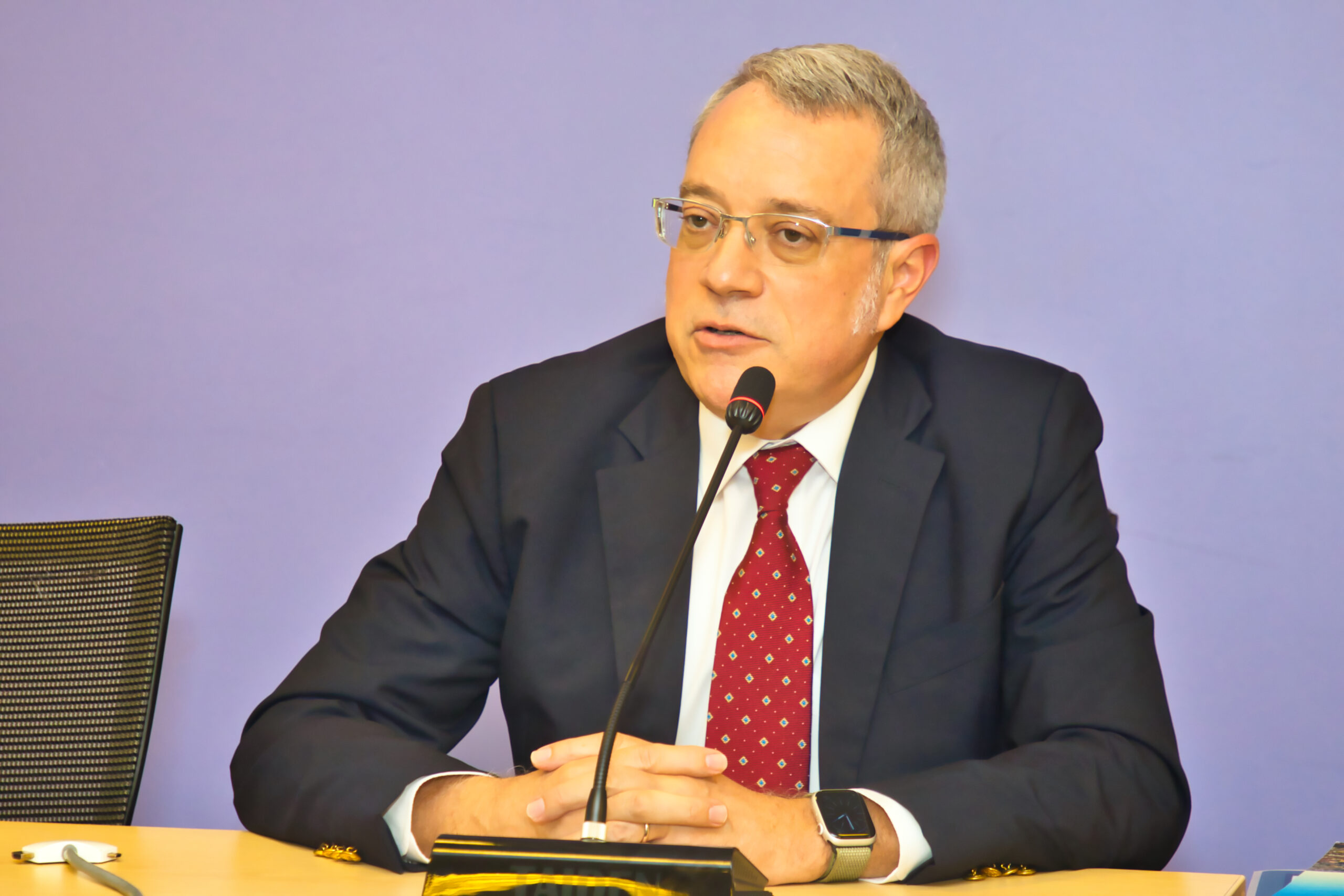
Accra, Ghana//-The connection between data and research took centre stage at the inaugural World Bank–University of Ghana Graduate Student Research Colloquium, with senior economist Gerro Carletto calling on students to treat data as the foundation for credible development solutions.
Speaking virtually at the event held at the World Bank Headquarters in Accra, Carletto, who works with the World Bank’s Development Data Group and the Institute of Economic Research, said the World Bank’s Institute for Economic Development has spent the last decade focused on improving data systems across Africa.
“Research and data work together to produce the knowledge needed for development,” he told participants. He urged graduate students to collect and use the right data, emphasising that meaningful impact depends on evidence, not assumptions.
Carletto encouraged students to pursue data that can directly change and improve Africa’s development landscape. He commended the colloquium for creating a space that fosters competitive advancement and turns academic ideas into practical impact.
He also highlighted the role of technology in bridging global and local knowledge. Participants, he said, should customise global knowledge into local content using tools like AI to make research more relevant and applicable.
Carletto described the partnership between the World Bank, University of Ghana, and ISSER as impressive and a clear sign that the region is moving toward higher standards in quality and credible research. He congratulated the graduate students and urged them to keep investing in rigorous, relevant work
Opening remarks
The event opened with remarks from World Bank Division Director Robert Taliercio, University of Ghana Department Head Professor Edward Nketia Amposah, and Professor Ama, Head of Economic Research at ISSER.
Mr Taliercio stressed that knowledge is now more critical than financing in driving development. He described the colloquium as part of the World Bank’s transformation agenda and urged a shift away from theory toward testing ideas through rigorous, evidence-based research.
Professor Edward Nketia Amposah said the colloquium plays a vital role in addressing Ghana’s socio-economic challenges.
He noted that the platform gives graduate students a valuable space to present research, exchange ideas, and sharpen their work. He encouraged participants to ask critical questions to strengthen the research presented.
Speaking on behalf of the ISSER Director, Professor Ama said research forms the foundation of ISSER’s work and that hosting the inaugural colloquium was a source of pride. She urged graduate students to produce candid, high-quality research that can contribute to building a better Ghana and a better world.
The colloquium marks a step toward bridging academic research and real-world policy in Ghana. By bringing together students, academics, and development practitioners, it creates a direct channel for turning rigorous research into solutions that matter on the ground.
