

Accra, Ghana//- The World Bank today revealed that Ghana’s recent economic recovery is yet to translate into the well-being of the people, as “56.4% of Ghanaians remain in poverty, with widening disparities across the country”.
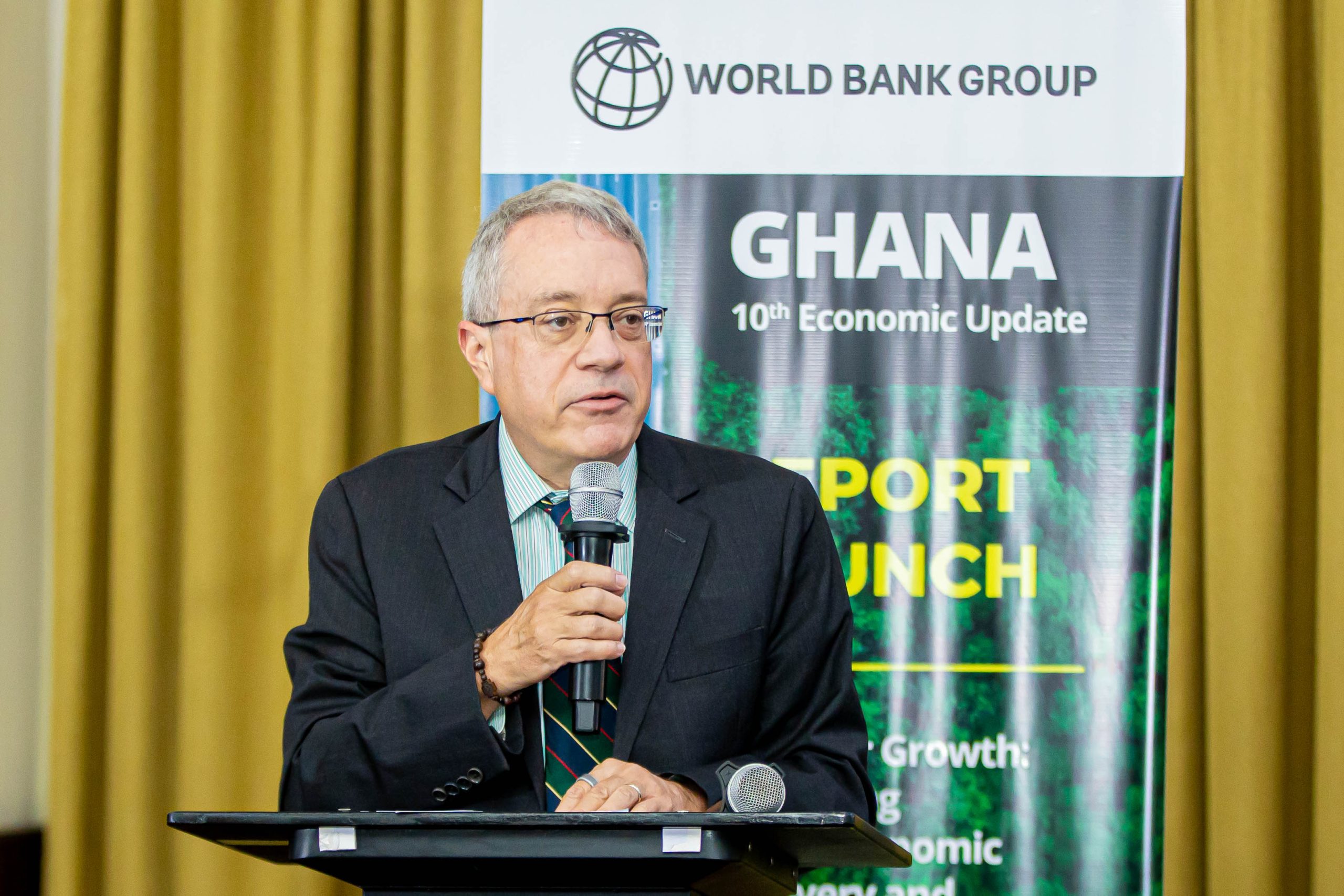
The World Bank Division Director for Ghana, Liberia and Sierra Leone, Robert R. Taliercio who disclosed at the launch of the Bank’s ‘Tenth Ghana Economic Update’ with widening disparities across of the country, the World Bank has said.
According to him, the strong headline economic growth recorded in recent years is yet to translate into improved living conditions for a significant proportion of the population.
Mr Taliercio noted that this situation highlighted the need for more inclusive growth that creates opportunities and jobs for the wider population.
There is a disconnect between Ghana’s headline economic growth and the realities faced by many households across the country, he told participants at the well-attended event
“There is a disconnect between the headline growth that is yet to reach most of the population”.
He added that the challenge is particularly concerning given Ghana’s growing young population and the need to create sufficient employment opportunities for people entering the labour market.
Ghana’s economy grew by 6% in 2025 and accelerated to 6.4% in the first quarter of 2026, indicating a strong recovery in economic activity, Mr Taliercio pointed out.
However, he cautioned that growth alone would not be enough to address the country’s development challenges if it was concentrated in sectors with limited capacity to create jobs.
The World Bank’s Director further noted: “Growth is led by sectors with limited employment absorption relative to its growing young population entering the labour market in the next decade”.
He described this as a structural imbalance requiring urgent attention if Ghana is to make its economic recovery more inclusive.
Mr Taliercio therefore recommended to the managers of the Ghanaian economy to focus on policies that promote job creation, improve productivity and ensure that the benefits of economic growth reach more households and regions.
He was emphatic that making Ghana’s recovery “inclusive, job-intensive and resilient would be critical to sustaining the progress made in restoring macroeconomic stability.
Major Warning
Reviewing the Bank’s ‘Tenth Ghana Economic Update ‘, a Senior Economist at the World Bank, Tamoya Christie warned that the country’s economy could be affected badly if the Middle East tensions are prolonged.
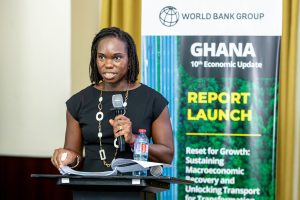
The report, which is on the theme: “Reset for Growth: Sustaining Macroeconomic Recovery and Unlocking Transport for Transformation,” projected that Ghana would end 2025 with a growth rate of 4.8%,. It added that “the medium-term outlook is broadly positive, though growth is expected to moderate”.
However, in the medium term, growth is expected to converge toward its estimated potential of around 5%. Inflation is also expected to remain within the Bank of Ghana’s 8 ± 2% target band, whilst the current account is projected to remain in surplus in 2026, and the primary surplus target of 1.5% of Gross Domestic Product is achievable provided revenue reforms are implemented as planned.
The World Bank warned that “These projections are achievable—but they are not guaranteed, and the downside risks to this outlook are material”.
The report stated that risks to macroeconomic stability are tilted to the downside, saying: “externally, gold price volatility, geoeconomic fragmentation, and the Middle East conflict—which elevates energy, food, and agricultural input costs—are the primary concerns potentially weighing on potential growth, eroding fiscal revenues, and driving inflationary and exchange rate depreciation pressures.”
Recommendations
The World Bank therefore suggested some policy recommendations to deal with or manage the expected risks going forward.
First, on revenue-led fiscal consolidation, the Bank believes that the domestic revenue mobilisation agenda is a central pillar for fiscal sustainability.
The Bank added that the primary surplus has been achieved largely through underspending rather than broad-based revenue growth.
Therefore, the reform priority is to broaden the base, improve compliance, and build a tax administration system capable of capturing revenues from all segments of the economy on a fair and equitable basis.
Second, regarding expenditure quality, the Bank pointed out that it is very important that policy actions were introduced in 2025 to bring fiscal consolidation back on track. They were amendments to the Public Financial Management (PFM) and Public Procurement Acts aimed at strengthening commitment controls and preventing future slippages.
However, the World Bank warned that repeated compression of capital investment, infrastructure maintenance, and social transfers risks eroding the medium-term foundations of the recovery.
“Priority must therefore be placed on safeguarding high-return public investment, preserving priority social spending, and strengthening PFM to improve efficiency—recognising that fiscal discipline and growth-supportive expenditure are complementary, not competing, objectives”.
Touching on key priorities, the World Bank urged the government to include developing a more robust fiscal risk architecture covering systematic disclosure of contingent liabilities, integrating risk scenarios into budget planning, and strengthening SOE accountability mechanisms. The full report here
