

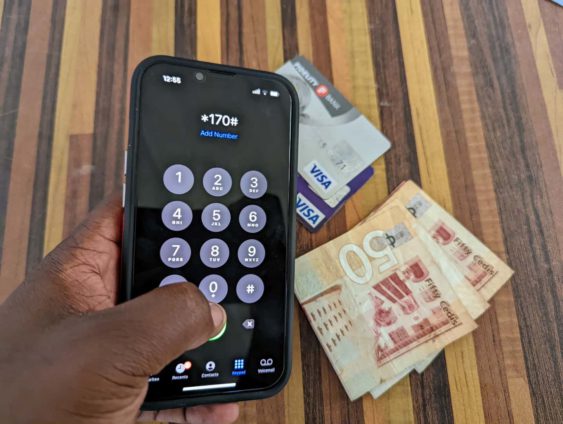

Ghanaians moved GH¢518.8 billion through mobile money in August 2026, yet most of the country’s businesses still do not accept digital payments, according to central bank data and census-based research.
The gap between how Ghanaians pay and how firms get paid is now one of the clearest weak points in the country’s shift away from cash. It matters for small businesses in particular. Firms that keep no digital record of their sales struggle to show lenders what they earn, which shuts many of them out of credit.
Consumers moved first
Bank of Ghana figures show the value of mobile money transactions rose from GH¢323.2 billion in June 2025 to GH¢492.9 billion in June 2026, an increase of more than 50 per cent. Volumes reached 954 million transactions in June alone. Values rose again in July and August.
Across 2025, mobile money transactions totalled GH¢4.54 trillion, up 50.8 per cent on 2024. The infrastructure is extensive: about 546,000 active agents, and 26.4 million active accounts out of 85.8 million registered as of August.
Firms lag behind
Businesses tell a different story. A study by the Ghana Statistical Service and the Retail Finance Distribution (ReFinD) research initiative at the Institute of Statistical, Social and Economic Research (ISSER) found that only about 37 per cent of firms accept or use digital payments. The study drew on the 2024 Integrated Business Establishment Survey. By contrast, nearly 95 per cent of individuals surveyed had paid digitally as consumers.
“This large gap between individual and business use tells us there’s strong potential,” said Francis Annan, the initiative’s co-lead.
Adoption is uneven. It stood at 38.4 per cent in services, 34.9 per cent in industry and 22.4 per cent in agriculture. Formal firms were far more likely to go digital than informal ones, at 56.7 per cent against 35.2 per cent. Use is concentrated in Greater Accra and regional capitals, with businesses in northern Ghana less likely to take part.
Even firms that have adopted digital payments mostly rely on personal mobile money accounts, which the researchers describe as the costliest and riskiest option for business. Merchant accounts are cheaper and more efficient. The researchers found that firms using merchant accounts recorded better revenue growth. Owners cited limited knowledge, cost, taxes and fraud concerns as the main barriers.
Why records matter for credit
The link to financing is where the stakes rise. A business that takes payments digitally builds a transaction history that a bank can assess. A business that runs on cash usually cannot prove its cash flow.
That matters more now that borrowing costs are falling. The average lending rate dropped to 15.9 per cent in August 2026 from 24.2 per cent a year earlier, Bank of Ghana data show. Cheaper credit helps only firms that can show they are creditworthy.
The researchers have recommended stronger cybersecurity, wider digital infrastructure outside the main cities, incentives for women-led businesses and better financial literacy among business owners.
News Ghana
