

Bangkok//- The International Fund for Agricultural Development (IFAD) and the World Bank today signed a new Co-Financing Framework Agreement to expand joint investment in rural transformation and food systems.
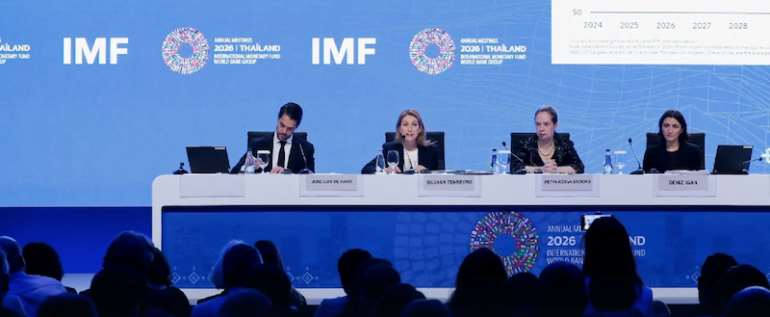
Signed during the 2026 Annual Meetings of the International Monetary Fund and the World Bank Group in Bangkok, the agreement will strengthen collaboration between the two institutions.
It aims to build resilience and promote entrepreneurship and job creation in rural areas, at a time when the largest generation of young people in history is reaching working age amid slowing growth and increasing economic uncertainty.
“Together, the World Bank and IFAD bring the scale, reach and expertise to transform rural economies and agrifood systems,” said Alvaro Lario, President of IFAD. “This agreement will enable us to turn our shared ambition into greater investment, more jobs, stronger resilience and improved food security for millions of people.
The agreement builds on the two institutions’ partnership across multiple initiatives, including AgriConnect, which aims to help transform agriculture for 300 million smallholder farmers by 2030, and Water Forward, which seeks to improve water security for 1 billion people by 2030.
“The next generation needs opportunity, and agriculture can be a powerful source of jobs, growth, and food security. That is what AgriConnect is designed to deliver,” said Ajay Banga, President of the World Bank Group.
“By bringing together the World Bank Group’s financing and global reach with IFAD’s deep expertise in rural communities and food systems, we can help smallholder farmers become more productive, connect them to markets, attract private investment, and create jobs where millions of young people live.”
The World Bank Group remains IFAD’s largest multilateral development bank partner, with collaboration spanning co-financing, policy engagement and global initiatives. IFAD’s co-financing with the World Bank’s International Development Association (IDA) more than doubled from approximately US$646 million in 2021 to US$1.56 billion in 2025.
The new agreement will help identify and systematically develop—throughout the investment cycle—new joint operations that will build on current collaborations, such as a national US$70.5 million investment in Lesotho. This programme has already created nearly 1,500 jobs and provided nutrition education to 217,000 people. More than 106,000 people have adopted climate-smart agricultural practices, while agro-weather services have reached over 900,000 people.
This agreement will also advance the priorities of IFAD’s 14th replenishment cycle (2028 – 2030) by accelerating investments that build resilience, expand economic opportunities, and transform rural livelihoods.
The new framework modernises the arrangements for co-financing country-level investments among the two development finance institutions. It also facilitates the use of common arrangements for technical support, procurement, financial management, disbursement, and environmental and social oversight.
The agreement builds on the historic cooperation between IFAD and the World Bank, dating back to 1978. The renewed framework preserves each institution’s independent policies, financing decisions and accountability requirements. The agreement will initially remain in force for five years and will automatically renew for a further five-year period.
