

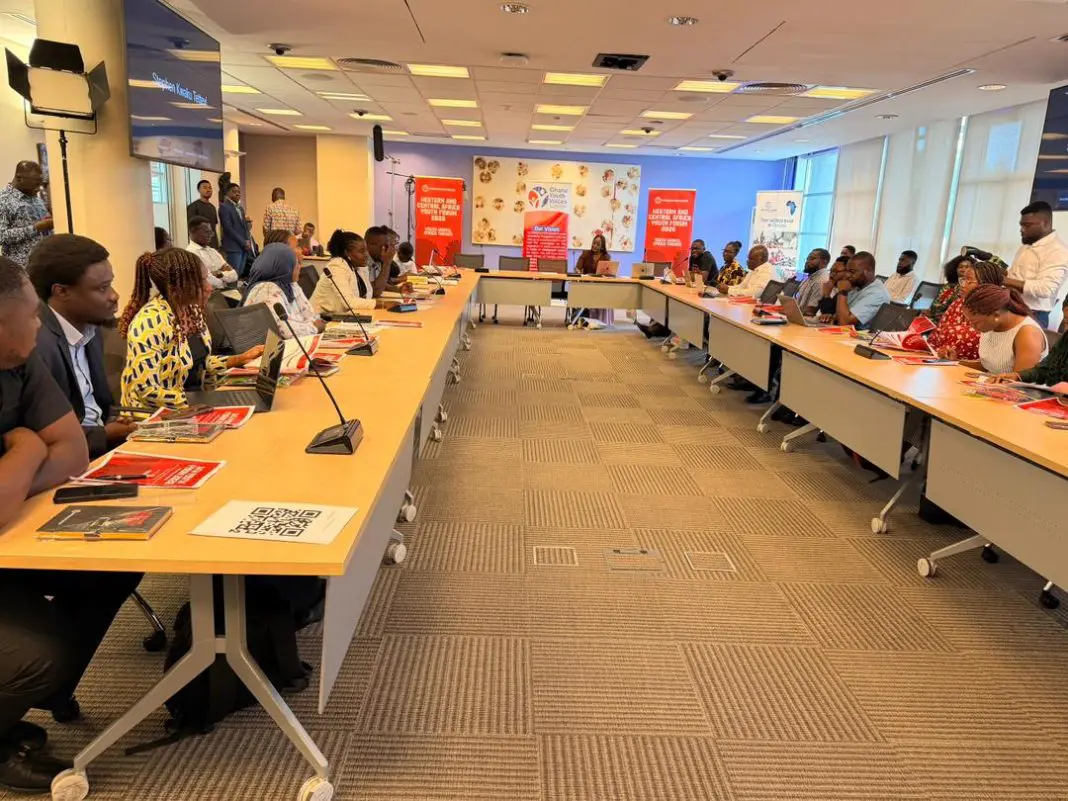
Accra, Ghana//-The World Bank Group today held the Western and Central Africa (AFW) Youth Forum 2026 in Accra, as part of its sustained efforts to tackle youth unemployment and the region’s economic potential.
The day’s forum, which brought together young entrepreneurs, youth activists, policymakers, development partners, and private sector leaders, was held simultaneously in Accra (Ghana), Abidjan (Ivory Coast), Conakry (Guinea), Dakar (Senegal), Niamey (Niger), and Yaounde (Cameroon), all in the World Bank Group’s AFW region.
A similar event was also held at the World Bank Group’s headquarters in Washington DC in the United States (US).
The forum theme, ‘ Youth Works, Africa Thrives,’ enabled the youth to explore practical solutions for job creation and inclusive economic growth across the AFW region and the African continent at large.
In a conversation with some of the youth at the event, they said the platform allowed them to dialogue on how governments, businesses and development institutions could collaborate to equip young Africans with the skills, financing and opportunities which are critical for driving sustainable development, entrepreneurship, and innovation, among others.
They and the World Bank officials and business leaders were focused on job creation, digital innovation, entrepreneurship, agribusiness, access to finance, business standards and skills development.
Intentionally designed as a listening platform
The Operations Manager at the World Bank Ghana Office, Michelle Keane in her welcome address said the event was “intentionally designed as a listening platform where young people could openly share their experiences, challenges and ideas for shaping policies that directly affect their future”.
“We’re here to listen to your realities, your challenges and your solutions. What is holding you back? What support matters most? What would enable you to build, scale and thrive?” she added.
Madam Keane noted that young people are already creating businesses, driving innovation and contributing significantly to their economies.
She, however questioned whether institutions, policies and financing systems are evolving quickly enough to match their ambitions in Ghana and other countries in the AFW region.
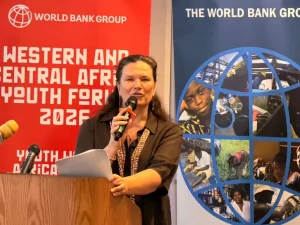
Madam Keane underscored that Ghana’s future economic growth would largely depend on how successfully young people transition from education into employment, entrepreneurship and productive livelihoods.
Ongoing interventions
While highlighting the Bank’s ongoing interventions, Madam Keane reiterated the World Bank’s commitment to supporting youth employment through investments in education, digital connectivity, skills development and private sector expansion.
For instance, she specifically mentioned the $300 million initiative aimed at ending Ghana’s double-track senior high school system while strengthening education quality and preparing students with skills needed for higher education and the labour market.
The manager added that the International Finance Corporation’s support for small and medium-sized enterprises could enable businesses to access to finance for expansion and stimulate job creation.
Obstacles and solutions
She lamented that youth employment is one of the most urgent development challenges facing Western and Central Africa.
Many young entrepreneurs continue to face significant obstacles, although Ghana has a vibrant entrepreneurial culture, an expanding digital ecosystem and a growing SME sector.
These, Madam Keane mentioned, include limited access to finance, inadequate mentorship opportunities, skills gaps and restricted access to markets, all of which hinder business growth and job creation in the West African country.
For her, addressing these challenges is critical to building an inclusive economy capable of creating sustainable opportunities for young people.
“This is why entrepreneurship, SMEs and youth-led innovation were selected as Ghana’s thematic focus for this forum”.
Widening jobs gap
Senior Agriculture Economist for Ghana and West Africa at the World Bank, Dr Ashwini Sebastian, was not enthused by the widening gap between labour market demand and job creation.
She went further to describe it as one of the country’s most pressing economic challenges, disclosing that while Ghana has created approximately 435,000 jobs over the past decade, nearly 3.7 million young people entered the labour force during the same period.
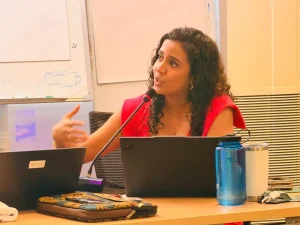
Dr Sebastian therefore underscored the urgent need for bold interventions to generate sustainable employment opportunities for the teeming unemployed youth in the country.
The disparity points to a structural challenge that cannot be addressed through conventional approaches alone, but requires comprehensive policy reforms, increased private sector investment and stronger support for youth entrepreneurship, according to her.
Dr Sebastian also believes that agriculture is one of Ghana’s most underutilised engines of job creation and economic transformation, noting that less than five per cent of the country’s agricultural exports are processed, limiting value addition, industrial growth and employment opportunities across the agricultural value chain.
She called for the expansion of the country’s agro-processing and investing in value-added production to unlock thousands of jobs for young people while boosting exports, strengthening local industries and accelerating inclusive economic growth.
Panel discussion
During a panel discussion, Jobberman CEO, Hilda Nimo Tieku, noted that employers are increasingly looking beyond academic qualifications and technical expertise, placing equal value on attitude, character and adaptability when recruiting young professionals.
Qualities such as passion, discipline, resilience and a willingness to learn often set candidates apart in an increasingly competitive labour market, making them more attractive to employers, she told the young people.

“What came up was passion. Employers want to see that you are passionate about what you do and that you will not give up easily,” she said.
Ms Tieku also underscored the importance of financial discipline and intentional career development, encouraging young people to build practical work experience, strengthen their professional networks and develop transferable skills before venturing into full-time entrepreneurship.
She added that combining technical competence with the right mindset and workplace attitude is essential for long-term career success and sustainable business growth.
Technical Specialist for Digital Finance and Ecosystem at the United Nations Capital Development Fund (UNCDF), Maame Yaa Owusu-Amoah, explained that although various funding opportunities exist, many youth-led enterprises struggle to secure investment because they lack formal business structures, reliable financial records and data-driven growth strategies that inspire investor confidence.
She observed that a significant number of startups fall into a financing gap, where they have outgrown the support offered by microfinance institutions but are not yet sufficiently developed to attract venture capital or commercial investment.
Ms Owusu-Amoah pointed out that securing funding requires more than a good business idea, noting that investors are increasingly looking for enterprises with clear business models, sound governance systems, measurable performance indicators and credible growth plans.
She therefore urged young entrepreneurs to invest in strengthening their operational and financial foundations, arguing that business readiness is a critical factor in unlocking sustainable financing and long-term success.
Founder and CEO of Digiits, Elli Banini, said the importance of trust, credibility and internationally recognised standards in building businesses could help them compete and thrive in the global marketplace.
Many locally developed software products struggle to scale beyond domestic markets because they are often not developed using structured engineering processes, robust quality assurance frameworks or internationally accepted best practices, he said.
Achieving global competitiveness requires more than innovation alone; it demands consistency, reliability and adherence to industry standards that inspire confidence among clients and investors.
Mr Banini noted that certification, quality assurance and standardised development processes are essential for securing repeat business, attracting international partnerships and positioning African technology companies for sustainable growth in an increasingly competitive digital economy.
Managing Director of WAMI Agro, Caleb Edwards, used the occasion to encourage young entrepreneurs to remain focused despite having multiple interests and opportunities.
He said many talented young people struggle with execution because they attempt to pursue too many ideas simultaneously.
“The most difficult thing for multi-skilled people is clarity. You just need to pick one thing and drive it”.
He argued that maintaining clarity enables entrepreneurs to build resilience, stay committed to long-term goals and overcome the daily challenges associated with growing a business.
Participants
The participants, who were mainly lamenting that youth unemployment as one of the region’s most pressing development challenges and urged greater collaboration to create scalable employment opportunities, reaffirmed that investing in Africa’s youth is key to driving inclusive growth, stronger enterprises and long-term economic transformation.
The forum called for coordinated action among governments, development partners, the private sector and young people to confront youth unemployment and unlock Africa’s economic potential.
