

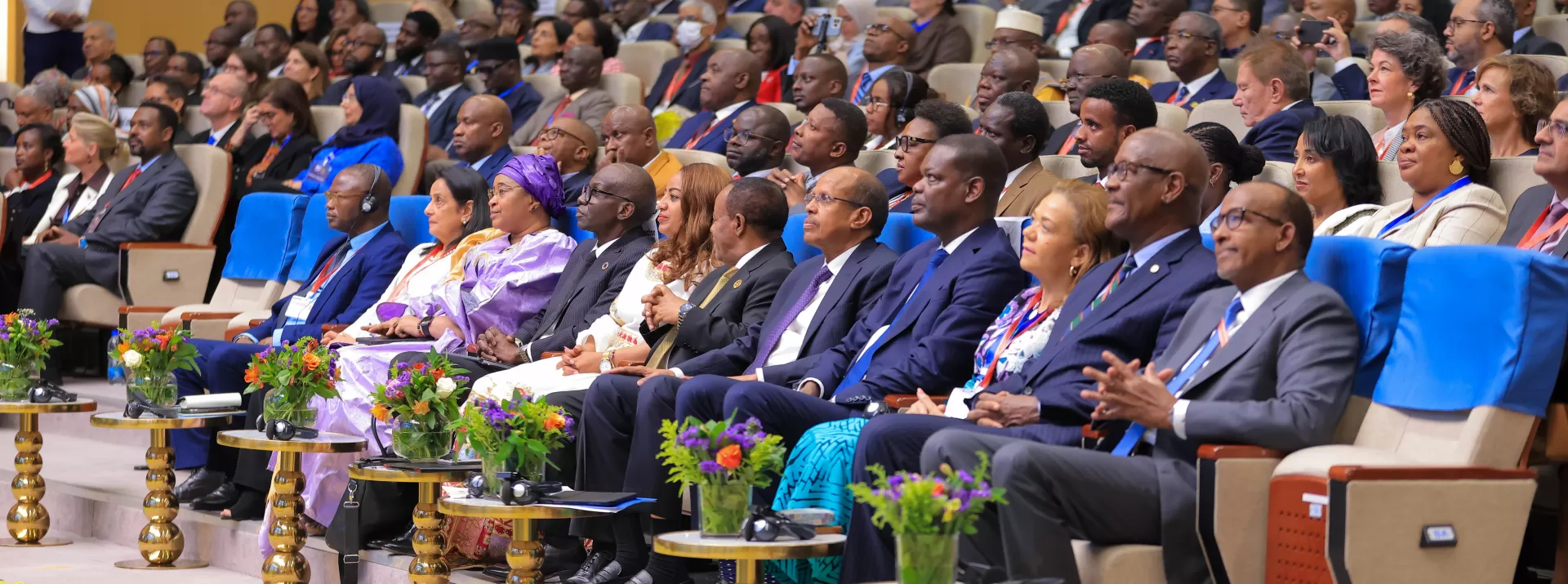
Addis Ababa, Ethiopia// — Ministers of Health from the 47 Member States of the World Health Organisation (WHO) African Region today opened the Seventy-sixth session of the WHO Regional Committee for Africa in Addis Ababa, launching three days of deliberations on policies and priorities that will guide the region’s health agenda in the coming year and beyond.
The Regional Committee, WHO’s highest decision-making body in the African region, brings together ministers of health, senior government officials, development partners and technical experts to review progress, address emerging health challenges and endorse regional strategies aimed at strengthening health systems and improving people’s health across the continent.
Opening the session, H.E Taye Atske Selassie, President of the Federal Democratic Republic of Ethiopia, called for stronger regional cooperation and sustained investment in resilient health systems to improve people’s health and support Africa’s development.
“Africa’s next health chapter must be defined by ownership over dependency, integration over fragmentation and practical action over words. Let us act not only with declarations, but with firm commitment and measurable actions,” said President Taye.
Dr Mekdes Daba, Ethiopian Minister of Health, called for efforts to build sustainable health systems for Africa’s future, noting that the region faces new challenges including persistent inequalities, resource constraints, emerging technologies, climate issues, demographic transitions and complex health emergencies.
“If we act in solidarity, invest with purpose, and innovate with equity at the centre, we can build an Africa that is healthier, more resilient, more self-reliant and better prepared to shape its future,” Dr Daba said.
WHO Regional Director for Africa, Dr Mohamed Janabi, noted that the Regional Committee reflects Member States’ shared commitment to building stronger, more resilient and self-reliant health systems through collective action and African-led solutions.
“We should gather in Addis Ababa, the diplomatic capital of Africa and home of the African Union, where generations of African leaders have come together to strengthen solidarity and shape our continent’s future,” said Dr Janabi. “The decisions we take this week will shape policies, guide investments and influence future generations. Let us therefore be bold in vision, practical in action and accountable for results.”
Key agenda items include a strategy to strengthen sustainable health financing; the Africa Health Workforce Agenda 2026–2035 to help countries educate, employ and retain more health workers; and a regional strategy to give every child the best start in life through greater investment in early childhood development.
Ministers will also consider proposals to strengthen regulation of medical products, and reinforce health security and emergency preparedness, in a region that experiences more public health emergencies than any other globally.
As the Democratic Republic of the Congo responds to its largest Ebola outbreak, ministers will review a regional framework to strengthen national emergency medical teams so that countries can respond more rapidly and effectively to outbreaks, disasters and other public health emergencies.
They will also consider a framework to safeguard Africa’s hard-won gains against polio by preserving the surveillance systems, laboratories, skilled workforce and emergency response capacities built through decades of eradication efforts.
The Committee will consider how better data can improve people’s health through a new Regional Health Data Hub, designed to help countries detect health threats earlier, target resources more effectively and make better-informed decisions.
Ministers will also consider A New Era of Health for Africa: United Action for Vision 2035, a long-term strategic framework to guide African-led health transformation through stronger primary health care, resilient health systems, sustainable financing, digital transformation and greater country ownership.
The decisions and resolutions adopted during the Regional Committee will help shape national health policies, strengthen regional collaboration and guide WHO’s support to Member States in the year ahead, while advancing longer-term efforts to build stronger health systems and improve people’s health across the African region.
