

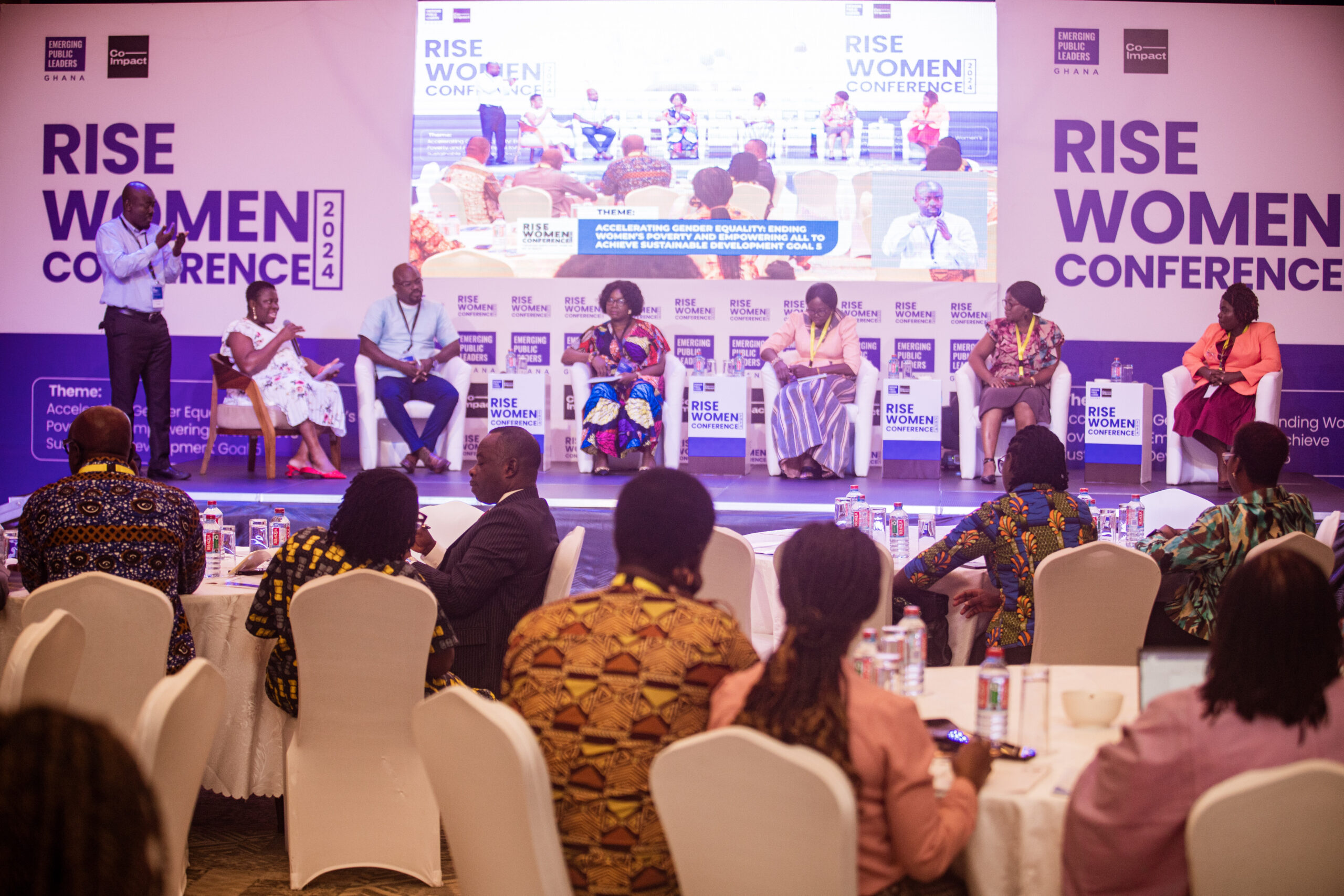

Accra, Ghana//-A communique issued at the end of the RISE Women Conference 2024 (RiWoCo2024), organised by the Emerging Public Leadership (EPL) Ghana and Co-Impact, has called for holistic strategies for addressing identified gender gaps and key issues confronting the country’s large female population.
It noted that some of the identified gender disparity gaps contributing negatively to the growth of women and girls are the entrenched negative cultural norms and perceptions about gender that have created difficulties in empowering and enhancing women’s participation in economic transformation.
The communique added that weak political will to develop, enact and implement gender-sensitive policies and regulations to support women’s social and economic empowerment is another barrier.
It stated that the non-availability of gender-disaggregated data for policymaking affects gender policy design, targeting and implementation. At the same time, there is a widening gender digital gap, evidenced by inadequate access to information and low digital literacy, especially in rural areas.
Low financial inclusion is evidenced by a lack of access to finance, specific financial products for women and women businesses, and low entrepreneurial support systems targeting women.
It is deepening poverty and widening rural and urban poverty among women, creating vulnerabilities, including gender-based violence, it said.
To help correct these imbalances, the communique recommended the redefinition and contextualisation of gender and the challenges women and girls face to help identify and address these peculiar challenges.
Another proposal proffered by the communique is creating an effective balance in identifying and addressing the specific challenges of the multiple categories of women, as urban women experience poverty differently from rural women.
Support programmes should be designed to support skilled urban women and women involved in the rural economy, it further suggested.
The communique also called for the provision of financial resources (loans or grants or combination) through existing institutions or a women’s bank for women to support their entrepreneurial ventures, especially those in the informal sector, to reduce poverty among women in line with Sustainable Development Goal (SDG), particularly goal 5.
“Stakeholders must work with the Ministry of Gender, Children, and Social Protection (MoGCSP) to develop the necessary legislative instruments to fully implement the Affirmative Action Bill”.
The communique was quick to recommend an elaborated structure for a proper gender equity architecture by identifying areas where policy reforms are needed, stimulating the adoption of these reforms, and ensuring their implementation following the enactment of the Affirmative Action Bill.
Furthermore, it called for public sector organisations to establish a functional gender policy backed by thorough institutional capacity assessments to identify areas for improvement and growth.
This policy should enhance female representation in management and leadership, create women role models in strategic positions, and support gender-sensitive leadership by including key gender targets in the public sector’s performance indicators.
Creating a supportive environment to increase female representation in decision-making positions at the local, regional, and district levels enhances strategies for protecting women from violence, discrimination, and exploitation and making available gender-disaggregated data to support policy formulation and implementation, the communique recommended.
Call to Action
The conference ended with a call to action for specific partners and actors to realise the objectives of women’s empowerment and economic transformation.
It called on the MoGCSP to work with relevant stakeholders after the president’s ascent to develop the necessary legislative instruments to support the full implementation of the Affirmative Action Bill.
The implementation of affirmative action in the public service will be supported by the Office of the Head of Civil Service, CSOs and NGOs, Academia, and the EPL.
MoGCSP should develop legislative and administrative frameworks and structures to enhance gender equity. This includes identifying policy reforms and implementing them following the enactment of the Affirmative Action Bill. The Office of the Head of Civil Service could support the Ministry’s development and roll-out of these frameworks.
Background
The conference was held from 13-14 August 2024 in Accra, titled ‘Empowering Women for Economic Transformation; A Path to Gender Equality and Inclusivity’ and themed: ‘Accelerating Gender Equality: Ending Women’s Poverty and Empowering All to Achieve Sustainable Development Goal 5’.
The two-day event sought to contribute to accelerating progress towards gender equality by specifically addressing the issue of women’s poverty while emphasising the importance of empowerment for all individuals.
The specific objectives of the conference were to identify key actions and investments required to end women’s poverty and advance gender equality, emphasise the significance of gender-responsive policies and programmes in bolstering institutional capacity to address systemic inequalities and foster collaboration among partners to mobilise resources and support effective strategies for promoting gender equality nationally and internationally.
Participants of the conference were from public sector organisations such as the Civil Service of Ghana and the MoGCSP; Civil Society Organisations and Non-Governmental Organizations; academia and research organisations and development partners; had insightful speeches, panel discussions and evidence-based research presentations that elaborated factors contributing to women’s poverty in Ghana including institutional weaknesses and traditional norms that perpetuate gender inequality, affecting women and youth; limited financial resources hinder gender equality initiatives globally.
