


Egypt welcomed nearly 19 million tourists in 2025, according to Egypt’s Ministry of Tourism and Antiquities. The country now aims to attract 30 million tourists annually by 2030, creating a clear need for additional airline capacity.
The challenge is not simply finding more aircraft. Airlines must decide how much capacity they will need permanently, how much is required only during seasonal peaks and how quickly they can respond when demand shifts or planned aircraft arrive late.
Permanent fleet decisions are made years in advance, while passenger demand can change within a season. Wet leasing offers a way to close that gap: airlines bring in additional aircraft, complete with crew, maintenance and insurance – hence the industry term ACMI – for a defined period.
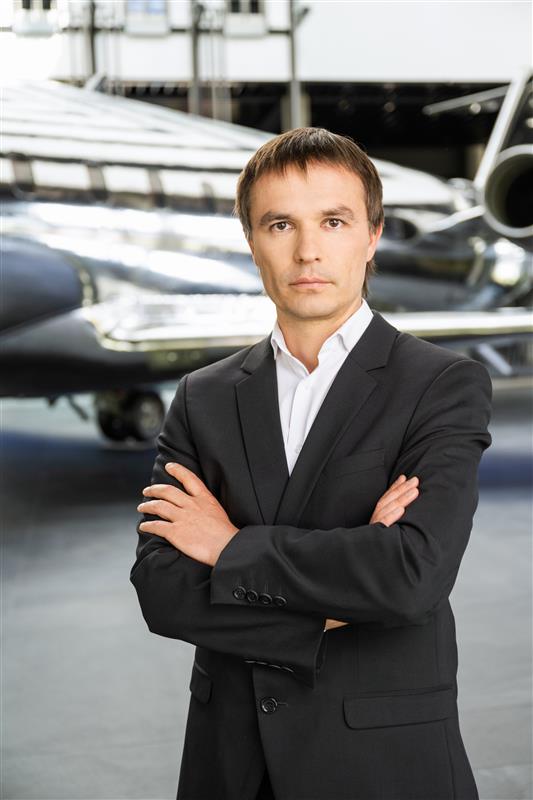
According to Justinas Bulka, CEO at KlasJet, an ACMI and charter operator within Avia Solutions Group, this flexibility should shape how Egyptian airlines approach fleet expansion.
“Egypt’s airlines have strong reasons to grow, but not every increase in demand requires a permanent aircraft. Fleet ownership and long-term leases provide the foundation for sustained growth, while ACMI gives airlines the flexibility to respond to seasonal peaks, launch new routes or cover short-term capacity gaps. The two should form part of the same fleet strategy,” explains Justinas Bulka.
Matching fleet growth with seasonal demand
Egypt is already investing in the infrastructure required to handle more passengers. A planned fourth terminal at Cairo International Airport will increase its annual capacity to 70 million passengers, while Sphinx International Airport has recently completed an upgrade.
Announced fleet expansion plans include EgyptAir’s target to grow to 125 aircraft by adding 34 aircraft and doubling passenger numbers. Air Cairo, a subsidiary of EgyptAir, plans to expand from 42 to 82 aircraft over the next four years.
Those plans address long-term growth, but passenger demand is not evenly distributed throughout the year or across the network. More than 10.2 million European tourists accounted for 65% of Egypt’s international arrivals in 2024, according to the OECD, and charter flights to Egyptian tourism destinations increased by 32% in 2025. Different source markets, destinations and routes create their own peaks, even though Egypt attracts visitors throughout the year.
Covering every peak with permanent aircraft can leave part of a fleet underused when demand falls. Building a fleet around average annual demand creates the opposite risk: too little capacity when airlines have the greatest opportunity to generate revenue. ACMI allows carriers to add aircraft to selected routes for a defined period and release that capacity when it is no longer required.
KlasJet demonstrated this model through its cooperation with Air Cairo in 2025. The aircraft was ferried to Cairo within three days of the agreement being signed, demonstrating how quickly additional capacity can be deployed across different regulatory environments.
Keeping growth plans on track
Seasonality is only one reason airlines may need temporary capacity. Aircraft delivery delays, scheduled maintenance and unexpected technical issues can all leave a carrier without the aircraft required to operate its planned schedule.
EgyptAir has begun receiving the 16 Airbus A350-900s and 18 Boeing 737 MAX aircraft included in its fleet program. Yet production and supply-chain constraints continue to affect both major manufacturers, which together have an estimated 12-year backlog of orders. Even a carefully planned fleet expansion can therefore be exposed to delivery delays outside the airline’s control.
“When a delivery moves, the commercial plan does not move with it. The airline may already have schedules, crews, airport slots and passenger commitments in place. ACMI can bridge that gap until the permanent aircraft arrives, allowing the airline to continue operating and protecting the wider growth plan,” explains Justinas Bulka.
For Egyptian airlines, permanent fleet expansion will remain essential if the country is to reach its tourism targets. The question is how to pursue that growth without treating every capacity requirement as permanent.
Used strategically, the ACMI model can also strengthen an airline’s financial performance. By adding capacity during periods when it can generate the most revenue – and releasing it when demand falls – ACMI can increase overall airline profitability by an estimated 2–3%.
“Airlines need a stable core fleet, but they also need the flexibility to respond as conditions change. ACMI provides that variable layer of capacity: aircraft can be introduced when demand rises, redeployed across routes as priorities shift and released once the requirement ends. That is what allows long-term fleet growth and short-term market demand to work together,” says Justinas Bulka.
KlasJet is an IOSA-registered operator working under EASA standards, with operational experience spanning 104 countries. As part of Avia Solutions Group, the company also has access to the Group’s wider aviation capabilities, including MRO, crew training and ground handling.
