

ACCRA: Recent political shifts in the UK spark tense debates about looming policy changes between London and Accra, including the UK–Ghana Trade Partnership Agreement, immigration and visa policies.
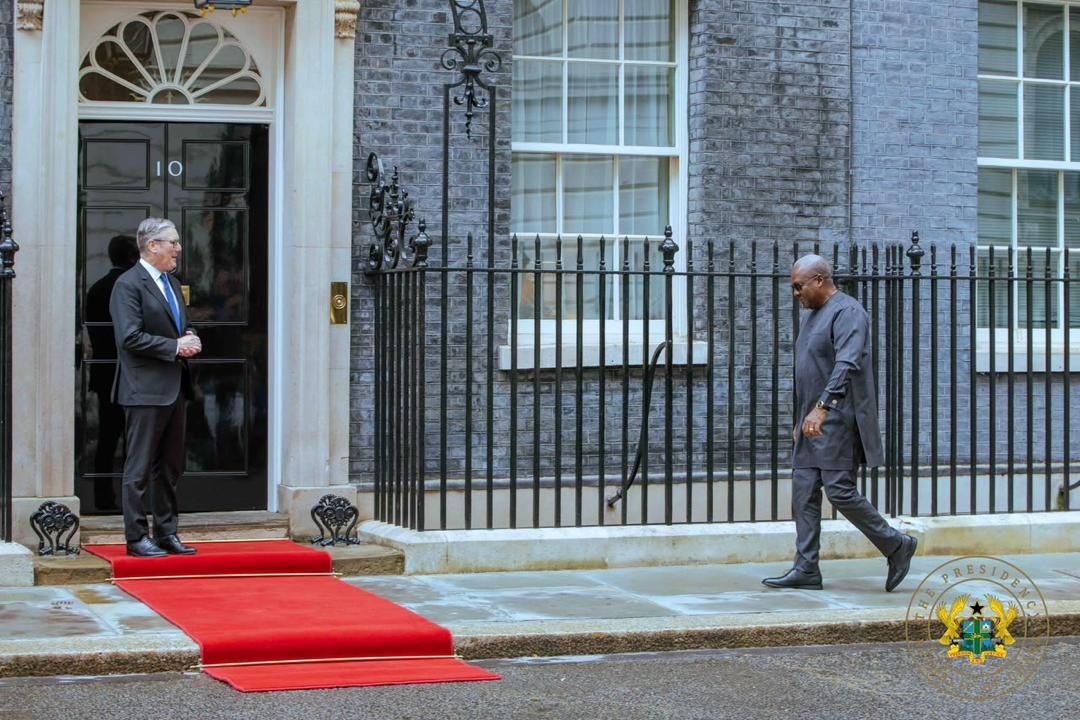
With Sir Keir Starmer leaving No. 10 Downing Street as UK Prime Minister, there are deep-rooted fears that all gains made at the UK-Ghana Investment Forum will be lost.
Former Greater Manchester mayor Andy Burnham, who had a meeting with Starmer on Tuesday, is tipped as the man who may become the next prime minister. Policy changes are inevitable with any new government.
Burnham is well known for advocating for a symbolic gesture and rhetorical approach to the transatlantic slave trade, for example. His Labour Party campaign has largely focused on local education and historical transparency, but doesn’t support financial compensation or reparations.
Those close to Burnham ought to remind him as he prepares to take over Great Britain, that the demand for reparatory justice is an inseparable component of the struggle for liberation of black people around the world and an integral part of African sovereignty.
British MPs said there are still many areas of policy that Burnham has not pronounced himself. And he’s faced some questions over it.
Reform’s Nigel Farage has criticised Burnham for not having a mandate – especially if he becomes prime minister uncontested. Farage said: “I have absolutely no idea where Andy Burnham stands on anything”.
This is the source of frustration for analysts in Ghana who believe that there is a lot of uncertainty and lack of clarity on what exactly Burnham stands for.
On the economic front, the debates in Ghana are more on whether there will be continuity or reversal of gains particularly about the recently signed landmark £215 million UK-Ghana Partnership, which is to help transform the economy and create thousands of opportunities for ordinary citizens.
The deal focuses on four priority areas: attracting private investment and finance; making it easier for Ghanaian businesses to trade; supporting infrastructure and industrial growth; and expanding skills and education partnerships. But now the chaotic change of government in the UK brings a level of doubt on whether the agreements will continue under whoever replaces Starmer.
Effective from 2026 to 2028, President John Dramani Mahama signed the bilateral agreements, which aim at delivering tangible benefits for people and businesses in Ghana, including more jobs, stronger infrastructure and better access to skills and education.
British High Commissioner to Ghana, Dr Christian Rogg, said the Growth Partnership is about real change people can see and feel: “It means more skilled jobs, stronger ports and transport links, better access to finance, and new opportunities for young people and women across
Ghana.
“By working with Ghanaian partners and backing private investment, we are supporting growth that is sustainable, inclusive and led by Ghana’s own priorities.”
The deal called for the creation of new jobs and a stronger maritime sector with a £101million ($137m) UK-supported project, to develop the first commercial-scale ship repair and dry-docking facility in the Gulf of Guinea. The Takoradi Floating Dock Project (ShipRite) is backed by a consortium of investors, including UK co-owned Private Infrastructure Development Group (PIDG) and delivered in partnership
with the Ghana Ports and Harbours Authority (GPHA). It is expected to create up to 430 direct jobs, with around 30% taken up by women, while positioning Ghana as a regional maritime hub and reducing emissions by overall travel distances. The project also pioneers the involvement of
local pension funds in infrastructure finance in the region.
On climate–aligned infrastructure: a £5 million UK-supported (ODA) Green Project Preparation Facility, hosted by Financial Sector Deepening Africa (FSD Africa) and in partnership with the Ghana Infrastructure Investment Fund, designed to help transform viable ideas from private and public sector developers into investable climate-focused infrastructure projects, with the potential to unlock
up to £180 million in deals over three years, supporting opportunities for UK firms, and supporting the Government of Ghana’s priority infrastructure agenda.
Mobilising global capital for Ghana’s green economy: Mere Plantations has announced plans to scale up plantation and reforestation activities in Ghana, including the use of new technologies such as biochar to enhance environmental impact and sustainability.
As a major milestone, the company will launch a £85 million reforestation investment fund listed in the UK, the first Article 9 “dark green” fund on the London Stock Exchange’s new Private Markets platform. Backed by the Ghana Forestry Commission, the fund will channel international capital into high–integrity reforestation and carbon projects in Ghana, supporting jobs, restoring degraded land and positioning Ghana as a leading destination for nature–based investment.
As part of a wider set of new Science and Technology collaborations, backed by £6 million UK funding, there is a new partnership to help implement the Ghana AI Strategy. During the Investment Summit, the Minister for Communications, Digital Transformation and Innovation will discuss how UK expertise can help Ghanaian institutions unlock the benefits of AI. Ten new Physics Partnerships have been funded in partnership with UK Research and Innovation, driving collaboration across universities.
Restoring forests and livelihoods: Rainforest Builder to inject £9 million in new investment in forest restoration in the Oti Region, supporting environmental protection and local jobs.
Skills and education opportunities: the publication of Transnational Education guidelines, opening new partnerships between UK and Ghanaian institutions and supporting access to higher–quality education and training.
Stronger healthcare skills: a £4 million, five–year partnership between a UK training provider and Ghana–based Mangel Klicks to deliver specialist clinical engineering training, strengthening healthcare systems in Ghana and supporting skills development across the wider region.
Economists have hoped Starmer will use his term in office to implement the agreement, but the chaotic changes in government mean that Mahama will have to revisit the UK to renegotiate the deal. Political analysts said it will be a difficult task for Ghana to renegotiate because Burnham would use his position to demand zero reparations against the UK in exchange for investment in Accra.
Burnham, who is now a more popular politician, is an outsider to Westminster despite his charismatic persona helping him overshadow his own contradictions.
True it is that “it feels like lots of Labour MPs are dashing for a train that’s about to leave the station, but they have no idea where it’s going,” according to an insider closer to the discussion in the Labour Party.
CAJ News
