

Accra, Ghana//-Ghana’s State Interests and Governance Authority (SIGA) today released its 2025 State Ownership Report (SOR), revealing that total State-Owned Enterprises (SOEs) revenue climbed by 28.12% to GHS176.43 billion in 2025, from GHS137.64 billion in 2024.
This significant revenue growth, according to the report, was propelled by SOEs in the country’s Agricultural, Manufacturing and Infrastructure sub-sectors. These sub-sectors contributed 203.71%, 114.74% and 92.24% respectively to the growth.
Continuing a four-year recovery
The SOR, which is the 10th edition of Ghana’s flagship account of the performance of its Specified Entities, and the fifth published by SIGA since the Authority’s establishment in 2019, also disclosed that the SOEs’ profit before interest and tax rose to GHS25.49 billion, continuing a four-year recovery from a loss of GHS502.00 million in 2023 and a partial rebound of GHS5.80 billion in 2024.
Most significantly, the SOEs sector broke a four-year cycle of consolidated net losses, closing 2025 with a Net Profit after Tax of GHS19.80 billion, against a Net Loss after Tax of GHS2.25 billion the year before.
Top performers
The top 10 performing SOEs in the report include: Ghana Ports and Harbours Authority, Bui Power Authority, Ghana National Gas Company, BOST Energies Company, Minerals Income Investment Fund and TDC Company Ltd. These 10 SOEs sustained profitability throughout the five years.
The SOEs recorded net foreign exchange earnings of GHS11.72 billion, reversing a GHS12.01 billion foreign exchange loss in 2024, while finance costs fell by 42.49%. This was achieved on the back of a stronger Cedi also reshaped the SOEs sector’s finances.
The report further revealed that balance sheets of some of the SOEs were contracted modestly, with total assets down 5.86% to GHS407.84 billion, led by the Electricity Company of Ghana (ECG), Volta River Authority and COCOBOD, bringing total liabilities down 4.31% to GHS281.99 billion, of which ECG alone accounted for GHS82.31 billion.
Bottom performers
The report also cautioned, however, that risks remain concentrated, especially because five SOEs consisting of ECG, Ghana Cylinder Manufacturing Company Ltd, GNPA Ltd, Graphic Communications Group Company and Ghana Digital Centre recorded losses in every year from 2021 to 2025, while six entities, including AirtelTigo Ghana Ltd, Gihoc Distilleries and Tema Oil Refinery, have carried negative equity throughout the same period.
Furthermore, dividend payments to government declined, with only two SOEs – Ghana Reinsurance Company Ltd and TDC Company Ltd – paying a combined GHS16.00 million, down 29.36% from 2024.
Joint Ventures Extend Their Gains
Ghana’s Joint Venture Companies (JVCs) built on the momentum of the previous year. Net profit, excluding minority interest, rose 36.55% to GHS3.14 billion, from GHS2.29 billion in 2024, while total JVC assets grew 25.99% to GHS96.69 billion.
Minority-interest JVCs performed even more strongly, with net profit climbing to GHS61.32 billion in FY2025 from GHS21.06 billion in FY2024.
These minority-interest companies were also the dominant source of dividends to government, contributing GHS1.19 billion, which represents 97.12% of all dividends received across the portfolio.
Other State Entities Face Mounting Pressure
The picture was less encouraging among Other State Entities, whose net deficit widened sharply to GHS10.48 billion in 2025, from GHS2.18 billion in 2024.
While total assets grew 60.15% to GHS310.62 billion, liabilities rose faster still, up 41.83% to GHS323.17 billion, and the sub-sector’s accumulated fund swung to a negative GHS41.14 billion from a positive GHS15.47 billion. This is a shift driven substantially by the Bank of Ghana’s negative equity position of GHS93 billion.
Supportive Macroeconomic Environment
The Specified Entities’ performance unfolded against a markedly improved macroeconomic backdrop. Real GDP growth reached 6.0% in 2025, which is the fastest pace of expansion since 2019 and an improvement on the 5.8% recorded in 2024.
Monetary conditions eased considerably over the year: the Monetary Policy Rate fell from 27% to 18%, the Ghana Reference Rate from 29.31% to 15.9%, and the average lending rate from 30.25% to 20.4% by December 2025.
Public debt rose in nominal terms to GHS640.99 billion but improved as a share of GDP, to 45.28%, on the back of currency appreciation, lower borrowing costs, a high primary surplus and effective debt management.
The report nonetheless flags continuing fiscal exposure from outstanding loan guarantees of GHS3.03 billion, on-lent loans of GHS14.73 billion, and US$3.7 million in contingent liabilities that crystallised from public-private partnership agreements during the year.
Reform Across Multiple Fronts
FY2025 was also a year of significant institutional change, beginning with the political transition from the New Patriotic Party to the National Democratic Congress and the new administration’s early steps to align Specified Entities with its development agenda.
On public financial management, the Ministry of Finance issued new PFM Implementation Guidelines in May 2025, requiring Specified Entities to submit quarterly internal audit and commitment control reports and subjecting centrally approved procurement to commitment authorisation by the Minister for Finance.
The measures coincided with a sharp fall in public-sector procurement infractions, from GHS18.4 billion in 2024 to GHS2.2 billion in 2025, though the report notes that commitment-authorisation requirements also introduced delays to capital projects and procurement activity.
SIGA itself deepened its oversight role during the year, assessing 70 Specified Entities that had executed FY2024 performance contracts through its Annual Governance and Institutional Performance Assessment Reports, intensifying engagement with entities showing persistent statutory reporting non-compliance, and welcoming a growing number of entities into the performance-contract framework ahead of FY2026 negotiations.
Government’s 24-Hour Economy Policy took shape across several Specified Entities, from a round-the-clock customer call centre at TDC and three-shift operations at Ghana Publishing, to AESL’s work on 24-hour markets across 33 MMDAs, extended production at GIHOC Distilleries, expanded services at DVLA, and continuous online services and environmental monitoring at the EPA.
SIGA intends to fold these initiatives into future performance contracts and monitoring frameworks. In transport, the GHS62.86 billion Big Push Programme advanced a corridor-based approach to modernising trunk roads, bridges, interchanges and highways under the Ghana Highway Authority, with most projects still in early implementation by year-end.
The financial sector saw the recapitalisation of state-owned banks NIB and ADB, alongside continued government support for CBG, aimed at strengthening capital positions and restoring depositor and investor confidence.
In the extractive sector, the government established the Ghana Gold Board (GoldBod) to centralise oversight of the gold sector, strengthen traceability and formalisation, curb illegal mining and smuggling, and capture greater value and foreign-exchange inflows from the gold value chain.
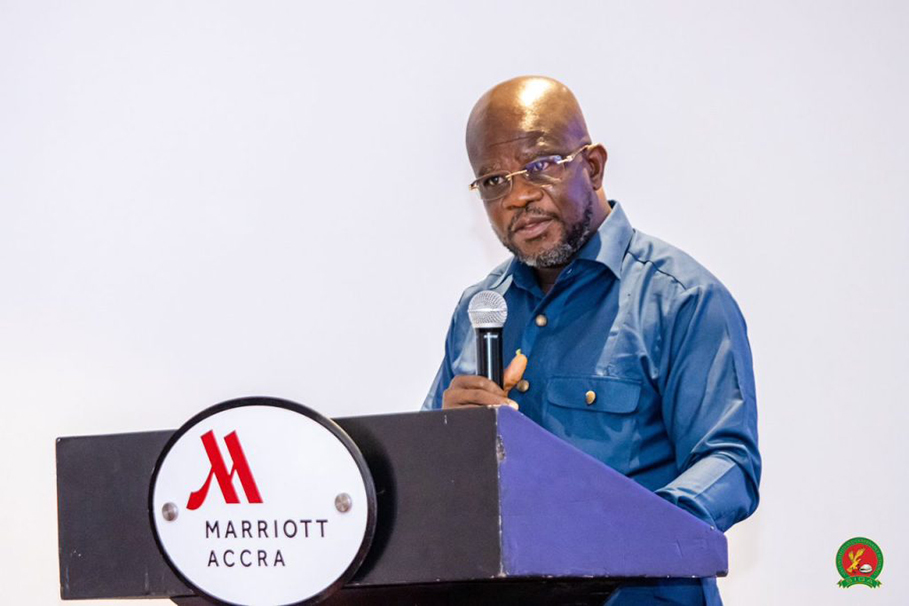
“This edition is significant because it documents the performance of Specified Entities for the first year of President Mahama’s second administration,” Prof. Michael Kpessa-Whyte, Director-General of SIGA, said.
“It gives a full picture of how these Specified Entities are contributing to the broader economic reset agenda, and it will help drive meaningful dialogue around the future of our State-Owned Enterprises, Joint Venture Companies and Other State Entities, ensuring they fulfil their potential as catalysts for economic growth and development.”
The complete 2025 State Ownership Report is available on SIGA’s official website. Covering 162 of the 175 approved Specified Entities comprising 53 State-Owned Enterprises (SOEs), 36 Joint Venture Companies (JVCs) and 73 Other State Entities (OSEs), the report offered a comprehensive and nuanced analysis of the financial and operational performance of the state-owned sector, and serves as a vital resource for policymakers, stakeholders and the public in shaping the future of Ghana’s SOEs, JVCs and OSEs.
SIGA therefore invites the Ghanaian public, the media, investors and all stakeholders to read the report and take an active interest in how their collective investments held in trust through the country’s Specified Entities are being managed and are performing on their behalf.
