
Doha, Qatar//- A proposed global initiative to share investment risks, new tools to attract financing for artificial intelligence (AI) infrastructure and principles to modernise investment treaties aim to help developing countries secure more capital for development.
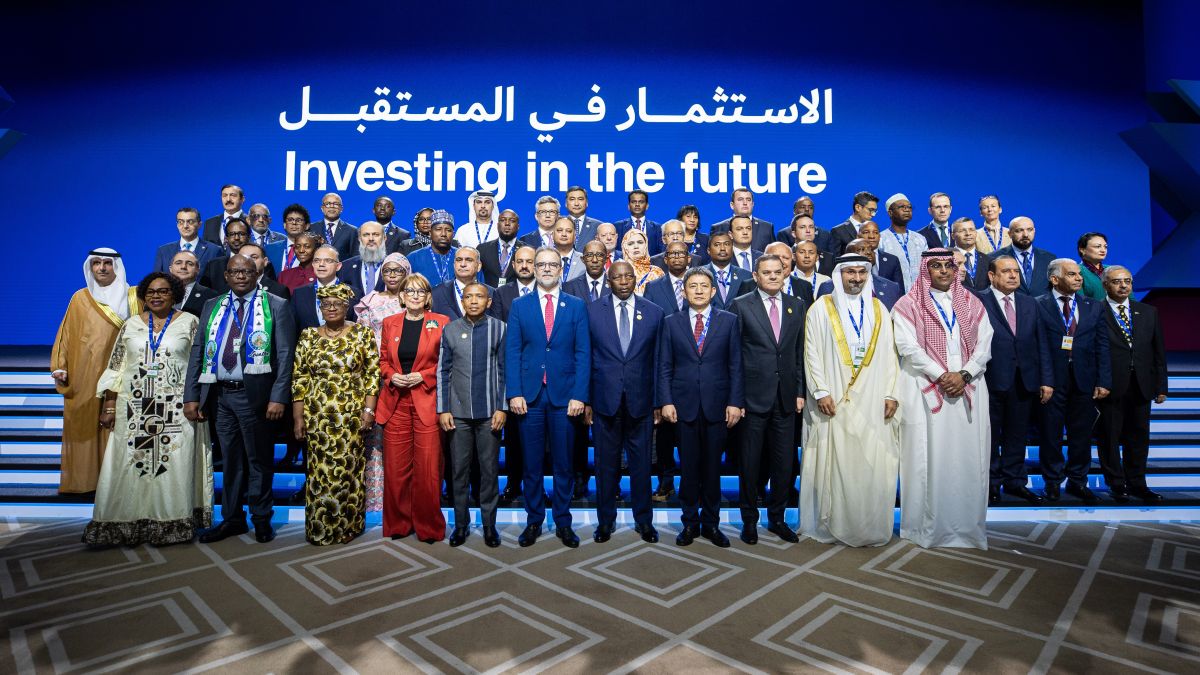
The measures are among the main outcomes of the World Investment Forum 2026, organised by UN Trade and Development (UNCTAD) and hosted by the State of Qatar.
The outcomes also include a declaration of intention with the Berne Union to strengthen cooperation on investment insurance, new partnerships targeting vulnerable economies and the first funded project of an expanded ocean-economy fund in São Tomé and Príncipe.
The measures respond to widening investment gaps. According to UNCTAD’s World Investment Report 2026, more than 80% of global foreign direct investment went to just 20 economies in 2025. And while investment flows rose in the first half of 2026, announcements of new projects in sectors critical to development, including infrastructure, energy, health and food systems, fell by more than 25% in developing countries, according to the latest Global Investment Trends Monitor, based on annualized 2026 figures.
Reducing risks that hold back investment
High borrowing costs, limited project preparation capacity and political, regulatory and currency risks continue to discourage investment in many developing countries.
The proposed Global Initiative for Investment Risk Sharing seeks to expand access to instruments that reduce risks and attract public and private capital to underserved markets.
It calls for cooperation among governments, development finance institutions, export credit agencies, insurers and investors to improve financing conditions and make more projects attractive to investors.
A separate declaration of intention between UNCTAD and the Berne Union, the international association of export credit and investment insurers, aims to strengthen cooperation on trade and investment insurance and risk mitigation.
Discussions also addressed investment in renewable energy, infrastructure and critical minerals, including opportunities for mineral-producing countries to develop processing and manufacturing industries.
Helping developing countries benefit from the AI boom
Developing economies risk falling further behind as investment in AI infrastructure becomes increasingly concentrated in richer countries. UNCTAD’s latest figures show that announced investment in data centres in developing economies fell by $32 billion.
The Digital Infrastructure Investment Catalyser, jointly convened by UNCTAD, the International Telecommunication Union and the World Bank, expanded its partnerships and launched an investment checklist and capacity-building resources to help countries prepare projects and attract financing.
A forthcoming Digital and AI Infrastructure Investment Playbook will help low- and lower-middle-income countries assess infrastructure needs, prepare investment plans and develop financeable projects.
A new steering committee will develop principles for responsible AI investment, covering transparency, sustainability and development priorities.
A partnership with the United Nations Office for Outer Space Affairs will help developing countries identify investment opportunities in the space economy.
Opening investment opportunities in vulnerable economies
Small island developing States and other vulnerable economies face particular difficulties attracting capital, despite opportunities in tourism, ocean industries and digital services.
An expanded UNCTAD Ocean Economy and SIDS Fund will support investment in ocean-related industries. Its first funded project, in São Tomé and Príncipe, will focus on marine and coastal tourism and related environmental and digital services.
New cooperation will also support emerging ocean industries, including seaweed production and value addition.
An agreement with UN Tourism will strengthen cooperation on tourism investment and help countries prepare projects for investors.
The Global Founders Fellowship will connect entrepreneurs from developing countries with investors, mentors and international markets.
Making investment rules work better for development
Greater predictability for investors must go hand in hand with governments’ ability to pursue their development priorities.
New Guiding Principles for International Investment Agreements Reform, launched by UNCTAD, will help governments modernise investment treaties while preserving the policy space needed for development.
A new technical assistance programme will help developing countries translate international investment facilitation commitments into practical reforms, including greater transparency and simpler procedures.
Nine agreements and partnerships announced in Doha include cooperation with the League of Arab States on economic diversification and regional integration, the Caribbean Association of Investment Promotion Agencies on investment promotion, and Qatar’s Ministry of Commerce and Industry on investment policy and facilitation.
UNCTAD and UNESCO also launched CreativeInvest to connect investors with opportunities in arts, culture and heritage.
Other initiatives include a Green Zone Working Group on investment and the green transition, and a “Beyond GDP” task force examining how investment decisions can better account for long-term value creation, people’s well-being and development.
Better evidence to guide investment decisions
Three new regional investment reports examine changing investment patterns and policy challenges.
The Caribbean Investment Report 2026, Eurasian Economic Union Investment Report 2026 and Gulf Cooperation Council Investment Report highlight investment concentration, uneven recoveries and regional uncertainty.
A permanent Chief Economists and Investors Dialogue will inform investment policy and decisions. New guidance on sustainability reporting and sustainable stock exchanges will help strengthen transparency and responsible investment practices.
Turning outcomes into investment
The initiatives form part of the Doha Global Investment Action Framework, comprising more than 20 outcomes across six priority areas and setting priorities for continued cooperation among governments, investors, businesses and international institutions.
Organised by UNCTAD and hosted by the State of Qatar, the ninth World Investment Forum brought together more than 7,000 participants over three days, including four prime ministers, more than 60 ministers, investors, business leaders, sovereign wealth funds, development finance institutions and more than 200 international journalists.
UNCTAD will work with participating governments and partners through technical assistance, investment policy reforms and project development to translate the proposals, tools and partnerships into more investment in the countries and sectors that need it most.
