

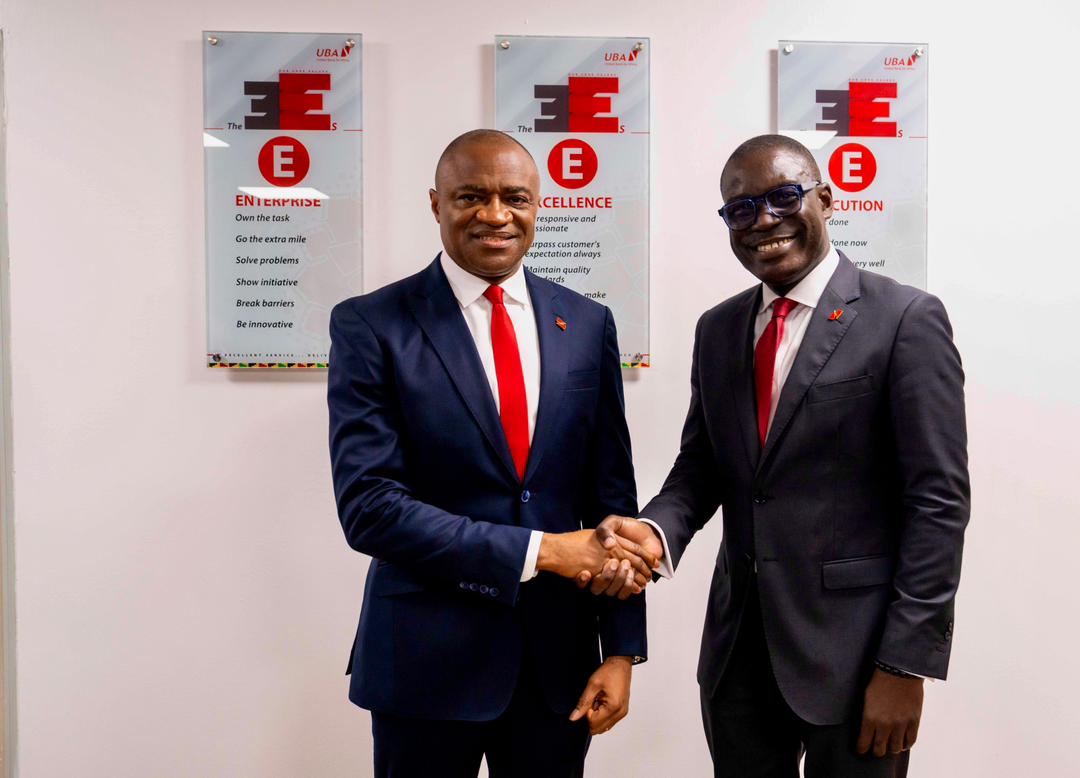

Accra, Ghana//-United Bank for Africa (UBA) has announced plans to leverage its over $20 billion balance sheet to support businesses in Ghana and help sustain the country’s improving macroeconomic recovery.
The Group Managing Director (GMD) of United Bank for Africa, Oliver Alawuba, who made the remarks at a customer forum in Accra on May 20, stated that the bank was ready to deepen partnerships with companies by providing financial support, technical expertise and market access opportunities across Africa.
He explained that Ghana’s improving inflation outlook, exchange rate stability and renewed investor confidence had created favourable conditions for business growth and investment expansion.
Mr Alawuba stressed that the bank’s presence in 24 African countries positioned it to support Ghanaian businesses seeking to expand beyond local markets and tap into continental trade opportunities.
“UBA Ghana is leveraging the expertise, experience and financial strength of the UBA Group to support customers in Ghana and help businesses access markets beyond the country,” he stated.
Customer forum
Mr Alawuba engaged with top customers of the bank during the GMD’s Customer Forum 2026 held as part of his official visit to Ghana.
The forum provided an opportunity for the bank’s leadership to interact with customers, receive feedback and discuss strategies for strengthening business partnerships and financial support services.
Key participants at the event included the Chief Executive Officer of Ghana Export-Import Bank, Sylvester Adinam Mensah, and the Group Chairman and CEO of B5 Plus Group, Mukesh V. Thakwani, among other dignitaries.
Stronger partnerships
Mr Alawuba stated that stronger partnerships between banks, businesses and governments were necessary to sustain Ghana’s economic gains amid growing global uncertainties and geopolitical tensions.
He explained that the ongoing Middle East conflict and rising petroleum prices could increase inflationary pressures across African economies, making collaboration and financial support more critical for businesses.
He stated that UBA was engaging customers directly to understand their challenges and develop tailored financial and non-financial solutions to improve resilience and competitiveness.
He stressed that the bank’s support extended beyond financing to include technical assistance, marketing support and business development strategies aimed at helping companies grow sustainably.
“Africa is your market, and whatever you are producing or selling, we will support you to access markets beyond Ghana so businesses can do more with less,” he said.
Mr Alawuba stated that customer feedback remained central to the bank’s strategy of improving service delivery and strengthening long-term business relationships.
He explained that UBA had created platforms for direct engagement with customers to better understand their experiences, expectations and operational challenges within the current business environment.
He stressed that the feedback gathered from customers would help the bank refine its products, improve efficiency and provide more responsive financial solutions to businesses.
He stated that effective partnerships within the banking sector should also encourage stronger collaboration among businesses themselves to create broader market opportunities and improve value chains across the economy.
“We see customer feedback as a valuable resource that helps us improve our engagement, strengthen support services and make businesses more competitive,” he said.
The Managing Director and Chief Executive Officer of UBA Ghana, Bernard Appiah Gyebi, expressed appreciation to customers for taking the time to participate in the engagement session with the leadership of the bank.
He stated that UBA was focused on building stronger partnerships with customers by supporting their businesses and creating shared value beyond traditional banking relationships.
Mr Gyebi explained that the forum also provided an opportunity for customers to interact with one another, strengthen business networks and explore opportunities across their various value chains.
