

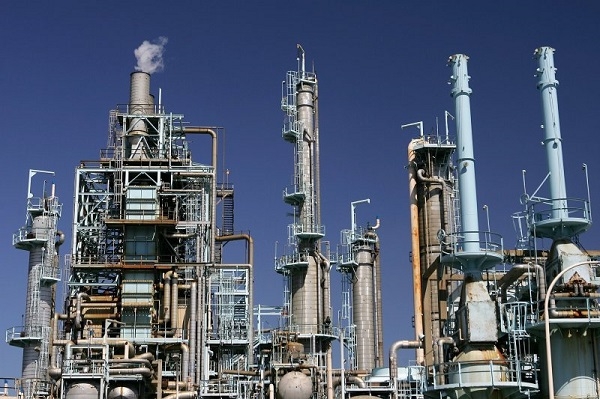
For a decade, the Tema Oil Refinery (TOR) stood not as a beacon of industrial sovereignty, but as a monument to institutional decay, a vast, silent engine of debt buried beneath the suffocating dust of unaccountability.
Year after year, the narrative remained unyielding: a state-owned enterprise trapped in an endless cycle of deficits, operational paralysis, and administrative darkness, failing even to produce the basic ledger of its own financial decay.
Yet, yesterday, the State Interests and Governance Authority (SIGA) shattered this grim status quo with a press statement that felt less like a routine regulatory update and more like an institutional resurrection.
TOR has broken its six-year silence by submitting its audited financial statements for 2019-2025. This bureaucratic awakening is reflected in a strong financial turnaround: in 2025, TOR recorded a historic Profit Before Tax of GHS 1.24 billion.
This is not merely a positive balance sheet; it is the refinery’s first taste of profitability in ten long, agonising years.
How does an institution buried under a staggering GHS 7.1 billion liability in 2024 suddenly lift its head above the rising tide of insolvency to declare a billion-cedi profit just twelve months later?
The numbers provided by SIGA tell a compelling story of deliberate, surgical intervention.
At the heart of this financial miracle lies a colossal foreign exchange gain of GHS 1.3 billion, clawed back from the volatile jaws of the market through what the authority terms “prudent financial and forex management strategies.”
For years, currency fluctuations served as the convenient scapegoat for state enterprise failure; today, they stand as proof of what happens when competence replaces complacency.
Furthermore, the refinery saw its share of associate profit grow to GHS 155 million, proving that its strategic investments still possess vital signs.
Crucially, the refinery has begun the arduous task of cutting the financial noose around its neck.
Total payables, which threatened to swallow the institution whole at GHS 7.1 billion in 2024, have been aggressively hacked down to GHS 5 billion. Simultaneously, the chronic inefficiency that plagued its receivables management has been drastically arrested.
In a spectacular operational squeeze, TOR reduced its receivable days from a sluggish, inexcusable 1,099 days to 652 days. While nearly two years to recover debts remains far from ideal, the trajectory proves that the refinery is no longer content to let state resources evaporate into thin air.
True institutional recovery cannot happen on paper alone; it must be forged in the heat of operational reality. Alongside these financial triumphs, the refinery completed its long-overdue Turnaround Maintenance (TAM) activities, culminating in the refining of approximately 600,000 barrels of crude oil.
This operational resurgence is symbolised by the revving back to life of its foundational pillars: the Crude Distillation Unit (CDU) and the Residue Fluid Catalytic Cracker (RFCC).
For too long, these multi-million-dollar installations sat idle, silent casualties of poor maintenance culture and technical neglect. Their reactivation is a powerful reminder that our national assets do not suffer from a lack of inherent capacity, but from a historical starvation of leadership.
SIGA has rightly recognised that these achievements are the direct fruits of deliberate strategic leadership, strengthened corporate governance, and the unwavering dedication of the Board, Management, and staff of TOR.
The authority noted the vital role played by the Board in supporting management’s recovery agenda through debt restructuring, receivables recovery, and cost containment. This is the constitutional and moral mandate of governance: to act as faithful custodians of the public purse, transforming public liabilities into national assets.
Yet, let us not mistake a victorious battle for a completed war. As SIGA pragmatically warned, severe structural vulnerabilities remain.
The refinery still wrestles with intense liquidity pressures, deep-seated retained deficits, and the gargantuan task of long-term balance sheet restructuring.
One profitable year does not instantly erase a decade of institutional neglect. It does, however, provide a undeniable blueprint for survival.
SIGA’s directive to the Board and Management of TOR is clear and uncompromising: sustain this current momentum, deepen operational efficiencies, and accelerate efforts toward achieving permanent profitability and competitiveness.
In the final analysis, the resurrection of TOR is not just about corporate numbers; it is about national pride, economic independence, and energy security. It stands as a powerful proof that when accountability is non-negotiable, even the most decayed state enterprise can be redeemed, realigning itself at long last with Ghana’s national development priorities.
By Raymond Ablorh
