

Accra, Ghana// — The SYND GenZs, the youth platform of the Strategic Youth Network for Development (SYND), today raised red flags over an International Finance Corporation (IFC) funded project underway in Ghana.
According to the youth, the Continental Blue Investment Ghana Limited (CBI Ghana) project financed by the IFC, and CBI Ghana itself, are failing to live up to the core dictates of the project.
To this end, they are asking Ghana’s Environmental Protection Authority (EPA) to make available the environmental permits, quarterly monitoring returns and inspection findings for the Tema plant and the Togorme quarry, in line with applicable disclosure rules.
They also demanded an explanation of how impacts from the plant are assessed in an area with multiple industrial emission sources.
More Demands
IFC: The SYND GenZs are asking the IFC, a member of the World Bank Group and the largest global development institution focused exclusively on the private sector in emerging markets and developing economies, to explain the “Hold” status and whether the loan has been signed or disbursed to the project.
The youth wing of the SYND, which is a leading civil society organisation, asked the IFC to publish an action-by-action progress report on all 12 ESAP commitments, with evidence of completion and revised timelines for any outstanding items.
It also urged the IFC as a matter of urgency to publish the emissions baseline, assumptions and methodology before any carbon credits are generated from the project.
CBI Ghana
According to the youth, CBI Ghana must respond to the SYND GenZs and engage openly with affected communities and civil society.
The CBI which is CBI is a leading cement manufacturer in Ghana established in 2017 and operating in Tema’s industrial zone, Ghana should publish the status of land and livelihood restoration in Togorme, including the census of affected people, arrangements for the women potters and shrines, and the close-out audit, the youth demanded.
They further asked the CBI Ghana to publish recent air-quality and noise monitoring results for the Tema plant and the Togorme quarry, with any corrective measures taken.
While asking the company to confirm that a community grievance mechanism is operating, explain how to use it, and set out how agency and contract workers can raise concerns without fear of retaliation.
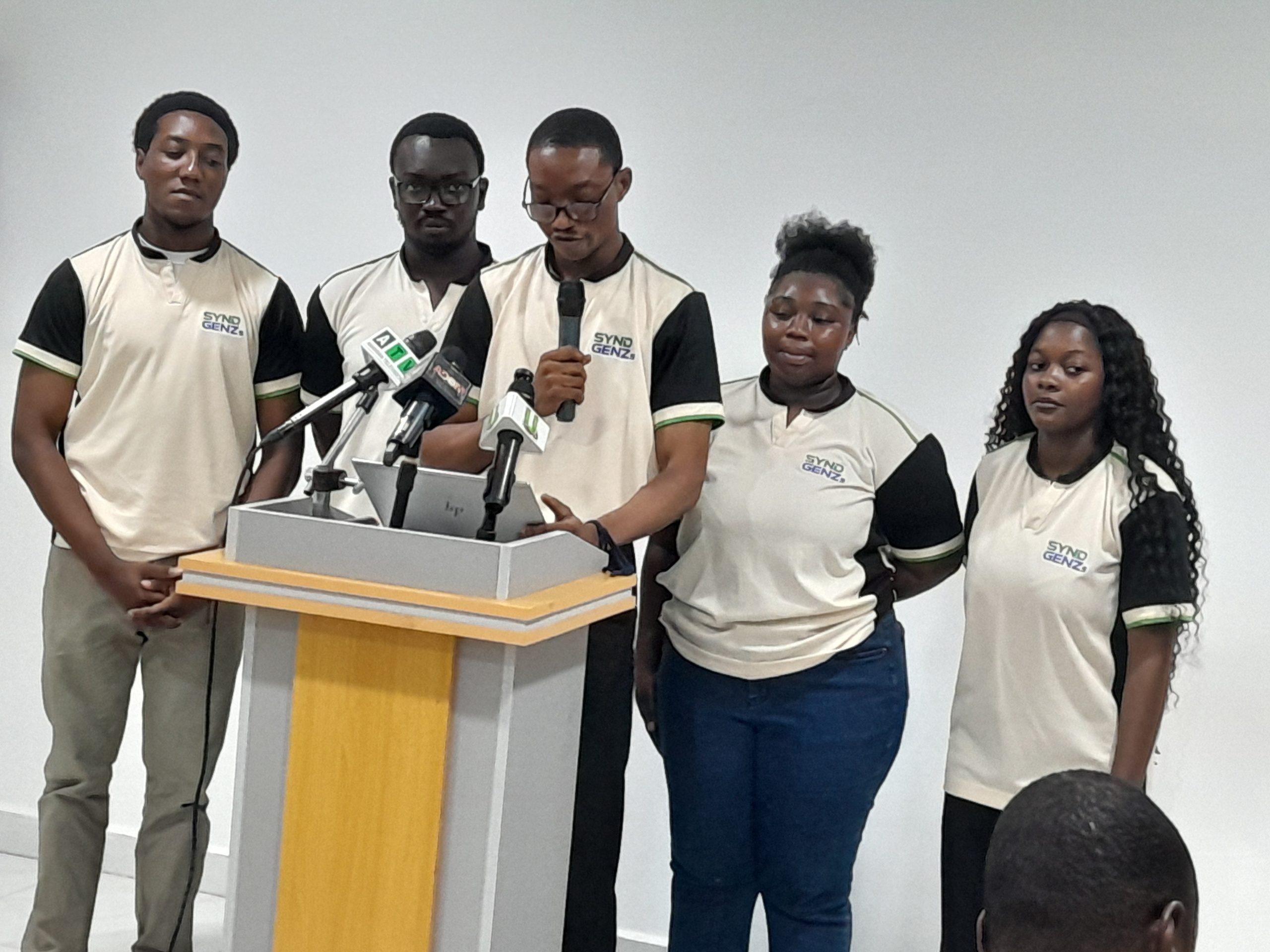
Addressing journalists at a press conference in Accra, members of the SYND GenZs also called on the IFC, CBI Ghana and the EPA to publicly account for the environmental, social and climate performance of CBI Ghana’s limestone calcined clay cement (LC3) plant in Tema and its clay quarry at Togorme, North Tongu District, Volta Region.
The Genesis of the Project and IFC Involvement
It would be recalled that IFC approved financing of up to US$20 million for the project on 24 November 2025. As part of that process, CBI Ghana agreed to a 12-point Environmental and Social Action Plan (ESAP) with deadlines between October 2025 and June 2026.
No Public Progress
All of those deadlines have now passed, and no public progress update has been released, they said.
Before issuing this statement, the SYND GenZs team and its partner, Industrious Labs, reached out to CBI Ghana in March and July 2026 via email to discuss these issues and seek the company’s responses.
At the time of publication, CBI Ghana had not responded. The SYND GenZs remain open to dialogue with the company.
The Founder and Executive Coordinator of SYND, Chibeze Ezekiel, told the journalists: “We support cleaner cement, and we want this project to succeed”. “But a project financed as a climate solution has to show its work.
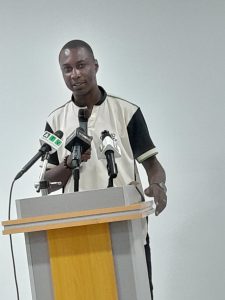
He added: “Communities in Togorme and Tema, and the people who work at the plant, deserve to know whether the commitments made to IFC have been kept. We reached out to CBI Ghana to hear their side, and we are still waiting for an answer”.
KEY CONCERNS
Safeguards came after the impacts began
The SYND GenZs, in their thorough secondary research findings read by a member of the team, Adigao Alvin Wenia, revealed that when the IFC appraised the project, construction of the LC3 plant was already 90% complete and early extraction at the Togorme clay quarry had begun.
Most of the safeguards IFC required — an updated management system, a supplementary livelihood restoration plan, a stakeholder engagement plan for the Tema plant and a community grievance mechanism — were set as future actions, he further revealed.
The climate claims need clear numbers
IFC’s own review states that LC3 technology can reduce the carbon footprint by 40% compared with Portland cement, while its emissions analysis for this project reports a 19% reduction in the carbon intensity of the cement, Mr Wenia said.
He explained that IFC projects average absolute emissions of about 354,590 tCO2e a year for 2026–2032, above the roughly 257,600 tCO2e reported for 2023, alongside a stated reduction of 195,030 tCO2e a year against a baseline that is not published in enough detail to be reproduced.
“Because IFC is also advising CBI Ghana on generating carbon credits from the plant, the baseline and methodology must be fully transparent”, Mr Wenia demanded.
Land, livelihoods and heritage in Togorme
The quarry covers 304 acres of Togorme community land. 21 families with customary rights agreed to compensation, payable in four instalments over nine years.
IFC found that the livelihood restoration plan was only partly aligned with its Performance Standard 5 and that the extraction area had not been clearly demarcated.
Those affected include crop farmers, a women’s pottery group of about 100 members who dig clay on the land, and custodians of shrines on the site.
A supplementary plan, with a census of affected people and a close-out audit, was due by 30 June 2026. Cultural heritage (Performance Standard 8) was not listed among the standards IFC applied.
Air quality in Tema
“Project documentation records ambient PM2.5 readings that exceeded the 24-hour limit on 20 of 28 occasions at two monitoring points between January 2020 and March 2021.
Tema is an industrial area with many emission sources, so careful attribution is needed — which is exactly why up-to-date, location-specific monitoring results should be public. An air emissions management and monitoring plan was due by 31 March 2026, according to him.
Protections for all workers
At appraisal, CBI Ghana had 154 permanent employees (25 of them women) and 114 workers hired through a third-party agency. None were unionised, and agency workers were not represented on the company’s Employee Voice Council.
IFC also flagged a risk of child labour in the clinker supply chain, requiring an updated Supplier Code of Conduct by October 2025.
The financing status is unclear
IFC’s project page has listed the investment as “Hold” since 6 May 2026, with no public explanation of the reason or of whether the loan has been signed or disbursed, Mr Wenia stated.
“Ghana’s industrial transition should deliver real climate benefits while protecting the people who live and work alongside it,” Chibeze added. “Transparency is how a good project proves it”, the SYND GenZs stated.
