

The key message highlighted at the launch of the SOFI report is clear: “The world is pushing hunger back. Now we must push even harder”. Healthy diets remain unaffordable for an unacceptable proportion of the world’s population.
While 645 million people faced hunger in 2025, healthy diets remain unaffordable for about 2.7 billion people worldwide (around 1 in 3 people).[1]
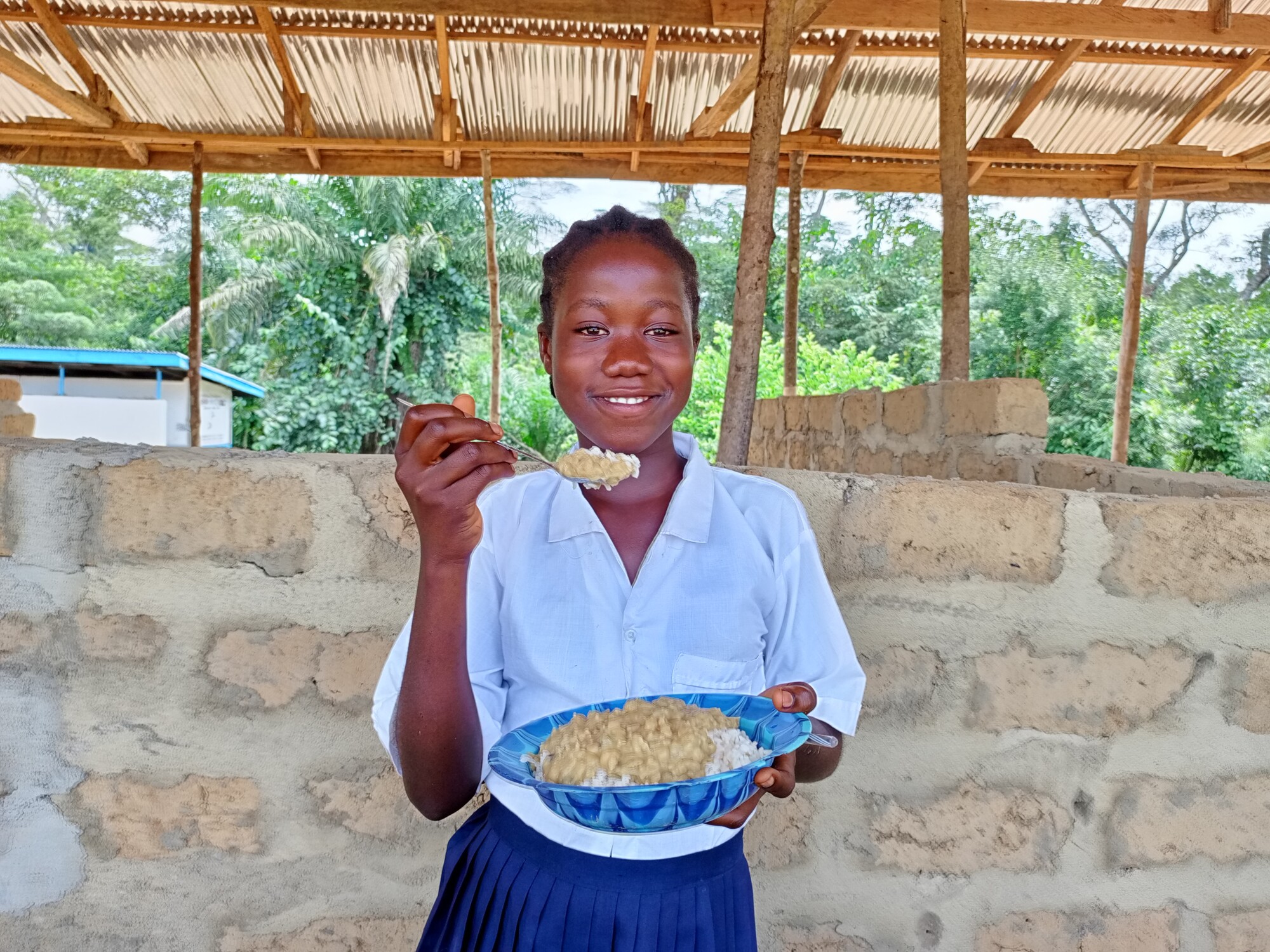
Mary’s Meals joins all the SOFI report stakeholders[2] in taking action to push hunger back. As one of the world’s largest non-governmental providers of school meals, Mary’s Meals demonstrates that it is possible to deliver nutritious, locally procured school meals at a remarkably low cost while working alongside local communities, governments and partners to create sustainable change.
Today, the organisation reaches more than 3 million children in over 6,400 schools across 16 countries.
The global average cost of providing Mary’s Meals to one child for a whole school year is just €22 / $25.20 / £19.15, equivalent to an average cost of only €0.11 / $0.13 / £0.10 per meal.
This is possible because local communities own and run Mary’s Meals programmes in the countries where the organisation operates.
Across its programme countries, tens of thousands of volunteer cooks prepare and serve meals to children from their own communities. Wherever possible, meals are prepared using locally procured food, supporting local farmers and strengthening local economies.
The message of hope, progress and urgency delivered by FAO Director-General Qu Dongyu included a call to action to “produce tangible results, not only develop policies. Progress cannot be taken for granted; it must be protected”.
Magnus MacFarlane-Barrow, Founder and CEO of Mary’s Meals, reinforced Qu Dongyu’s message, saying:
“SOFI is an important reminder of a painful paradox: the world has the capacity to produce enough food, yet millions of children remain hungry and vulnerable. As nutritious diets become harder for families to afford, children in the world’s poorest communities are often the first to suffer.”
Dr. Alvaro Lario, President of IFAD, highlighted that affordability is the challenge, and that the concern is “no longer whether food exists, but whether people can afford it”, stating that “a solution is to invest in local programmes, and the evidence shows that this approach works”.
School feeding has been recognised by SOFI Report 2026 as an essential social safety net and an important initiative to reduce the cost of a healthy diet in the context of growing demand at scale.
Emphasising the importance of this point, Magnus MacFarlane-Barrow also noted:
“No child should have to sit in class too hungry to learn. At a time when humanitarian needs risk being pushed aside, school feeding is a simple, practical and proven way to put children first, helping them eat, learn and build a better future.”
Further evidence of how Mary’s Meals’ school feeding programmes contribute directly to Sustainable Development Goal 2 (Zero Hunger) is available in the organisation’s recently published Impact Report.[3]
The message of the SOFI report should not be received as a warning only; it should inspire collective action. Everyone can play a part: an investment of just €22 / $25.20 / £19.15 can provide a child with nutritious school meals for an entire school year, while offering a vital lifeline and an essential social safety net for that child and their family.
