


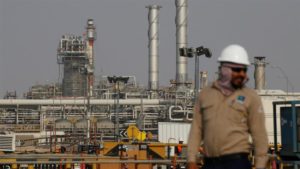
First, there were Thursday rumours about strikes impacting Saudi Arabia’s East-West pipeline and flumes visible from satellite imagery. Then, just after the London market closure, Saudi Arabia announced Friday that it had halted pipeline transportation via its key Hormuz bypass, stoking fears of long-term damage to its midstream infrastructure.
The vicious cycle of bad news from Saudi Arabia reached its apex today, as Saudi Aramco confirmed that loadings from the Red Sea port of Yanbu have been suspended, lifting ICE Brent back to $108 per barrel.
China Runs Rebound as Fuel Exports Recover. China’s crude throughput rose 11% month-on-month to 13.9 million b/d in August as refiners ramped up fuel exports after Beijing lifted its export ban, while inventories were drawn down by 639,000 b/d to support refinery supply and export demand.
Houthis Send Saudi Oil Back to Hormuz. Saudi Arabia is seeking to raise exports through Hormuz after attacks halted its 7 million b/d East-West pipeline, halting the main wartime outlet via Yanbu, however, replacement of Red Sea flows is hindered by record tanker rates near $1 million/day.
Trump’s Eyes Fragile Russia-Ukraine Energy Truce. US President Trump said Ukraine and Russia agreed to halt strikes on energy infrastructure, but neither side fully confirmed a reciprocal deal after several previous deals collapsed within several days, however gasoil futures fell on the news.
Iran Expands Hormuz Shipping Blacklist to 77 Vessels. Tehran’s Strait authority added 20 ships for breaching its northern-corridor rules, warning that0 listed vessels and ships conducting STS operations with them risk fines or confiscation, although Iran has yet to enforce the designations.
EPA to Scrap Power Plant Carbon Rules. The EPA is expected to repeal Biden-era carbon standards for coal- and gas-fired power plants, including requirements for technologies such as carbon capture, revoking the legal basis for regulating greenhouse-gas emissions from the power sector.
Ukraine Drone Hits Defy Calls for Energy Truce. Ukraine’s army stated that it struck the crude processing unit of Rosneft’s 170,000 b/d Syzran refinery, underscoring continued attacks on Russian energy infrastructure despite U.S. claims of a mutual halt to strikes on critical energy assets.
Thailand and Malaysia Boost Key Gas Hub. State oil companies Petronas and PTT have signed a new 35-year PSC covering Block A-18-01 in the Malaysia-Thailand Joint Development Area, extending a project that supplies about 700 MMcf/d of gas shared equally between the two countries.
Saudi Pipeline Woes Reach European Refiners. Saudi Aramco cancelled some late-September crude cargoes for European term buyers after the halt of the East-West pipeline, the first supply impact of Houthi attacks as shipping disruptions constrain both the Red Sea and Gulf export routes.
US Eyes Deep-Sea Permits for Critical Minerals. The Trump administration signaled it could approve the first U.S. deep-sea mining permits within months, aiming to secure access to seabed deposits rich in battery and defence-critical minerals as Washington seeks to reduce dependence on China.
Libyan Protests Trigger Force Majeure Threat. Operations were suspended at three fields in Libya after members of the Petroleum Facilities Guard closed a valve on the Hamada–Zawiya crude pipeline, prompting NOC to warn it may declare force majeure if the disruption persists or spreads.
UAE Turns Iraqi Discounts into Trading Edge. ADNOC reportedly agreed to buy 72 million Iraqi barrels for August–September at discounts reaching $27 a barrel, using its tanker fleet and Fujairah access to exploit wartime dislocations even though daily Hormuz transits remain in single digits.
White House Sanctions Russia’s 2nd Largest Bank. The US imposed Iran-related sanctions on Russia’s state-owned bank VTB (already excluded from the dollar system over Ukraine), accusing it of using rouble-rial settlement channels for trade with Tehran and ties with sanctioned Iranian lenders.
China’s Mine Safety Push Slashes Output. China produced 361.82 million tonnes in August, down 7.7% year on year but up from July’s 343.21 million tonnes as Beijing intensified inspections after another gas explosion last month, with the August 14 blast killing 7 people in Hunan province.
Senegal Turns to Eni to Revive Offshore Exploration. Senegal signed an agreement with Italian oil major ENI (BIT:ENI) to launch preliminary studies across five offshore blocks, seeking to restart exploration as the new deal underscores ENI’s role as the leading West African drilling specialist.
Dangote’s $49 Billion Refinery Goes Public. Dangote launched Africa’s largest IPO this week, offering roughly 3% of its Lagos refinery to raise $1.6 billion—or $2.1 billion if oversubscribed— as the Nigerian downstream giant eyes the doubling of its capacity to 1.4 million b/d by 2029.
Oilprice.com
