

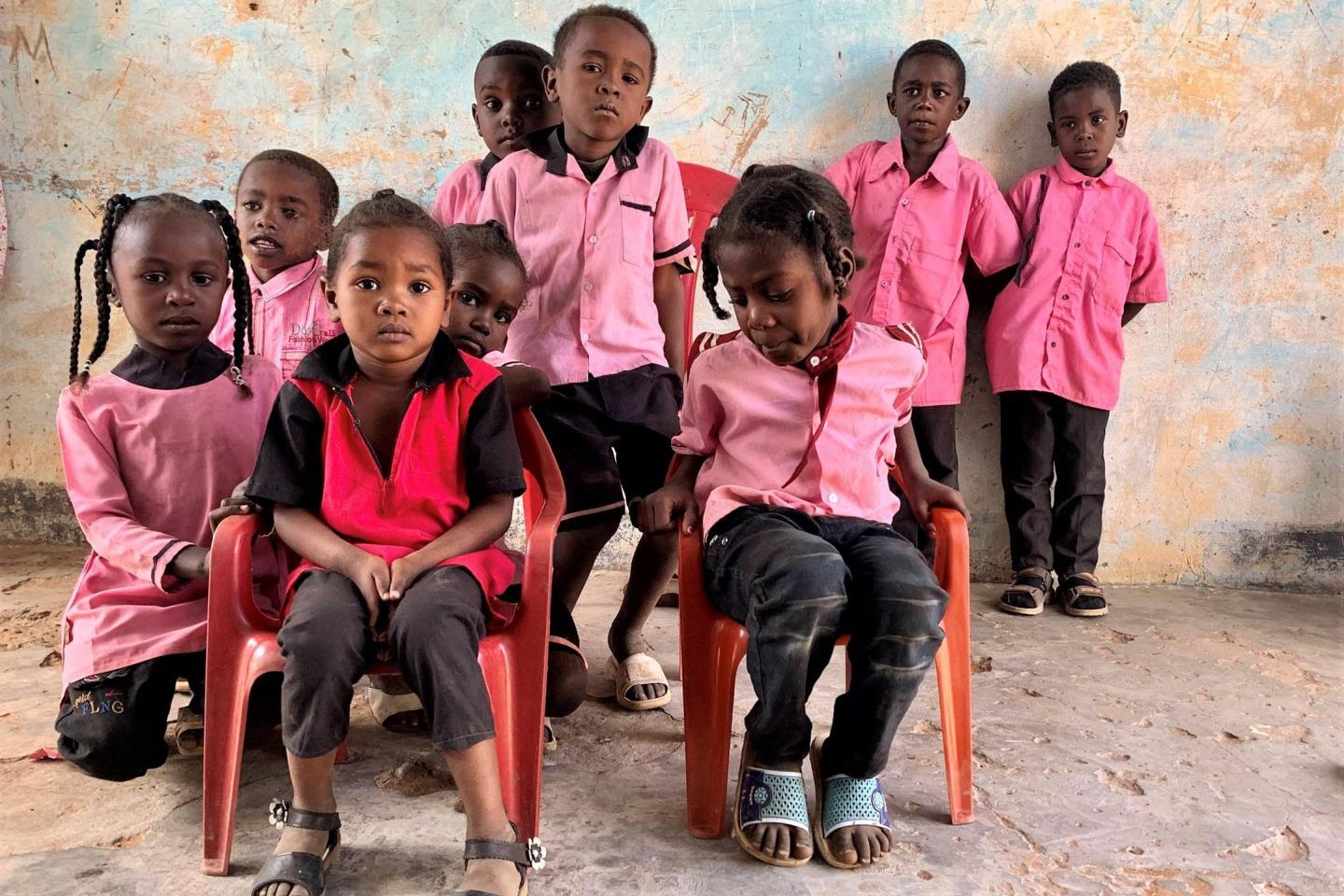

Qatar Fund for Development (QFFD) in cooperation with the Education Above All Foundation (EAA) signed four MoUs with the Republic of Senegal, the Republic of Bangladesh, the Republic of Liberia, and Burkina Faso, all Least Developed Countries (LDCs).
These MoUs focus on opportunities to provide access to quality education to ensure more than 785,060 out-of-school primary children are committed to enrolling in education between now and March 2027 through EAA’s Educate A Child program.
These MoUs that were signed on the sidelines of the LDC 5 that was held in Doha support projects designed to enable access to education for out-of-school children and youth.
The MoUs focus on several important activities to provide access, enrolment, and learning skills, including teacher training, capacity buildings, developing educational curricula, refining educational techniques and methods, and improving infrastructure for schools and classrooms.
As for the projects, they seek to address the livelihood requirements of water and good food for students, teachers, and teaching staff, and ensure the cleanliness of schools with good sanitation.
Awareness campaigns for parents will address the importance of education and combating the problems of child labor and children dropping out of school, and will be done in cooperation with local community leaders and influential personalities in the beneficiary countries. In addition, several projects include developing student registration systems, and solving overcrowded classrooms.
In addition, The Qatar Fund For Development and the EAA foundation held a ministerial roundtable entitled: “Out of School Children: Linking across Sectors for Success”, With the participation of HE Minister of Education and Higher Education H E Buthaina bint Ali Al Jabr Al Nuaimi, HE Director of the International Organisations Department at the Ministry of Foreign Affairs, Ali bin Khalfan al-Mansouri, and the Ministers of Foreign Affairs and Education of Bangladesh, Burkina Faso, Liberia, Nigeria, Pakistan, Palestine and Senegal.
In Burkina Faso for example, Education Above All and their partner Educate A Child will work on BuildOn2. The Enrol OOSC Project: Break the Cycle of Poverty aims to reach over 21,000 out-of-school children by early 2027 through their work partnering with rural communities to empower local residents to build schools and enrol children.
One such child is 9-year-old Tong Nooma Nestor, who was identified as an out-of-school child by BuildOn in 2022. His schooling had been delayed due to a speech impediment that slowed down his language skills in class.
Since being enrolled, Nestor’s teacher, Guigma Salamata, says he is now one of the best students. Nestor dreams of becoming a police officer one day because he wants to secure his village and protect his parents against any threat of terrorists.
Khalifa Al Kuwari, Director General of Qatar Fund for Development, said: “Children and youth in the LDC suffer from different obstacles and face hardship along the way, living in economic and social uncertainty that is why we need to Invest in education as it is the starting point for those children and youth to be positive members of their community.
Our cooperation with EAA and through Educate a child program, we aim to provide children and youth with the tools they need to complete their education journey and give them hope and support their communities. For this reason, Qatar Fund for Development is proud to contribute to the development of education.”
Fahad Al Sulaiti, EAA’s CEO, said: “Helping EAC to achieve quality education in these countries is a way of showing our continued commitment to helping the United Nations reach its sustainable development goals by 2030. We appreciate QFFD, our strategic partner in contributing to the EAA mission of providing education facilities to developing countries and helping students to enrol in education.”
To complement the Qatar national strategies and priorities in the field of education, QFFD works alongside EAA to address poverty, rehabilitate schools, provide psychosocial support, and sports education.
As well as implementing targeted capacity-building initiatives and advocating for educational rights for the hardest-to-reach groups of out-of-school children. In doing so, the partnership between the two institutions continues to mitigate barriers to education, such as poverty, refugee status, gender discrimination, inadequate infrastructure and challenging geographic areas.
