

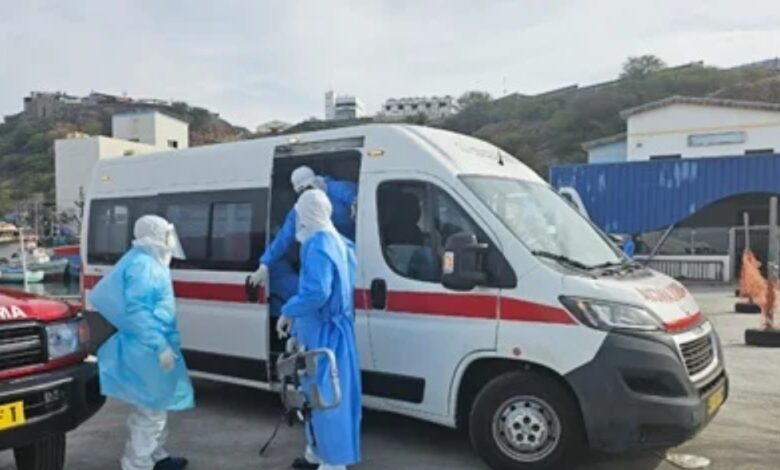

International health authorities are scrambling to track the spread of a rare and potentially fatal hantavirus outbreak following the emergence of suspected cases in Spain and the remote island of Tristan da Cunha.
These new developments involve individuals linked to the Dutch-flagged cruise liner MV Hondius, which has become the epicenter of the first documented hantavirus cluster on a ship.
The World Health Organization (WHO) confirmed that six of the eight cases aboard the vessel have tested positive for the Andes virus—a specific hantavirus strain notorious for its unique ability to transmit between humans through close contact.
With three fatalities already recorded (a Dutch couple and a German national), the focus has shifted to “secondary transmission” after a Spanish woman fell ill after sitting near an infected passenger on a flight, and a British man showed symptoms on one of the world’s most isolated inhabited islands.
Despite the far-reaching nature of these reports, WHO technical officers have maintained that the risk to the general public remains low, citing the virus’s requirement for “prolonged and close contact” for human-to-human transmission.
The MV Hondius, carrying 147 passengers and crew, is currently en route to Tenerife in the Canary Islands, where rigorous screening protocols are being finalised before any disembarkation is permitted.
Meanwhile, the U.S. Centers for Disease Control and Prevention (CDC) has activated a “Level 3” emergency response, arranging for the medical repatriation and quarantine of 17 American citizens at the University of Nebraska.
The outbreak has underscored the chilling speed at which modern travel can bridge vast distances, from the Antarctic waters where the ship first sailed to the Mediterranean coast of Alicante.
While current patients remain hospitalized across South Africa, the Netherlands, and Switzerland, the global medical community is on high alert, urging anyone in contact with disembarked passengers to monitor for respiratory distress.
With a fatality rate that can reach 50% in severe cases, the containment of the Andes virus has become a pivotal test for international maritime and aviation health protocols in 2026.
https://afronews.net/global-health-experts-race-to-contain-hantavirus-outbreak/
