

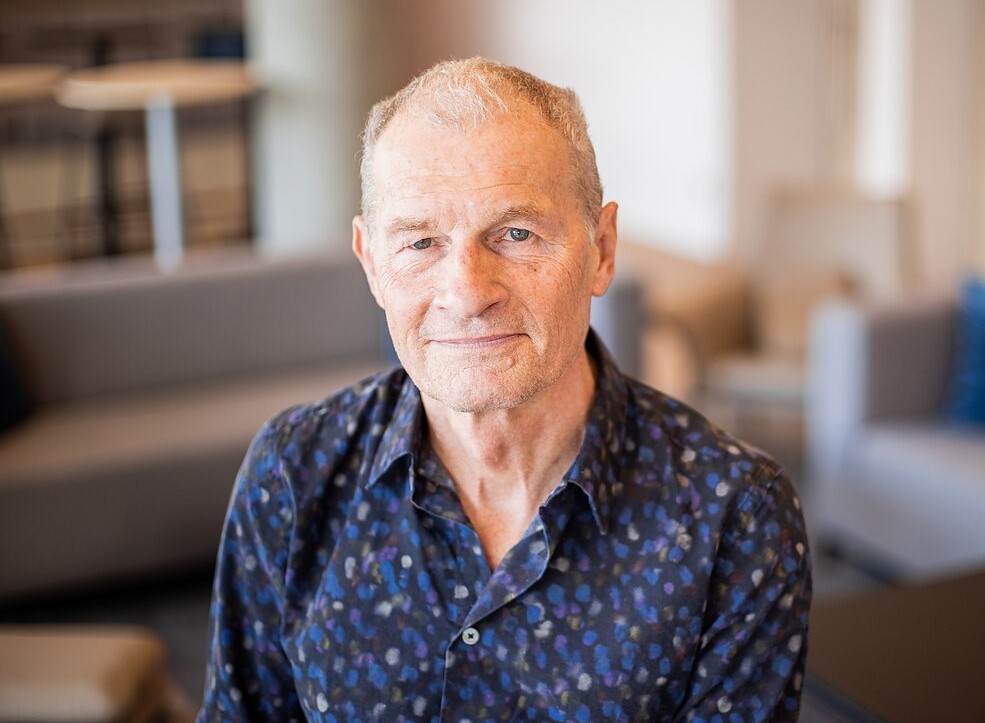
To study power without studying faith is to observe a ship navigating a tempestuous ocean while blind to the wind. For decades, the global intellectual landscape has been haunted by a pervasive, secular fallacy, the stubborn belief that religion would quietly recede into the private chambers of history as modernity advanced. Enter Professor Jeffrey Haynes, Emeritus Professor of Politics at London Metropolitan University.
He is not merely an academic cataloguing the intersections of power and belief; he is an intellectual cartographer mapping the very soul of global politics.
In an era defined by rapid polarization, where civic trust frays and political dogma masquerades as moral truth, Haynes’ monumental body of work, spanning over sixty-five authored or edited volumes, serves as a vital constitutional and moral anchor. His scholarship cuts through the noise of contemporary populism, asking the profound, uncomfortable questions that lesser minds avoid. What happens when the pulpit dictates policy?
How does the sacred intersect with the secular state? Through seminal texts like Religion & Politics: The Basics, Christian Nationalism and Democracy in Ghana, and the authoritative Routledge Handbook of Religion and Politics, Haynes has relentlessly broadened the scope of international relations. He reminds us that the transcendent cannot be divorced from the transient affairs of governance.
To read Haynes is to witness an unyielding commitment to intellectual clarity. His writings do not merely describe phenomena; they interrogate them with architectural precision. Whether dissecting the rise of neo-nationalism and the Christian Right in America or probing the complex architecture of “progressive” Pentecostalism and its socio-political ripples across Sub-Saharan Africa, Haynes bridges the chasm between legal structures and moral imperatives.
His prose is a masterclass in intellectual balance. He pairs rigorous empirical analysis with deep normative inquiry, exposing how faith functions simultaneously as an instrument of liberation and a mechanism of exclusion. Consider his sharp critique of political co-optation, where religious devotion is weaponized to sideline vulnerable minorities. Here, Haynes deploys a razor-sharp rhetorical structure, using juxtaposition and aphorism to lay bare the hypocrisy inherent when sacred platforms serve secular ambitions.
“Religion in politics is neither an obsolete relic nor a guaranteed salvation; it is a mighty current that, left unexamined, will either power the machinery of democracy or drown its foundations.”
This is the hallmark of a scholar operating at the absolute zenith of his craft. As co-editor-in-chief of the esteemed journal Democratisation and editor-in-chief of the International Journal of Religion, Haynes has not only authored a library of wisdom; he has curated the very conversations that define modern political science.
The scope of Haynes’ impact extends far beyond the ivy-covered halls of European academia. Through his insightful columns in leading newspapers like Ghana’s Daily Graphic, he engages directly with the vibrant public spheres of the Global South, proving that rigorous scholarship must speak to the citizen in the square just as clearly as it speaks to the scholar in the library. His work on Christian nationalism in Ghana illustrates a rare global dexterity: the ability to seamlessly connect local pulpit politics with transnational ideological movements.
When the International Studies Association honoured him with the prestigious Distinguished Scholar Award, it was a formal recognition of what his readers already knew: Jeffrey Haynes possesses an uncompromising dedication to truth. He writes with the conviction that ideas matter, that words shape realities, and that intellectual integrity is the ultimate defence against authoritarian impulses.
In a world desperate for moral clarity and structural wisdom, Professor Jeffrey Haynes stands tall as a titan of political thought. His legacy is etched not in fleeting headlines, but in the enduring permanence of books that challenge, illuminate, and endure. To engage with his work is to look into the mirror of our global political reality and to find, at long last, a guide who knows the way through the dark.
By Raymond Ablorh
