


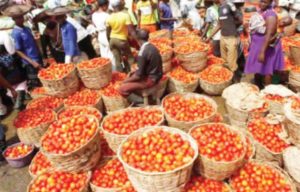
Accra, Ghana – In response to the recent tragic terrorist attack in Burkina Faso that affected Ghanaian tomato traders, the Chamber of Agribusiness Ghana, in partnership with key stakeholders across the tomato value chain, today unveiled a comprehensive National Tomato Production Strategy (2026-2030) backed by shocking economic data that reveals Ghana loses approximately GHS 5.7 billion annually, equivalent to 1.2% of GDP to tomato import dependency, inefficient production, and lack of value-added infrastructure.
The Staggering Economic Cost
New research commissioned by the Chamber reveals that Ghana’s tomato import dependency costs the nation far more than the direct GHS 650-760 million spent on imports annually:
- Direct Import Costs: GHS 650-760 million for fresh tomatoes (75,000-100,000 MT) and tomato paste (78,000-100,000 MT). Ghana is the world’s second-largest tomato paste importer after Germany.
- Lost Tax Revenues: GHS 180-220 million annually in uncollected income taxes, VAT, and corporate taxes from 250,000 potential jobs that don’t exist due to import dependency.
- Post-Harvest Losses: GHS 175-250 million worth of domestically grown tomatoes rot annually due to lack of cold storage, representing 30-45% of production.
- Lost Wages: GHS 4.5 billion in wages that could be earned by 250,000 Ghanaians if the sector were fully developed jobs that instead benefit foreign farmers and processors.
- Security Costs: Immeasurable,traders’ lives lost and families traumatized in cross-border operations through insecure Sahel corridors.
“These numbers are devastating,” Anthony Morrison, CEO of the Chamber of Agribusiness Ghana said. “We’re not just losing foreign exchange; we’re losing an entire generation’s employment opportunities.
The recent security incident in Burkina Faso is a wake-up call. We cannot continue to sacrifice Ghanaian lives and livelihoods for tomatoes we can grow better and cheaper at home.”
A Youth Employment Revolution
Central to the strategy is a massive youth employment initiative targeting 200,000 jobs across the tomato value chain:
- 35,000 young farmers will receive land access support, starter kits worth GHS 5,000, and training in modern tomato farming
- 15,000 cold chain technicians will be trained through new Cold Chain Operations Academies at technical institutes nationwide, earning GHS 1,500-2,500/month
- 35,000 processing plant workers (50% women) will staff new tomato paste factories across the country
- 20,000 logistics and transport workers will operate refrigerated trucks and distribution networks
- GHS 200 million Youth Agri-Entrepreneurship Fund will provide micro-loans (GHS 10,000- 100,000) at 8% interest for youth-led tomato businesses.
“This is not just an agricultural strategy, it’s a youth employment revolution,” Ms Akosua Frimpong, Director of Youth Programs, said.
“Every young person who joins this sector will earn decent wages, gain technical skills, and contribute to Ghana’s food security. We’re creating an entire new employment ecosystem.”
Ending Import Dependency
The strategy targets dramatic import substitution, particularly in tomato paste, where Ghana ranks as the world’s second-largest importer:
- Reduce tomato paste imports from USD 100+ million (GHS 500+ million) to USD 20 million by 2030
- Increase local tomato usage by processors from current 7% to 85%
- Establish 50 cold storage facilities (150,000 MT capacity) to reduce the 30-45% post-harvest losses
- Build competitive domestic tomato paste brands, capturing 70% of Ghana’s market
- Generate GHS 150 million in export revenues from processed products
The Chamber estimates that “We lose nearly half our tomatoes to spoilage, worth GHS 250 million every year, because we have nowhere to store them.
Meanwhile, Ghana imports over GHS 500 million in tomato paste annually. This makes no economic sense.
With the cold chain infrastructure in this strategy, our tomatoes will feed processing factories instead of rotting in the field.”
“The Burkina Faso attack was a tragedy, but it’s not the first time traders have been attacked or killed. We risk our lives because there aren’t enough quality tomatoes produced in Ghana.
This strategy will finally make it possible to trade safely within Ghana’s borders while creating prosperity for all of us.”
The Chamber emphasised that currently, only 7% of the tomatoes we process are Ghanaian; the rest is imported bulk paste repackage.
We have the technology and market demand, but not the consistent local supply. This strategy’s focus on production, quality, and cold chain will finally enable us to process Ghanaian tomatoes, creating thousands of factory jobs.”
Investment and Returns
The strategy requires GHS 3.2 billion over five years, but will generate returns far exceeding the investment:
- GHS 600 million annual import savings by 2030
- GHS 180-220 million in new annual tax revenues
- GHS 200 million recovered from reduced post-harvest losses
- GHS 150 million in export earnings
- 200,000 jobs with GHS 4.5 billion in annual wages circulating in Ghana’s economy
- Total Annual Economic Gain: GHS 5+ billion Return on Investment: For every GHS 1 invested, Ghana will gain GHS 8 annually by 2030.
Immediate Next Steps
The stakeholder coalition will immediately:
- Present strategy to President and Cabinet for endorsement
- Establish National Tomato Strategy Steering Committee
- Launch Youth Registration Portal for training and employment opportunities
- Provide GHS 20,000 emergency relief to each family affected by the Burkina Faso tragedy
- Begin construction of first 10 cold storage facilities in Q2 2026
Call to Action
We call upon all Ghanaians to support this transformational initiative. The choice is clear: continue losing GHS 5.7 billion annually to imports, unemployment, and waste, or invest GHS 3.2 billion to build a sector that creates prosperity, employs our youth, feeds our nation, and saves lives.
