


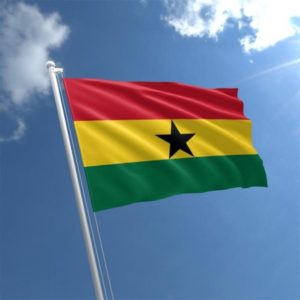
St John’s,//- Ghana ranks 17th out of 56 Commonwealth countries in a major new study of youth AI readiness, finishing just 1.8 points short of the study’s benchmark, as researchers identify a potential US$1.66 billion AI-related increase in GDP after ten years and considerable opportunities for young people to secure better jobs and incomes.
The Ayre Index, launched at the Commonwealth Heads of Government Meeting in Antigua and Barbuda, gives Ghana a score of 51.2 out of 100 against its readiness benchmark of 53. The result reflects strong digital connectivity and promising examples of AI use among university students, alongside wider gaps in conventional digital skills.
Research by the Ayre Think Tank, founded by Antiguan-Canadian philanthropist Calvin Ayre, also identified encouraging signs of AI use among Ghanaian university students.
In an international survey of university students aged 18 to 29 who already utilise ChatGPT, 65.5% of Ghanaian respondents were found to be using it at least sometimes for creative writing, while 66.4% used it for help with computer programming. Both were the highest proportions recorded among the Commonwealth countries covered by the respective student-survey comparison.
The student survey also revealed caution in Ghana about AI’s reliability. Just 47% of Ghanaian respondents agreed that ChatGPT could provide reliable information, compared with 71.8% in The Gambia.
Ghana nevertheless has strong digital foundations. 4G networks reach 99.3% of the population, while 80.7% of young people reported using the internet in the latest census.
The potential economic implications are substantial. Ghana has approximately 9.3 million young people aged 15 to 29 and, applying scenarios developed by the International Monetary Fund to the country’s economy, researchers calculate that AI could increase the level of the country’s GDP by US$1.656 billion after ten years under their moderate scenario. The figure falls to US$799 million under the conservative scenario – and rises to US$2.513 billion in the optimistic case.
Calvin Ayre, founder of the Ayre Think Tank, said: “I’ve spent my life in businesses where new technology changes everything, and I know you can’t stand still. AI is going to change how we work, how we do business and how wealth is created.
But this is not a race that only the biggest or richest countries can win. What matters is giving young people the skills and the chance to get ahead – whether to start businesses, find jobs or build something for themselves. Some Commonwealth countries are ahead, others have catching up to do. Nobody can afford to be complacent. That’s why we created this Index. It shows countries where they stand, what they’re getting right and where they need to do better. Governments now have to decide what they’re going to do about it.”
Ghana scores just 1.6 out of 10 for digital, data, media and AI capability, drawing partly on household research from 2017 to 2018 which found that only 0.6% of young people had written a computer program.
While these older figures do not necessarily reflect current AI capabilities, they highlight the importance of equipping young Ghanaians with practical digital skills.
Ghana is already taking steps to do that by turning AI into employment opportunities. In September 2026, the government reported that more than 10,000 people had completed training under its One Million Coders Programme, covering AI and other digital skills.
In October, Kwame Nkrumah University of Science and Technology and GIZ Ghana announced a new initiative to train at least 120 young professionals and graduates in AI, working with employers to provide internships and potential jobs. These programmes will help young Ghanaians develop practical skills, strengthen businesses and take advantage of new opportunities created by AI.
The White Paper identifies five priorities: affordable and reliable access to technology; education that develops practical skills; stronger routes from training into employment and enterprise; AI tools suited to local languages and needs; and safeguards that enable young people to question automated decisions.
It calls on governments, educators and development partners to better understand the particular barriers young people face in each country before deciding where investment can make the greatest impact.
Professor C. Justin Robinson, Pro Vice-Chancellor and Campus Principal of the University of the West Indies, Five Islands Campus, said: “We need to make sure that the next generation will be able to do more than just consume AI products made elsewhere.
Access must come with its own agency and a real equitable stake in how these systems are governed. Young people need to be equipped to question these new tools, to improve them and to be supported in building alternatives suited to their own needs. Whether that happens will depend on choices made now. This index gives us a clearer view of where those choices are most urgent. We should use it.”
The White Paper, The Ayre Index: The 2026 Commonwealth Youth AI Readiness Index, can be downloaded here:
White Paper for media distribution
Published ranking, out of 100. The study’s readiness benchmark is 53 points, between Nigeria (15th) and Seychelles (16th).
| Rank | Commonwealth country | Index score | Scoring coverage (of 102) | Data Gap Index (of 100) |
| 1 | Singapore | 77.6 | 75 | 37.7 |
| 2 | Malta | 75.0 | 68 | 41.4 |
| 3 | Australia | 71.0 | 76 | 26.2 |
| 4 | United Kingdom | 70.8 | 84 | 20.1 |
| 5 | Canada | 70.2 | 76 | 31.8 |
| 6 | Malaysia | 69.0 | 72 | 29.0 |
| 7 | Cyprus | 67.4 | 74 | 34.1 |
| 8 | Mauritius | 64.4 | 61 | 49.4 |
| 9 | New Zealand | 63.9 | 55 | 50.1 |
| 10 | Brunei Darussalam | 62.3 | 57 | 56.3 |
| 11 | India | 60.6 | 80 | 20.7 |
| 12 | Fiji | 56.9 | 60 | 47.9 |
| 13 | South Africa | 56.8 | 75 | 32.0 |
| 14 | Trinidad and Tobago | 56.5 | 58 | 56.6 |
| 15 | Nigeria | 54.5 | 82 | 17.4 |
| 16 | Seychelles | 51.8 | 39 | 73.1 |
| 17 | Ghana | 51.2 | 73 | 31.7 |
| 18 | Jamaica | 50.7 | 61 | 51.2 |
| 19 | Sri Lanka | 49.9 | 54 | 52.7 |
| 20 | Zambia | 48.8 | 65 | 40.5 |
| 21 | Bangladesh | 48.7 | 84 | 14.4 |
| 22 | Kenya | 48.7 | 66 | 42.9 |
| 23 | Uganda | 47.0 | 61 | 50.0 |
| 24 | Pakistan | 46.4 | 84 | 15.7 |
| 25 | Tanzania | 45.5 | 63 | 41.0 |
| 26 | Gabon | 45.3 | 43 | 67.1 |
| 27 | Antigua and Barbuda | 45.2 | 41 | 70.6 |
| 28 | Maldives | 44.9 | 41 | 71.4 |
| 29 | Cameroon | 44.9 | 54 | 53.9 |
| 30 | The Bahamas | 44.7 | 35 | 78.5 |
| 31 | Guyana | 44.5 | 49 | 65.5 |
| 32 | Papua New Guinea | 44.1 | 38 | 67.9 |
| 33 | Sierra Leone | 43.6 | 64 | 46.5 |
| 34 | Barbados | 43.0 | 43 | 70.5 |
| 35 | Belize | 42.8 | 50 | 65.2 |
| 36 | Namibia | 42.7 | 52 | 56.2 |
| 37 | Togo | 42.6 | 58 | 51.8 |
| 38 | Grenada | 41.7 | 45 | 66.2 |
| 39 | Nauru | 41.6 | 44 | 69.2 |
| 40 | Dominica | 41.3 | 37 | 75.1 |
| 41 | Samoa | 41.0 | 47 | 65.1 |
| 42 | Saint Vincent and the Grenadines | 39.5 | 38 | 72.1 |
| 43 | Saint Kitts and Nevis | 39.0 | 37 | 75.1 |
| 44 | Mozambique | 38.9 | 53 | 58.1 |
| 45 | Botswana | 38.9 | 63 | 53.8 |
| 46 | Kiribati | 38.4 | 44 | 66.9 |
| 47 | Rwanda | 38.1 | 60 | 50.2 |
| 48 | Tonga | 37.9 | 49 | 62.8 |
| 49 | Saint Lucia | 37.5 | 52 | 61.6 |
| 50 | The Gambia | 37.3 | 63 | 41.9 |
| 51 | Vanuatu | 37.1 | 48 | 64.7 |
| 52 | Eswatini | 36.9 | 51 | 62.7 |
| 53 | Solomon Islands | 32.0 | 36 | 75.6 |
| 54 | Tuvalu | 31.6 | 42 | 69.1 |
| 55 | Lesotho | 27.8 | 55 | 54.9 |
| 56 | Malawi | 26.3 | 59 | 53.0 |
Scoring coverage is the number of the 102 scored indicators with a usable value, including permitted estimates. The Data Gap Index is a separate weighted measure of missing qualifying evidence across all 111 indicators.
