

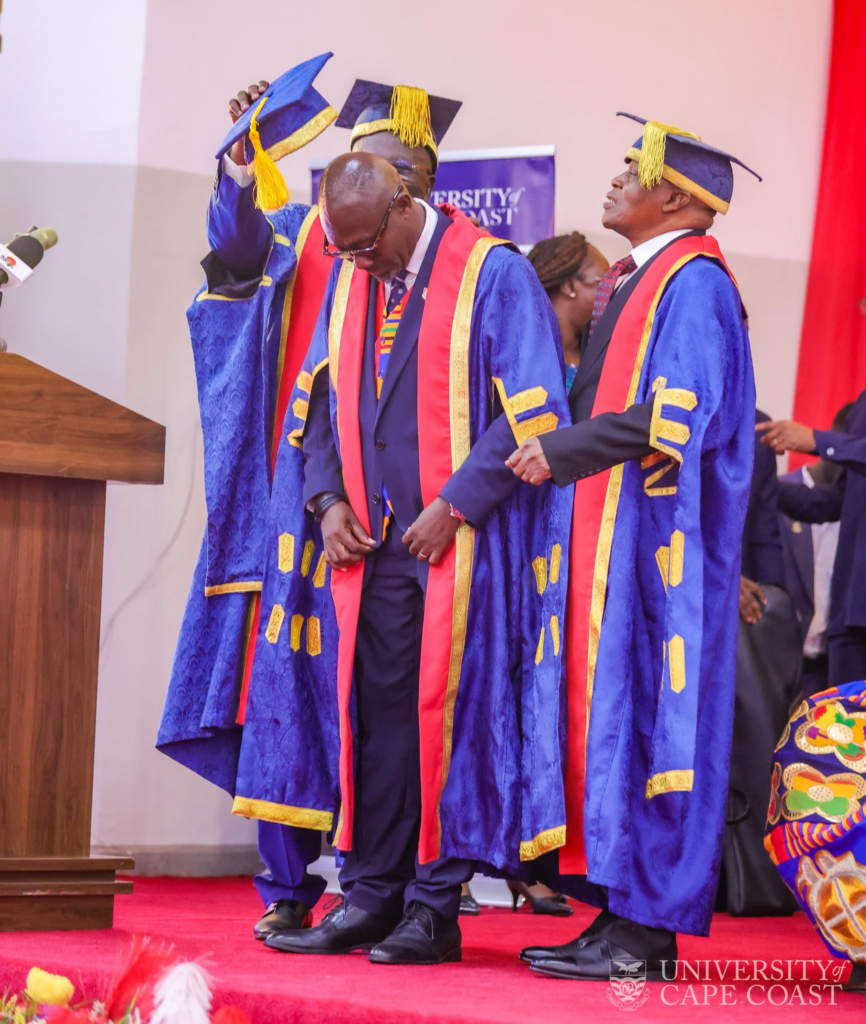
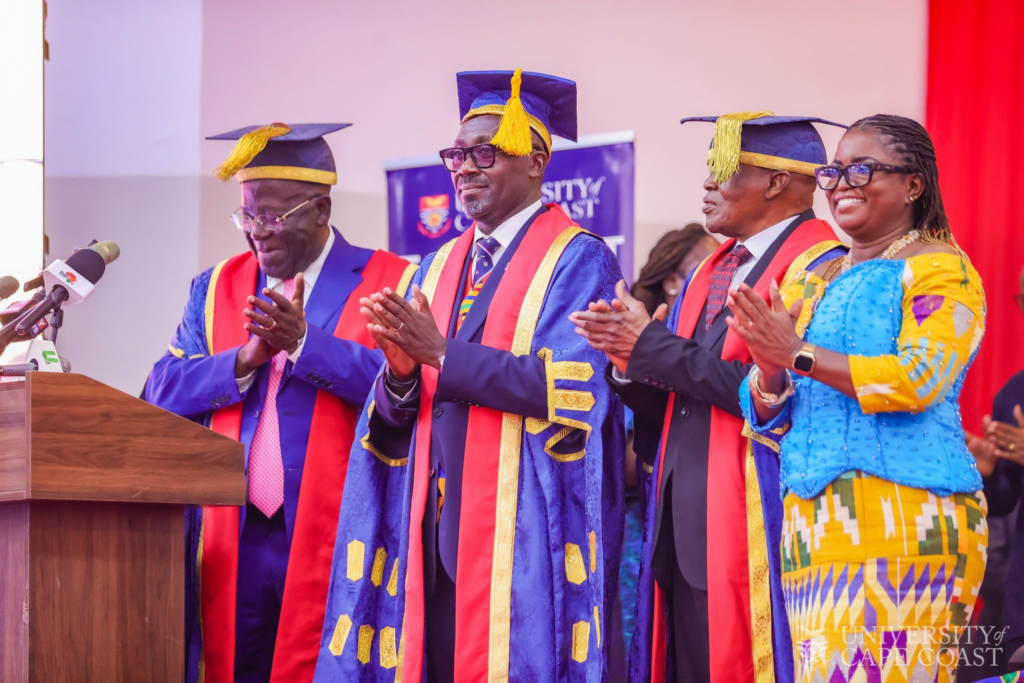
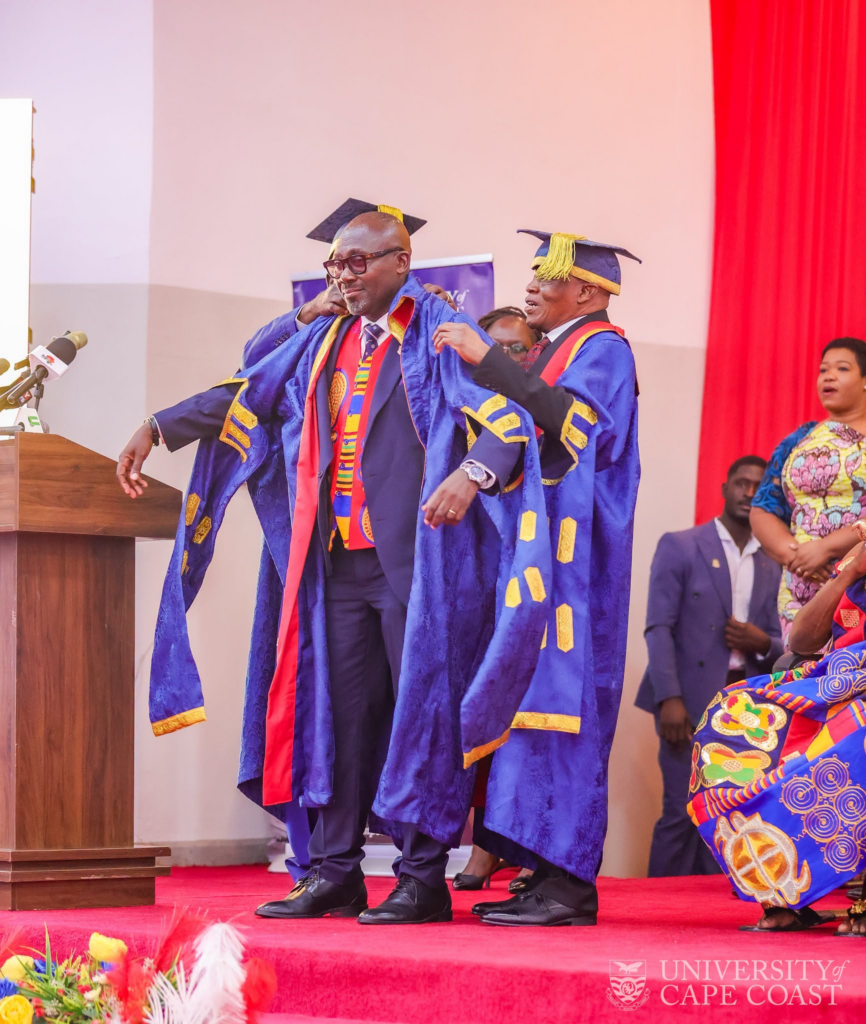
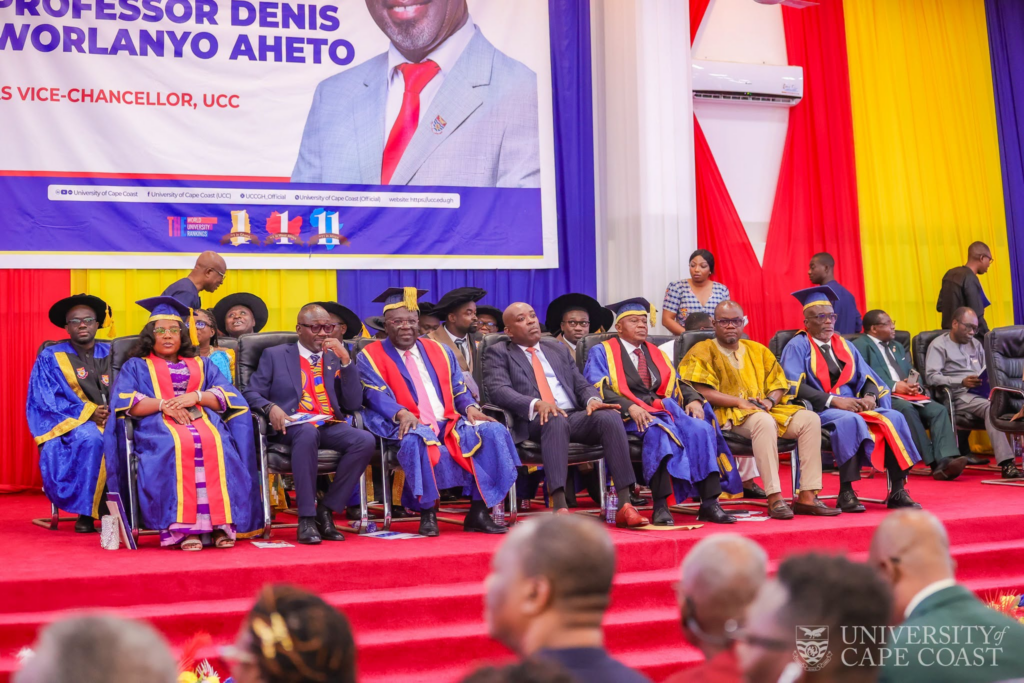
The University of Cape Coast (UCC) on Saturday, August 1, formally invested Professor Denis Worlanyo Aheto as its 12th Vice-Chancellor, marking the beginning of a new chapter for one of Ghana’s premier higher education institutions.
In his inaugural address, Professor Aheto described his appointment as “a solemn call to service” and pledged to lead the university with humility, integrity and a commitment to collaboration.
“It is with profound humility and a deep sense of responsibility that I stand before you today, honoured and privileged to be appointed and invested as the 12th Vice-Chancellor of our great university,” he told the gathering.

Professor Aheto explained that he referred to himself as the institution’s 12th Vice-Chancellor because historical records had been reviewed and corrected to accurately reflect the succession of the university’s leadership.
He expressed gratitude to God for the opportunity to serve and acknowledged the support of UCC Chancellor Dr Sam Esson Jonah, Chairman of the Governing Council, retired Supreme Court Justice William Atuguba, members of the Council and the university community.
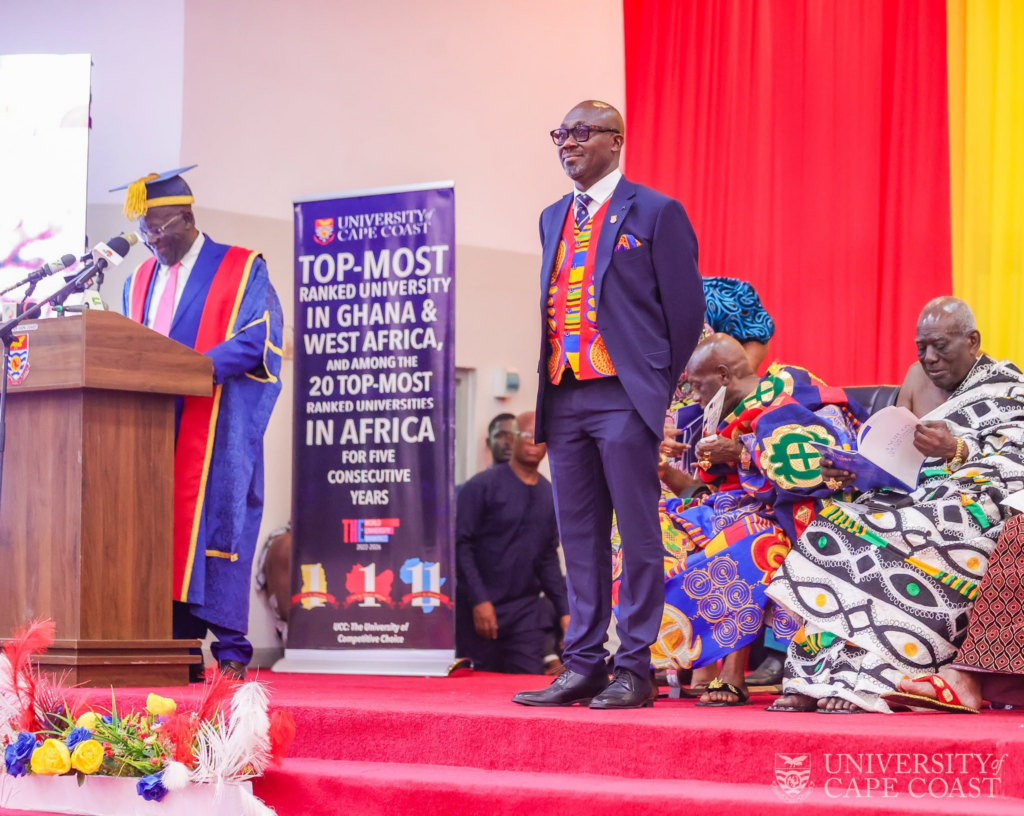
Setting out his vision for the institution, Professor Aheto said the University of Cape Coast must continue to strengthen its reputation as a centre of excellence in teaching, research, innovation and community engagement while responding to the rapidly evolving demands of higher education.
He stressed that leadership at the university level should not merely focus on administration but on stewardship, innovation and long-term institutional development.
According to him, his administration will prioritise strengthening academic programmes, increasing research output, expanding community engagement and enhancing the university’s international profile.
He also pledged to work closely with faculty, staff, students, alumni and development partners to consolidate the university’s achievements while pursuing new opportunities for growth.
Professor Aheto used the occasion to reflect on the progress made during his ten-month tenure as Acting Vice-Chancellor, having assumed the role in September 2025 following his appointment by the University’s Governing Council in accordance with a directive from the Ghana Tertiary Education Commission (GTEC).
He said the period was characterised by significant administrative reforms designed to improve efficiency and institutional governance.
Among the key measures implemented was the decentralisation of financial approval and travel authorisation processes to the various colleges, enabling quicker administrative decision-making while maintaining compliance with university financial regulations.
He also announced that a comprehensive State of the University Report had been commissioned and presented to both the Governing Council and members of Convocation to guide institutional planning.
Professor Aheto further disclosed that he chaired appointments and promotions board meetings that resulted in the appointment of 92 staff members and the promotion of 160 employees, including 32 full professors, 49 associate professors, 55 senior lecturers and 24 non-teaching staff.
The university also recorded a historic milestone during the period, graduating 17,542 students across 58 congregation sessions during the 2025–2026 academic year—the highest number of graduates in UCC’s history.
The most significant announcement during the investiture ceremony was the unveiling of UCC’s fully digital E-Campus, a flagship initiative that Professor Aheto described as central to his vision for the university’s future.
Developed in partnership with Astra Learning and approved by GTEC, the initiative is intended to transform access to higher education by expanding online learning opportunities for students in Ghana and around the world.
Professor Aheto revealed that approximately 36 postgraduate programmes, including Master’s degrees, Doctor of Business Administration (DBA) programmes and PhDs, have already received accreditation.
Among the newly approved programmes are MSc Cyber Security, MBA Sustainability and Governance Management, DBA in Financial Analysis and Management, and PhD Artificial Intelligence and Digital Transformation.
Marketing and recruitment for the programmes are already underway, with the first cohort expected to begin studies during the 2026–2027 academic year.
He estimated that the digital platform would enrol approximately 10,000 students annually, significantly expanding the university’s reach beyond its physical campuses.
Professor Aheto assured stakeholders that the E-Campus would complement existing regular, sandwich and distance education programmes rather than replace them.
“The E-Campus is an additional pathway that expands access to quality higher education, enhances flexibility for learners and positions the University of Cape Coast to meet the evolving demands of higher education in a digital age,” he said.

He acknowledged the contributions of the Provost of the College of Distance Education, Professor Ngoji, and Astra Learning Chief Executive Officer Dr Jeff Potts, who travelled from the United States to participate in the investiture ceremony.
Professor Aheto also announced that GTEC has approved the establishment of the Africa Ocean Institute (AOI) at the University of Cape Coast.
The institute will serve as a national and continental centre for ocean science, marine governance, policy research and capacity building.
It will integrate the Centre for Coastal Management, the Department of Fisheries and Aquatic Sciences—an African Union Centre of Excellence—and the newly established Centre for Marine Affairs into a single interdisciplinary institution.
The Vice-Chancellor said the institute would connect scientific research, public policy, industry and society to promote sustainable ocean governance and support the development of Africa’s blue economy.
In addition, he announced the establishment of the Africa Centre for Food Integrity (AfriFood), another GTEC-approved initiative aimed at strengthening research and innovation in food safety, food systems and agricultural sustainability.
Professor Aheto paid tribute to all former Vice-Chancellors of the University of Cape Coast, describing them as visionary leaders whose dedication laid the foundation for the institution’s growth and international reputation.
He thanked members of the Governing Council, management, faculty, staff, students and alumni for supporting him during the transition period and pledged to build on the achievements of his predecessors.
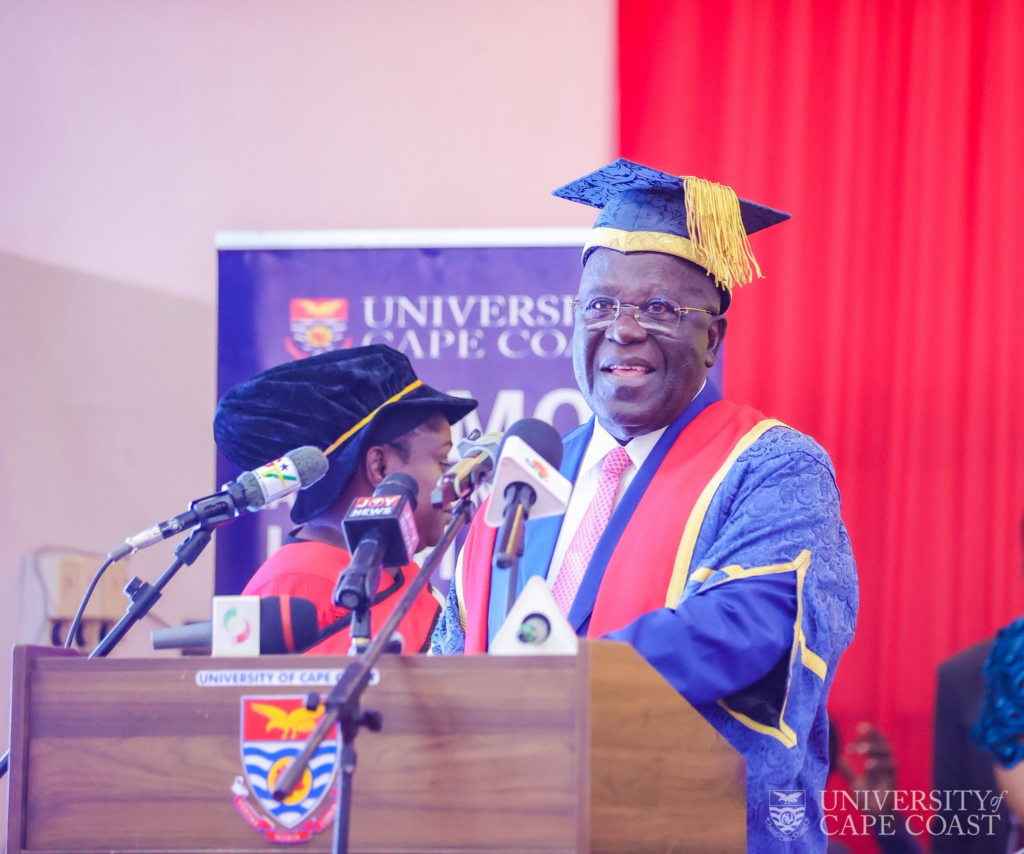
“We stand on the strong foundation that you have laid, and your collective legacy will continue to inspire me and colleagues to advance the University of Cape Coast to even greater heights,” he said.
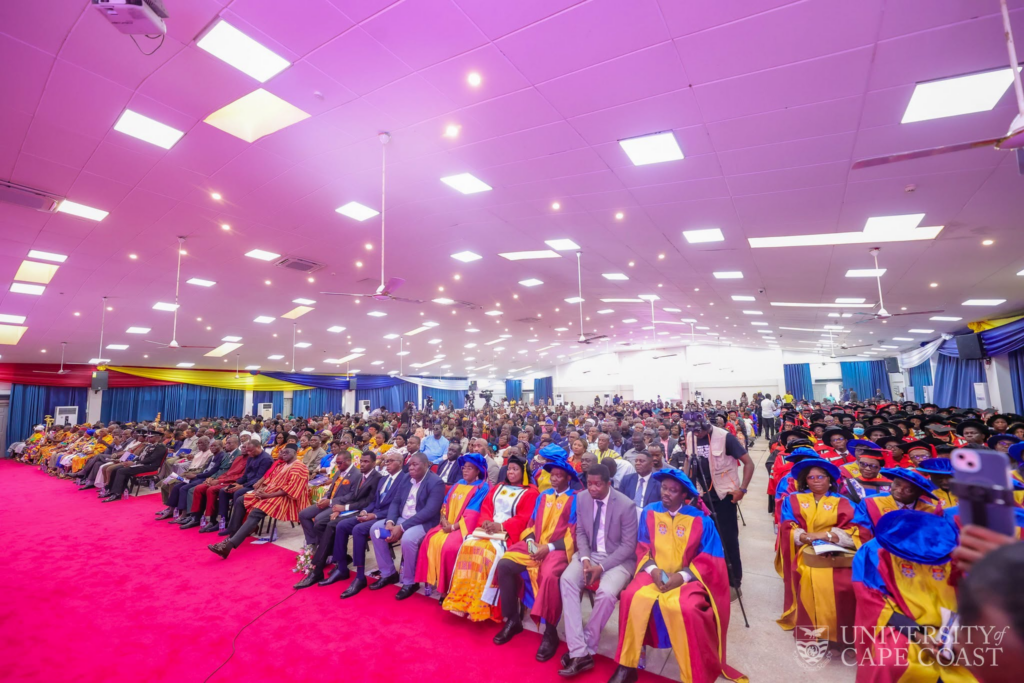
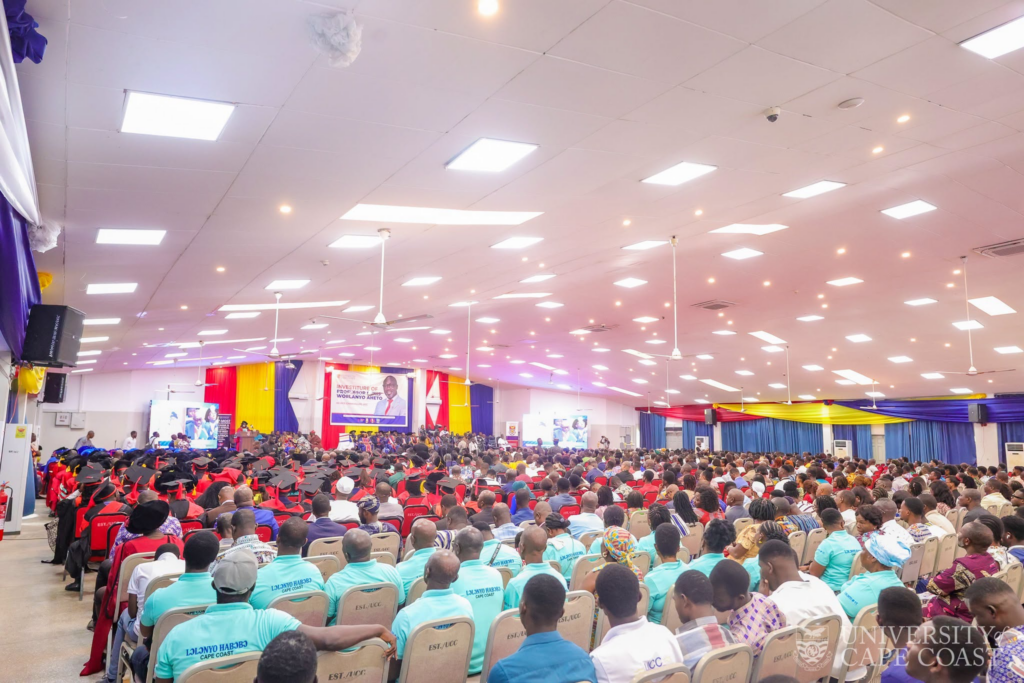
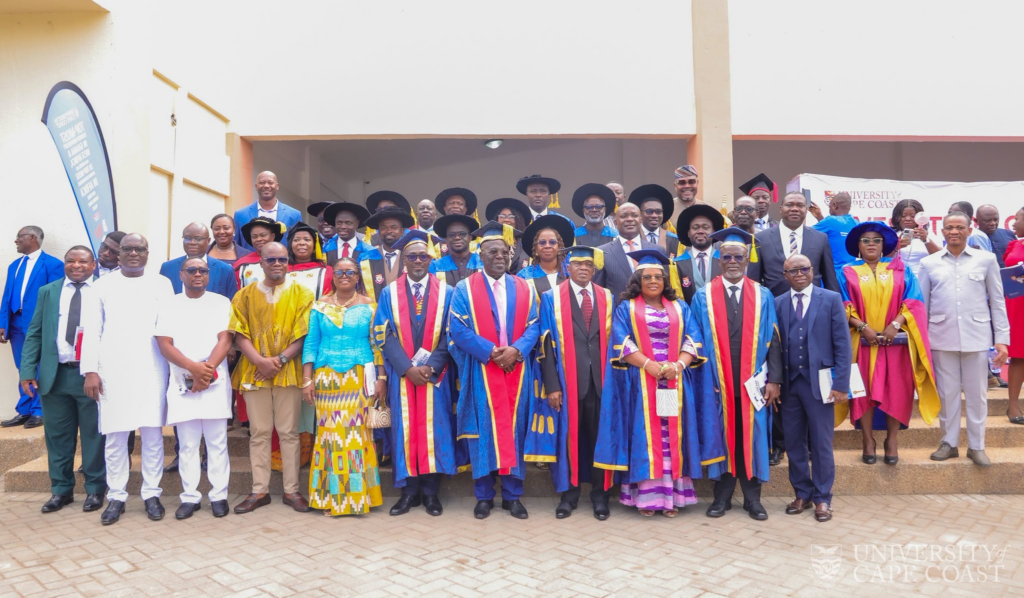
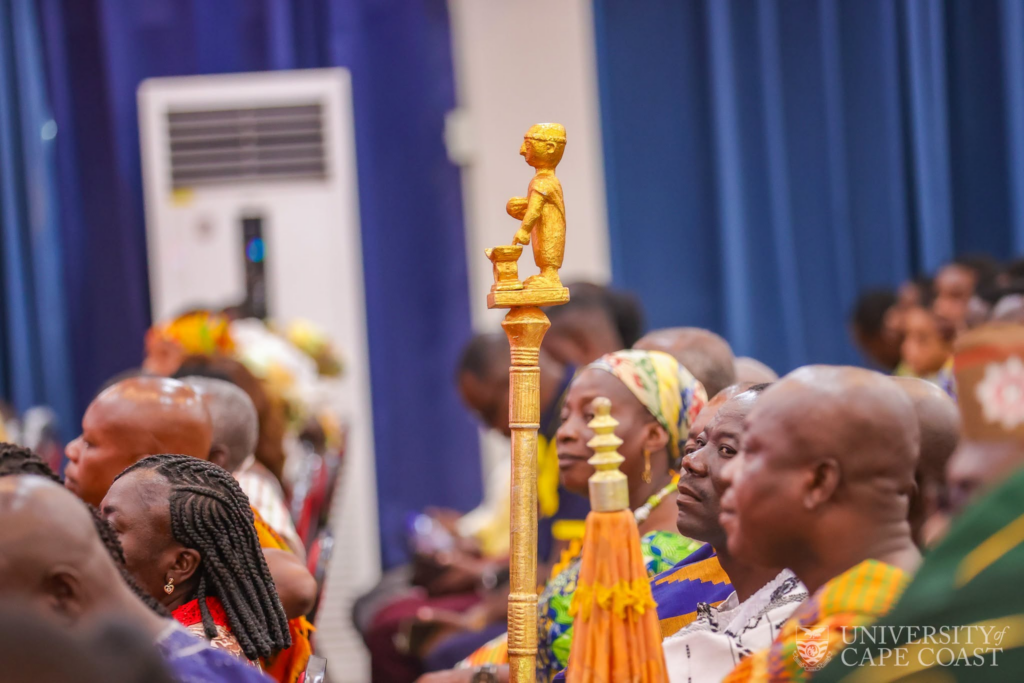
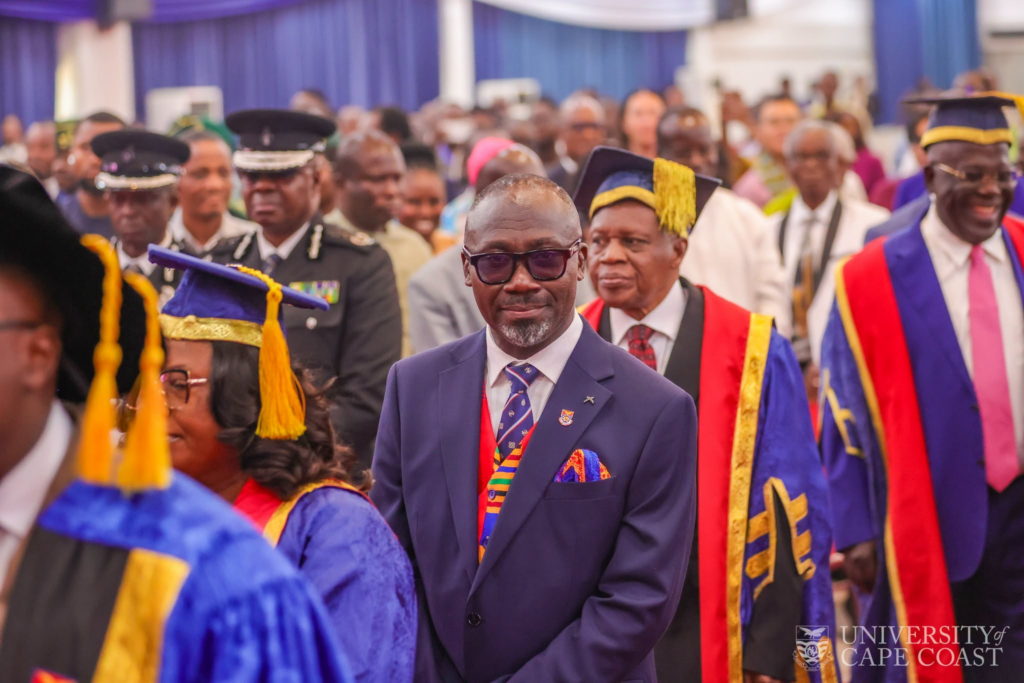
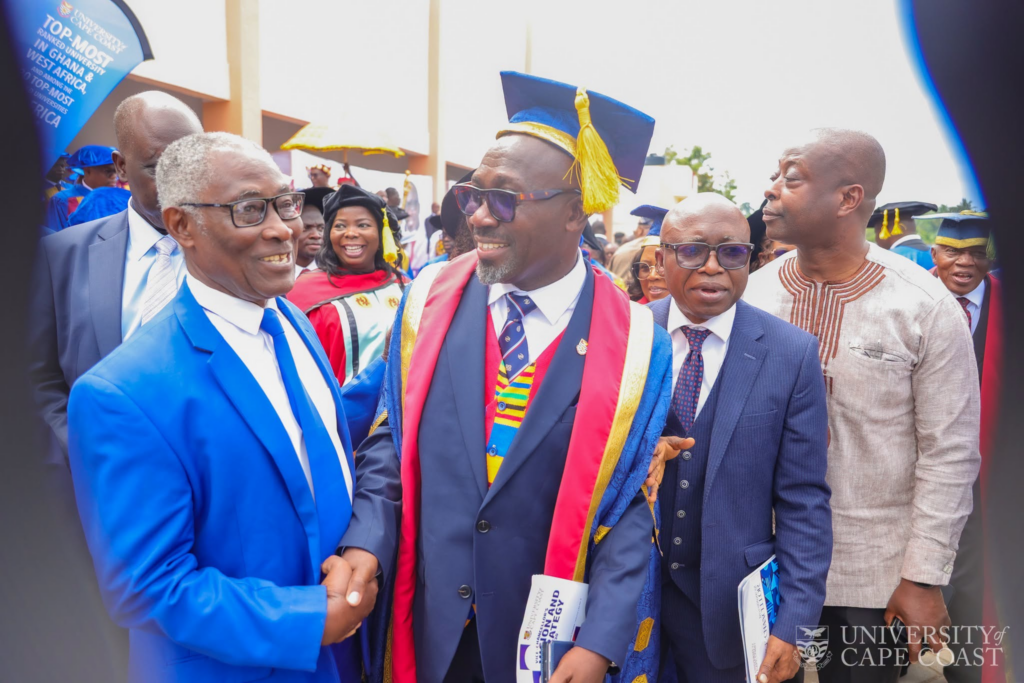
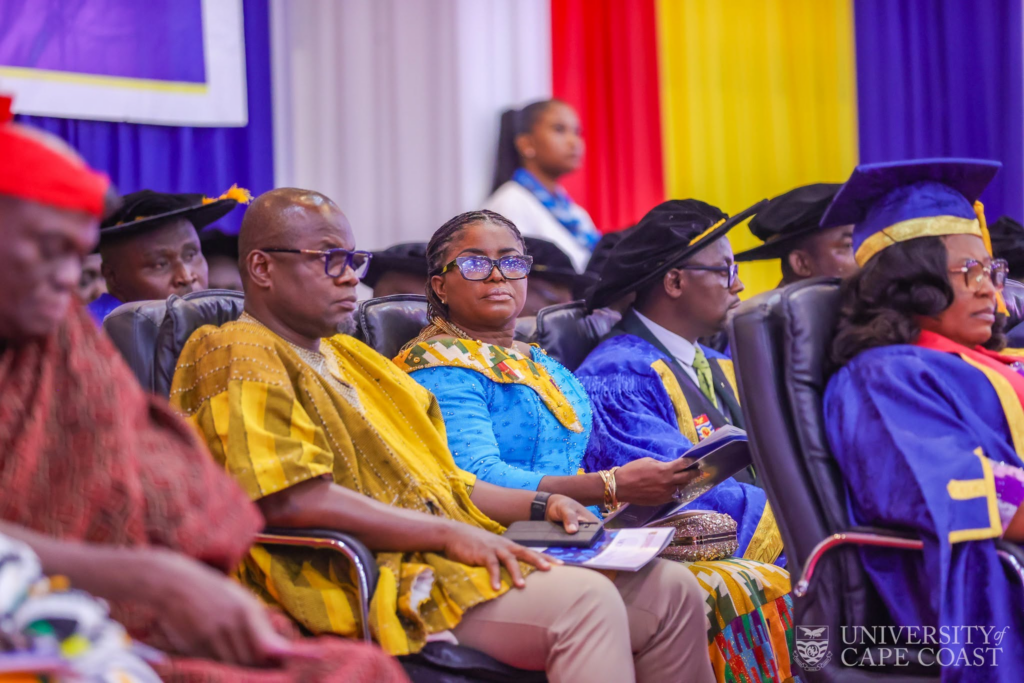
The investiture ceremony brought together senior government officials, members of the University’s Governing Council, traditional leaders, academics, students, alumni, development partners and representatives of the diplomatic community to witness the installation of the marine scientist and academic administrator as the university’s new chief executive.
