

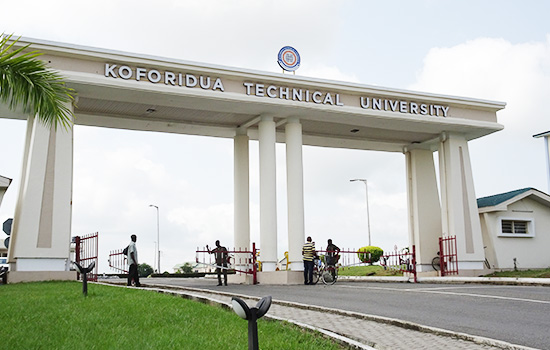
Koforidua, Eastern Region, Ghana//- The Department of Food and Post-harvest Technology of the Koforidua Technical University (KTU), in collaboration with the Sustainable Nutrition Advocacy and Community Knowledge (SNACK), has called for concerted action to reduce rampant food loss and waste in the country’s agricultural value chain.
According to studies, up to 50% of harvested fruits, vegetables, and root crops in Ghana are lost or wasted before ever reaching consumers, driven heavily by post-harvest bottlenecks.
Lecturer at KTU, Dr Yaw Gyau Akyereko, made the call at a conference to mark this year’s International Day of Awareness of Food Loss and Waste.
The conference, he explained, reinforced the need for individuals, researchers, food industries, educational institutions, and policymakers to work together to address food loss and waste.
While innovation and technology offer opportunities to improve food waste management, participants also recognised the importance of individual responsibility and behavioural change, particularly at the household level.
The conference held under the theme “Zero Food Loss and Waste: Innovation, Sustainability and Solutions for a Resilient Food System” brought together over 100 participants comprising academics, researchers, industrial players, students, entrepreneurs, development, among others.
It featured presentations by Prof. John Owusu, Vice-Chancellor of Koforidua Technical University, and Mr. Shadrach Ofori Yeboah, Deputy Technical Manager at HPW Fresh and Dry Ltd.
The discussions focused on the challenges of food loss and waste and exploration of innovative, practical, and sustainable solutions to address them.
The speakers highlighted the need to move beyond treating food waste as something to be discarded and instead recognise its potential as a valuable resource.
The participants also explored opportunities for converting food waste and by-products into useful products, including compost, organic fertiliser, biochar, and other value-added products.
A key message from the conference was the importance of measuring food loss and waste to develop effective solutions.
It was emphasised that understanding the quantity and sources of waste is essential for identifying appropriate technologies and improving waste management practices.
The conference also highlighted the broader implications of food loss, noting that wasted food represents not only a loss of food but also a waste of the water, energy, labour, raw materials, and other resources used in its production.
One of the major outcomes of the conference was participants’ commitment to applying the knowledge gained in their homes, workplaces, and communities.
In their feedback, participants identified several practical actions they intend to take, including:
- Turning household food waste into compost and organic fertiliser.
- Separating organic waste from inorganic materials to improve waste management.
- Exploring opportunities to transform food waste and by-products into valuable products.
- Measuring food waste in workplaces and using the data to identify opportunities for improvement.
- Conducting research with students to generate data that can inform food loss and waste management decisions.
These responses reflect a growing interest in practical approaches to reducing food waste and recovering value from materials that would otherwise be discarded.
The conference organised by the Department of Food and Post-harvest Technology at KTU and SNACK, a Ghanaian non-governmental organisation, reaffirmed the importance of continued education, research, collaboration, and practical action in building a more sustainable and resilient food system.
One message that stood out at the end of the conference was: “Food waste is not simply waste; it is a resource with the potential to create value. The challenge is to measure it, manage it, and turn that potential into action”.
