


Washington D.C., London, Accra//– The report makes the case that development cooperation should be understood through the broader balance sheet countries manage in pursuit of economic and social transformation — including domestic resources, institutional capacity, trade, investment, human capital, external partnerships, and exposure to growing global risks — not aid flows alone.
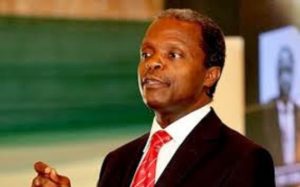
Said Coalition Co-Chair and former Nigerian Vice President Yemi Osinbajo about the findings, “Effective development cooperation depends on recognising that low- and middle-income countries are the primary architects of their own future. Partnerships must therefore be built on mutual respect, shared benefit, and development priorities that are clearly defined by those countries themselves.”
The report embraces a stylised “balance sheet” framework, examining the assets and liabilities — defined more broadly than pure financial flows — that shape a country’s ability to deliver on its development ambitions amid a tumultuous global landscape.
“Long-term development is obviously influenced by a variety of forces and shocks as we are currently seeing,” added Co-Chair and former Spanish Foreign Minister Arancha González Laya, “but development is first and foremost the result of domestic policy choices, productive investment, building up human capital through health and education, trade integration, innovation, and institutional strength.”
The report identifies institutional capacity as a central determinant of whether countries can effectively leverage diverse financial and non-finance resources and coordinate diverse forms of development cooperation.
It argues that the ability to strategically manage assets and liabilities — optimizing assets while actively mitigating liabilities — is often more important than the starting point of any country’s given balance sheet.
Notably, the report argues that the existing web of development cooperation is far deeper, more multi-layered, and diffuse than the traditional “north-south” framing with which development is often characterised. The review of country strategies found extensive forms of regional, bilateral, south-south, and triangular cooperation, with several low- and middle-income countries also acting as development providers themselves.
The report also emphasises that development assistance remains critically important for many vulnerable countries, but argues that aid has always been only one component of a much broader ecosystem shaping development outcomes. Domestic resources, remittances, trade, investment, philanthropy, institutional strength, and political leadership all play central roles in determining long-term development trajectories.
Ultimately, the report concludes that having countries at the centre as stewards of their own development trajectories has the potential to significantly improve development cooperation by fostering partnerships based on mutual benefit, respect, and transparent and clearly articulated priorities.
You can access the full report here.
