

BBC Eye investigates the global expansion of the manosphere, and the social media algorithms driving young men towards increasingly extreme views on gender, relationships and masculinity.
BBC Global Disinformation reporter Jacqui Wakefield spent a year examining the rise of two of the most influential manosphere figures in Latin America and Africa – El Temach in Mexico and Andrew Kibe in Kenya, who have millions of followers, speaking to women living with the real-life consequences of their influence.
This BBC World Service investigation comes as international debate continues over online safety and the influence of social media algorithms.
The women paying the price
Fernanda, a medical professional in Mexico, told the BBC her former partner – a dedicated follower of El Temach – subjected her to physical aggression, control, and threatened to kill her during their relationship.
“I think it affected me very deeply that this type of content was in our relationship,” she said. “I think he was already a sexist who was hiding it. But El Temach influenced him to no longer feel bad about it. He also forced me to watch videos from El Temach – the only option I had to survive was to be there listening to those videos. And he told me, ‘See? I’m not doing anything wrong. You have the wrong ideas. You’re the one who’s wrong.’”
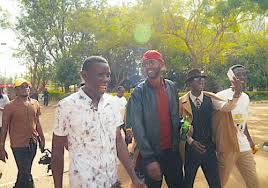
In Kenya, the BBC meets female students at a university after a book signing for Andrew Kibe, a popular Kenyan online personality. One student, Viraah, told the BBC she had observed changes in her male classmates who were engaging with his content.
She said: “I totally disagree with Kibe’s influence or content because it’s not encouraging at all. I have one of my classmates – he has been influenced by Kibe’s content. I feel like he has some hatred; he can’t maybe associate with the other gender. He has bought Kibe’s books. Wherever you find him, he is carrying a laptop and that book.”
The influencers monetising the manosphere
In Kenya, Andrew Kibe has built a following across multiple platforms through selling books, merchandise and even his own cryptocurrency coin.
He told the BBC that “anybody who is really my fan” should send him money, while an associate, with him during filming, referred to Kibe’s fans as “customers”.
Dr Awino Okech, a gender, sexuality and security studies expert, told the BBC what makes influencers like Kibe particularly effective in the Kenyan context: “He has found the ability – both by using local narratives and understanding of the national and local context – to feed into ongoing insecurities in society.”
In Mexico, El Temach – who has a combined following of more than 11 million – generates income through paid YouTube live chats (where viewers pay to have their comments highlighted during live streams), live events, and paid “baptisms” that are livestreamed to fans across Latin America and beyond.
Using multiple analytical tools, the BBC estimates that he made up to $1.5 million USD through social media views alone.
El Temach’s sister, Alex, told the BBC she fell out with her brother over his views and traces his trajectory to Western manosphere figures. She said, “Andrew Tate was super big at that time. And that’s how it happens. Any trend that starts in the United States will then be reflected here in Mexico.”
She described how her brother changed after returning to Mexico following an attempt to pursue an acting career: “It’s really astonishing to me to see him now because he was a totally different person. He was very free. Then he moved to L.A. to pursue his dream of becoming an actor. He went expecting greatness, and when he had nothing left, he just came back… It was sort of like a big reality check.”
Alex adds that while she believes El Temach stands by some of his content, “he believes some things and others: he’s just experimenting with what works best with the algorithm. If it works best in the algorithm, then it must be true.”
During the investigation, the BBC confronts Kibe on the contradictions between the life he sells to followers and the one he leads, and attempts to question El Temach following one of his live shows. When asked whether he lived by the ‘commandments’ he sells to young men, Kibe told Wakefield:
“I’m not here to try and be anyone’s anything… I am a God, I can be anything I want to be.”
El Temach’s team said they “categorically reject the allegations, which are unfounded and taken out of context.”
How the algorithm builds the pipeline
As part of the investigation, young male followers of Kibe and El Temach shared access to their social media histories, allowing the BBC to map how algorithms may be directing users toward increasingly polarising content.
Julián, 19, from Mexico, began following El Temach after searching for self-development content. His Instagram history shows a clear progression: early posts focused on cars, fitness and self-improvement. By April 2023, the first manosphere content appeared in his feed. In the following months, his engagement escalated – eventually commenting on women using language such as “whores” while praising “feminine and submissive women.”
When the BBC asked Julián about his extreme online comments. He said he regrets his tone but stands by the content of what he said.
In Kenya, a student called Ryan discovered Andrew Kibe, as he had lost his father when he was younger. He told the BBC: “My father had died ten years ago, and I was in a dilemma of being masculine or just remaining just a boy… there’s a certain role that a father plays in the family of giving his sons or daughters certain skills, advice, and maybe physical training. So, I lacked all these.”
He describes how Kibe has become a primary source of guidance: “Most of my teachings, I get them from Andrew Kibe. From masculinity, to growth, to personal development, to mentality, physical, and spiritual. He teaches me a lot.”
Dr Okech explains why she believes young men are believing this content: “They are tapping into young men and boys with real mental health challenges, and groups of men and boys in societies where unemployment rates are high, people do not have the resources to be able to live a meaningful life. And rather than addressing the absence of a State that provides you with good, proper, liveable conditions, it is women who are the problem.”
Jacqui Wakefield, BBC reporter, says:
“Through meeting devoted fans in a nightclub in Kenya to a live event in Las Vegas – and even being told misogyny doesn’t exist by an influencer, I saw firsthand how what begins online can have real, global consequences for women.”
As a woman stepping into this space, I experienced how this content is fuelling misogynistic attitudes and driving the gender divide. But above all, it was important for me to ensure the stories of the women being impacted by this content were heard.
Gaining access to young men’s social media accounts allowed me to see how quickly their feeds were dominated by this type of content: what appears to begin as self-development advice rapidly leaps into harmful, misogynistic quick fixes.”
