

The government of Ghana is putting together comprehensive legal processes to pursue and secure full financial compensation for citizens whose thriving businesses and life savings were destroyed in the latest wave of anti-immigrant violence in South Africa.
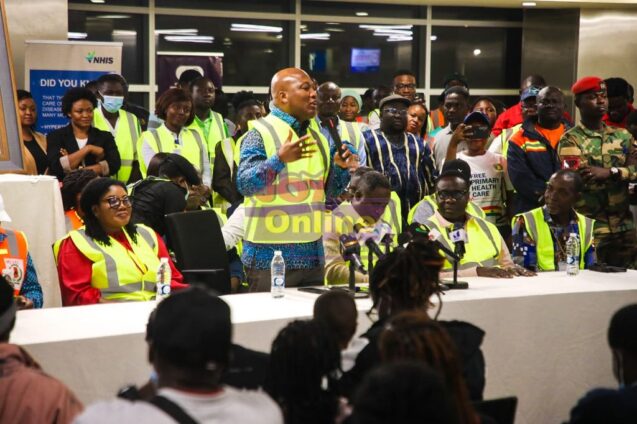
The Minister for Foreign Affairs and Regional Integration, Samuel Okudzeto Ablakwa, revealed this on Saturday night, June 6, 2026, at the Accra International Airport while welcoming the second batch of 345 Ghanaian evacuees back to the motherland.
Interacting with the returnees, many of whom were visibly distraught after abandoning their investments to escape with their lives, the minister assured them that the state would not allow their decades of hard labour to be wiped out by lawless vigilante groups.
A Promise to Reclaim Life Savings
Recognising the economic trauma of the evacuees, who watched their retail shops, warehouses, and homes targeted by arsonists and looters, Mr Ablakwa made it clear that the state’s intervention extends far beyond mere repatriation.
The minister explicitly committed the state’s legal apparatus to tracking down, documenting, and fighting for every single asset lost in the crossfire.
Addressing the displaced traders and workers directly, Mr Ablakwa stated:
“…your shops and what have you. So we are putting together legal processes that we will activate to ensure that those properties you invested in, and some of you, your life savings – you have worked for more than two decades, three decades, to put together businesses that were thriving. We are going to make sure that we go all out to obtain compensation for you.”
Decades of Hard Work Wiped Out
The ongoing crisis represents one of the most painful disruptions to the Ghanaian diaspora in recent years. A significant number of the returnees had lived in South Africa for decades, building robust businesses that contributed heavily to both their host communities and the Ghanaian economy through remittances.
The sudden explosion of xenophobic attacks directed at nationals of other African countries forced a massive rush for repatriation, with more than 1,500 anxious Ghanaians eventually registering for the emergency airlift coordinated by the Foreign Ministry and Ghana’s diplomatic mission in Pretoria.
The Saturday night flight brings the total number of successfully repatriated citizens to nearly 700, following an initial batch of approximately 300 evacuees who landed safely in Accra on May 27. Despite complex international logistics and initial administrative delays, the emergency corridor has remained highly efficient.
The Legal Battle Ahead
Ghana’s move to mount a formal compensation claim could involve bilateral state-to-state negotiations or petitioning regional human rights bodies, holding the South African state accountable for failing to protect foreign investments and enforce law and order.
Immediately after the minister’s briefing, officials from the National Disaster Management Organisation (NADMO) and the Ghana Immigration Service (GIS) began documenting the specific asset losses, business registrations, and properties left behind by each evacuee to build a solid legal dossier.
With a third emergency flight carrying over 300 additional passengers expected to land in Accra later today, Sunday, June 7, 2026, the government has reiterated that it will continue to act with maximum speed to secure both the lives and the economic rights of its citizens trapped in the xenophobic crisis. Myjoyonline
