

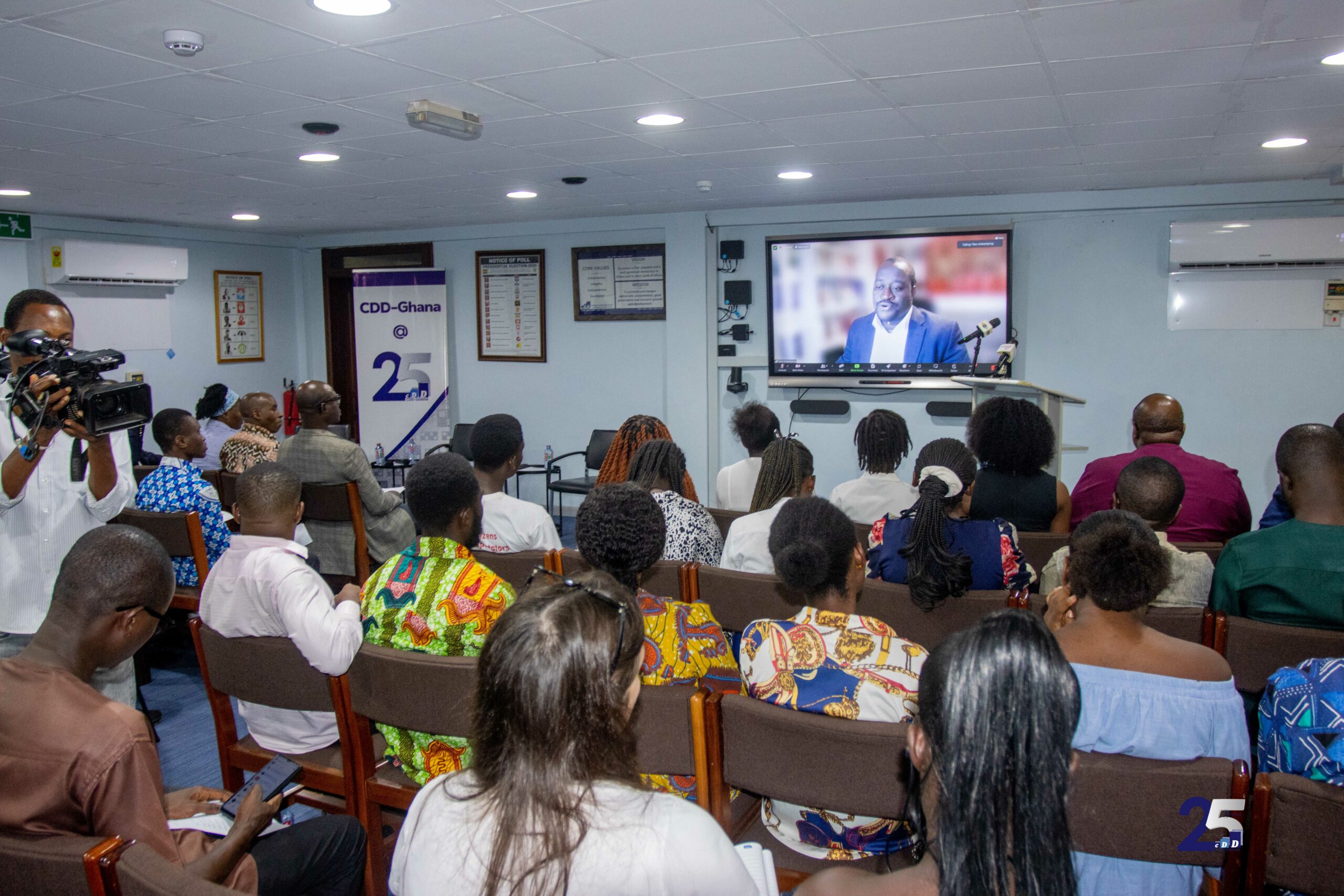

Accra, Ghana//-Economists at a roundtable discussion on Public Officers’ Responsiveness to Accountability and Transparency have revealed that accessing the remaining tranches of the Ghana-IMF support programme may be difficult.
They are casting doubts due to delays which impeded the West African country’s ability to receive the second tranche of $600 million under the programme.
The IMF earlier set the November 1, 2023, date for the disbursement of the second tranche, contingent upon Ghana meeting certain financing assurances from its external creditors.
The country has been unable to secure all the necessary assurances, putting the scheduled payment in danger.
The debt restructuring initiative which forms a very important part of Ghana’s three-year Extended Credit Facility (ECF) programme, aimed at reorganising approximately $10.5 billion of the country’s external debt, which had reached nearly $30 billion by June 2023.
If the country had received the second tranche in addition to the first tranche of $600 million, it would bring the total disbursement to $1.2 billion following the IMF’s first review.
However, the Government of Ghana recently said it was making good progress with its strategic plan to engage the Official Creditor Committee (OCC) of the Paris Club; secure a Memorandum of Understanding on debt restructuring; and go before the IMF Executive Board for approval of the first review.
It is even going to be more challenging
Setting the tone for the discussion at the roundtable event organised by the Citizens’ Coalition which is an amalgamation of civil society organisations and individuals, a leading Ghanaian economist based in the UK, Dr Theo Acheampong said that “It is even going to be further challenging or very difficult to be able to get the full measure of what we are looking to get from our external debt restructuring”.
According to him, Ghana was supposed to have gotten in total of about $4.2 billion in terms of extra financing from both the IMF and the restructuring of its external debt by the end of the year.
In his own words: “As we speak currently we got the $600 million from the IMF and if we get the $600 million from the second tranche subject to the official debt restructuring, then what that means is that already by the end of this year, we would have even missed our target on the financing that we were supposed to receive because we have not done the whole external debt restructuring”.
So, if you take $600 million from the IMF over this year and divide that by $4.2 billion, you are going to get around 25% or 30% of what was supposed to come through for this year alone”.
He noted that there was a high expectation of the country receiving the second tranche of the IMF money on time. “As we speak people are beginning to worry about the delays in accessing the second tranche”, he said.
“Again, those of us in civil society warned the government in September that the government must be a bit measured and careful in terms of how they communicate some of these expectations to the market”.
Dr Acheampong said: “Ghana most of us know has been virtually broke for a while now to the point that it is in debt distress, and it is hard to go through several processes and interventions to correct that especially on reaching out to the IMF”.
He used the occasion to call on the managers of the Ghanaian economy to address challenges impeding delays in securing the second tranche as part of the $3 billion programme, going into 2024.
Dr Acheampong who is also a political risk analyst said Ghana had chalked some successes in the way it handled the Domestic Debt Exchange Programme (DDEP).
Although the DDEP was uncomfortable to many financial institutions, and individual pension bondholders, among others it chalked successes on the broader macroeconomy side.
The government does claim some successes in terms of reducing for instance the coupon and its extended maturity on some of the debt instruments, he stated.
Also, overall, it has given the government about Ghs61 billion worth of savings or around 7% of GDP, this is from the 2024 budget which was read recently.
Of course, the trade-off is the serious impact it has on the financial sector credit availability and access to financing in general for all businesses and the private sector.
Looking for macroeconomic stability
Another economist and Professor of the University of Ghana Business School, Godfrey Bokpin said: “What Ghana is looking for under the IMF-supported program is macroeconomic stability”.
That is not an end in itself. The dominant view in economics is that to have a greater economic transformation inclusive growth and inclusive productive growth, you first need to have macroeconomic stability. So, macroeconomic stability is a means to an end. What we are struggling to achieve now is a means”.

He admitted that since Ghana’s independence, they had been struggling to achieve the means. “No one has underachieved it. We have not. So, to have the economic transformation and inclusive productive growth, we need sustained macroeconomic stability for not less than 15 years”, Prof Bokpin pointed out.
So, we are still recovering from this old structure. We need a leader who will do something fundament about this Guggisberg economic structure”.
Tax incentives
Senior Lecturer of the University of Ghana School of Law, Dr Abdallah Ali-Nakyea urged the government to come out with incentives such as tax credits for capital expenditures or research and development to encourage businesses to invest, innovate, and contribute to economic growth.
According to him although the country is going through an economic crisis, businesses play a pivotal role in economic recovery, and taxation policies can influence their investment decisions.
Dr Ali-Nakyea who is a well-known tax expert added: “While implementing expansionary taxation policies may be necessary to address immediate fiscal challenges, policymakers must balance short-term imperatives with long-term fiscal sustainability.
Sustainable tax policies that promote economic growth without compromising the fiscal health of the government are crucial for a robust recovery”.
The country is at a crossroads
The Director of Advocacy and Policy Engagement at Ghana Center for Democratic Development (CDD-Ghana), Dr Kojo Asante said everybody believes that the country is at a crossroads.
As Ghanaians are preparing for the Christmas celebrations, many of them are finding it difficult to afford basic commodities to cook for their families and friends, he added.

“Both the economic crisis and the 17th IMF programme call for a very serious introspection. In our efforts to react to this current predicament, we seem to still be doing business as usual.
One will think that a crisis normally helps you to change behaviour it scares you a little bit and maybe change differently about how you approach it”.
However, Dr Asante observed that since the government even announced that the country was going to the IMF, ballooning public debt, exchange rate and food inflation are still rising and nothing seems to change.
Democratic credentials
The Head of Governance and Growth at the United Nations Development Programme (UNDP), Dr Edward Ampratwum, noted that Ghana’s governance and democratic credentials are touted as one of the best in Africa.
Indeed, Ghana has recorded good indicators in governance and other indicators which paint very nice pictures of Ghana, despite these achievements challenges such as vertical and horizontal among government institutions and others undermine accountability systems in the country, he added.

“The UNDP Ghana Programme Office recognises the need to collaborate with national institutions and key actors to promote transparency accountability and cost-effectiveness in public financial management in the country.
UNDP has and will continue to support effective collaboration among local authorities, civil society organisations, communities, and development partners for keeping democratic development”.
Dr Ampratwum therefore reassured UNDP of continuous commitment to working with all stakeholders to enhance and promote democracy and inclusive growth in the country.
Abdul-Karim Mohammed, a Coordinator of Citizens’ Coalition, said: “As members of the Citizens’ Coalition working together with the Economic Governance Platform, we take it upon ourselves that we don’t want the lives and livelihoods of Ghanaians to be sacrificed on the altar of macroeconomic stability”.
So, we make a very strong case that whatever IMF Programme that the government subscribes to must have in it some social protection measures for the poor and the vulnerable people”.
