

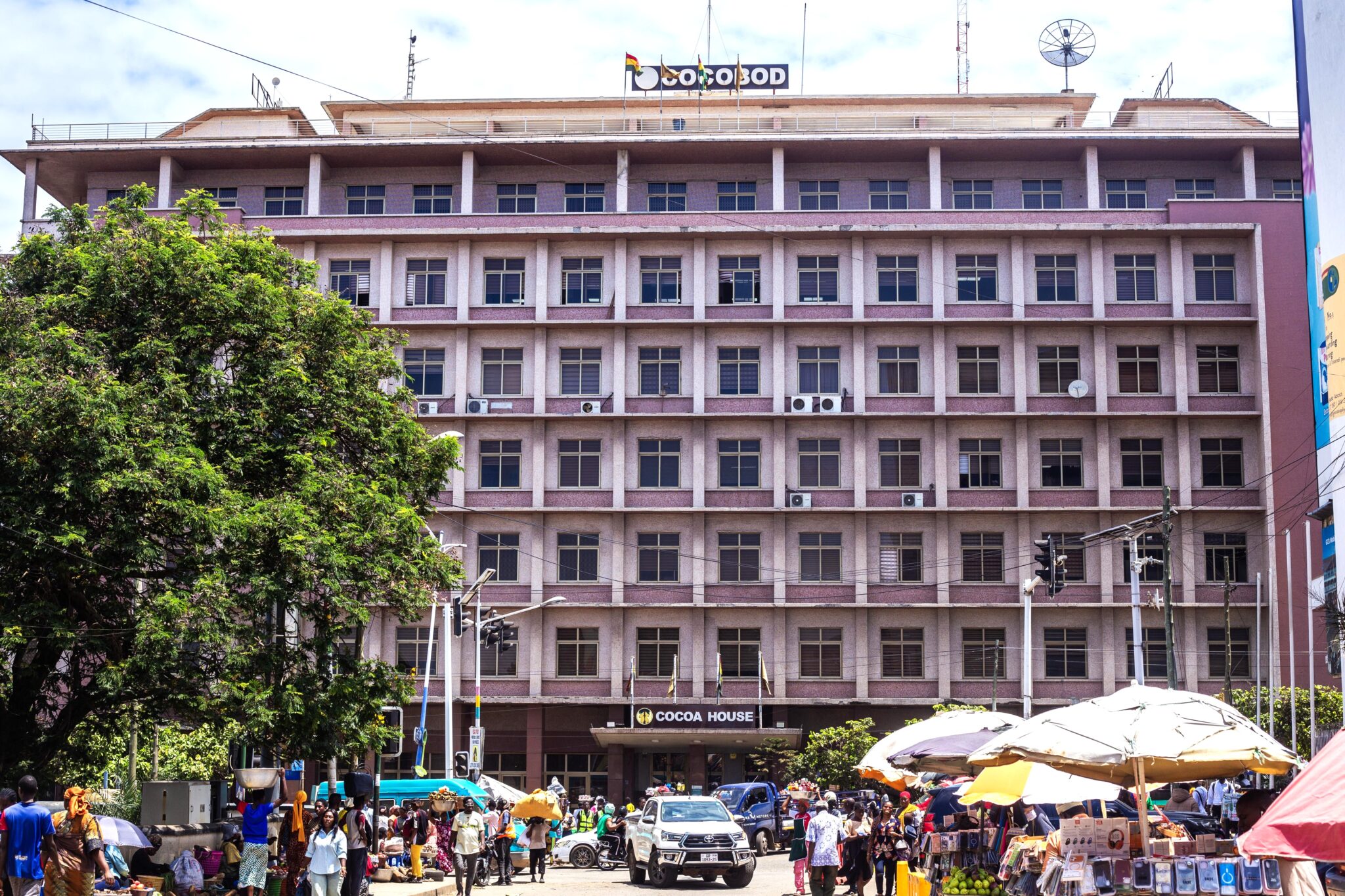
The Ghana Cocoa Board (COCOBOD) goes around every year seeking loans to buy cocoa, only to land on a lender’s watchlist. A watchlist is a red flag that international financiers reserve for borrowers whose finances they no longer trust. Still, the Board recently reported a GH¢5.11 billion profit, driven largely by exchange-rate gains.
This investigation, China Capital, based on 4.8 million files from the archives of the London branch and subsidiary of the Industrial and Commercial Bank of China (ICBC), reveals how ICBC pursued deals considered strategic for Beijing even when they involved opaque companies linked to kleptocrats, oligarchs, and China’s political establishment.
This investigation by Ghana Business News is part of an ICIJ-led collaboration involving 75 journalists from 24 media organisations in 24 countries.
As part of this investigation, we looked into documents and correspondence found in China Capital and eight of COCOBOD’s annual reports published on the entity’s website, obtained and analysed by Ghana Business News, which show why the cocoa regulator made the list – mounting debt, chronic secrecy, and a pattern of financial mismanagement that has gone unchallenged even as the Board returns to global markets year after year, cap in hand, to borrow the money it needs to pay cocoa farmers.
In November 2019, COCOBOD received a $600-million syndicated loan from a consortium of lenders, including ICBC. The loan became a centrepiece of the African Investment Forum organised by the African Development Bank in Johannesburg, South Africa.
When the Ghana government became indebted and was compelled to introduce the Domestic Debt Exchange Programme (DDEP), also known as the ‘haircut’, a debt restructuring exercise aimed at pulling Ghana back from debt distress, the Board was one of the state entities most significantly affected.
In one of the emails found in the files, COCOBOD was watchlisted on February 9, 2023, in what is titled Credit Committee No. 6 of the ICBC.
Dr Evans Kissi, a lecturer and researcher in sustainability management in the international food industry at the University of Kassel in Germany, says COCOBOD’s operations lacked transparency and credibility.
“There is a bit of opaqueness in the entire system”, he says.
Nicholas Opoku, a lawyer and policy consultant who specialises in regulatory compliance and cross-border commerce echoed that assessment.
“Transparency in the cocoa sector remains deeply inadequate, particularly regarding price build-up calculations, administrative cost deductions, and debt servicing”, he told Ghana Business News.
COCOBOD suffers a ‘haircut’
Information in the files shows for the first time how much ‘haircut’ COCOBOD suffered. It shows the exposure at $17.5 million as of September 30, 2023.
It also describes COCOBOD’s finances as weak and suggests a move to shore them up; to improve its position, the Board restructured GH¢15.5 billion ($1.3 billion) in short-term local debt, known as 180-day cocoa bills.
Under the government’s DDEP, the Bank of Ghana’s GH¢7.4 billion in those bills took a 50 per cent haircut. Local banks held the remainder.
The document further shows that more than 97 per cent of the bills were restructured into term debt, with repayments spread over five years.
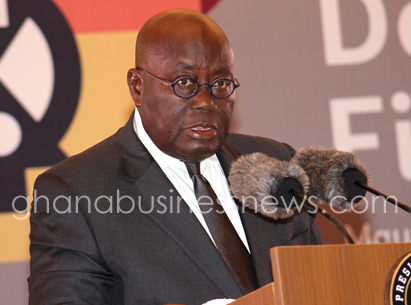
“I want to assure all Ghanaians that no individual or institutional investor, including pension funds, in government treasury bills or instruments will lose their money as a result of our ongoing IMF negotiations. There will be no ‘haircuts,’” the former president said in 2022.But it didn’t take long before haircuts hit.
Under the programme, domestic bondholders were compelled to swap their existing high-yielding bonds for new ones with drastically lower coupon rates and extended maturities.
For instance, pre-DDEP government bonds carried interest rates between 15 per cent and 21 per cent annually. Rates fell to as low as zero per cent in 2023, then rose gradually to 10 per cent in later years, with maturities extending up to 15 years. The exchange resulted in 12 new domestic bonds with staggered maturities starting from 2027 to 2038. Several pensioners eventually lost their savings despite protesting against the Akufo-Addo government.
While examining COCOBOD’s books before another financial request, ICBC observed that there were, at that time, “sufficient funds” in the offshore collection account to cover the next repayment in November 2023. They were, however, silent on the exact amount.
“Under the government’s DDEP, the Bank of Ghana’s GH¢7.4 billion in those bills took a 50 per cent haircut. Local banks held the remainder”.
Auditors, however, found that the management accounts as at September 30, 2022, showed negative equity of GH¢3.526 billion ($326 million), compared with positive equity of GH¢132 million ($12.5 million) at March 31, 2023.
The government then issued a Letter of Comfort promising to inject GH¢1 billion, about $94 million, into the COCOBOD for the 2023/2024 season if the Board’s equity fell into the negative.
The financiers closely monitored sovereign and cocoa bill maturities and restructuring, loan repayments, cocoa production, and shipments.
COCOBOD’s procurement indiscretions

In June 2026, Ghana’s Deputy Minister of Finance, Thomas Ampem Nyarko, told Parliament that the cocoa sector was dealing with significant fiscal pressures due to procurement commitments that exceeded budgetary allocations in previous crop seasons.
He said even though only $312.8 million was provisioned in the COCOBOD budget for the 2021–2022 crop year, a total of $455.7 million was procured for agrochemicals. He explained that the situation worsened as additional procurement continued in subsequent years despite outstanding payments to suppliers.
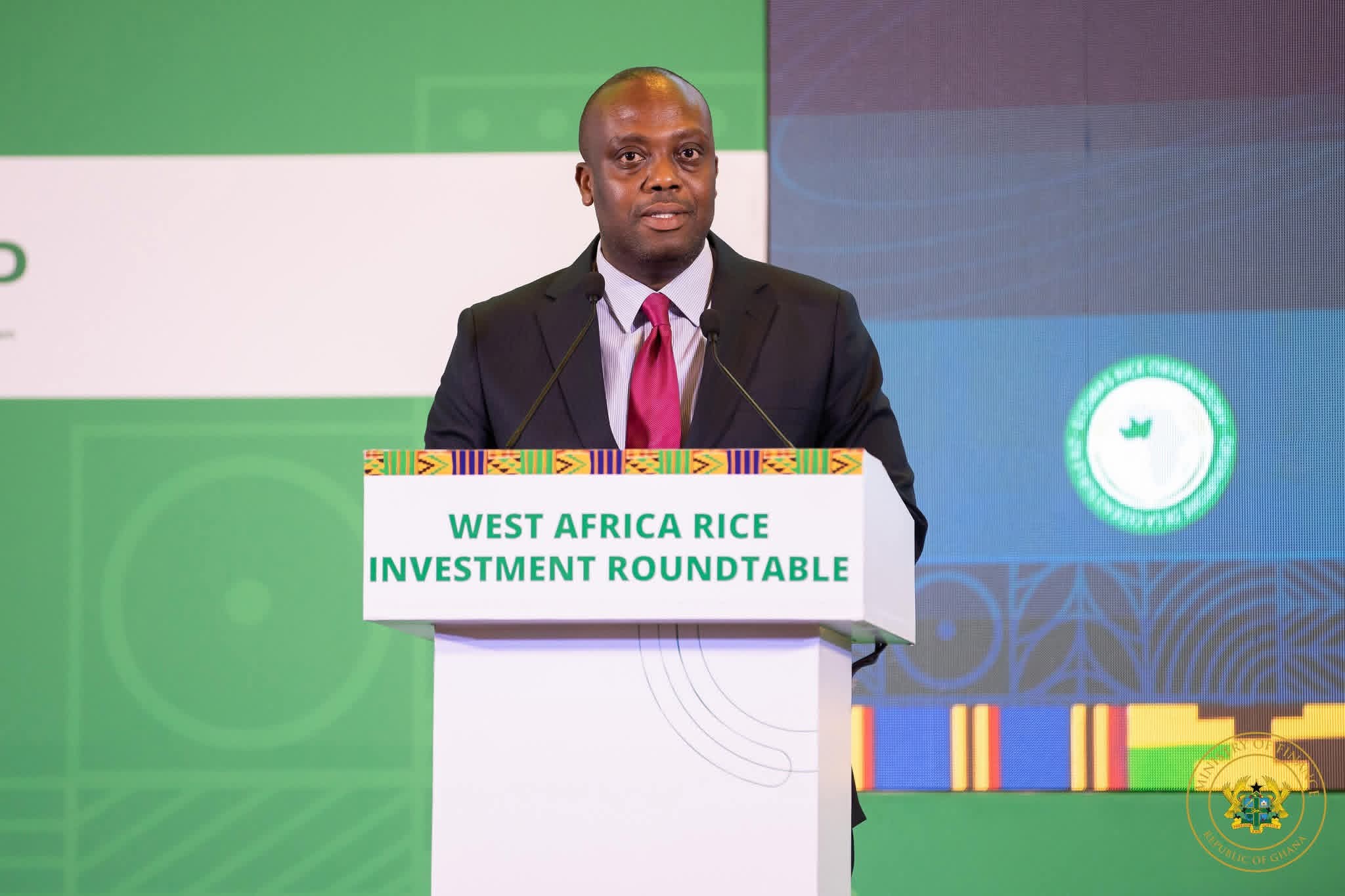
The deputy minister further disclosed that while $76.5 million was budgeted between the 2023 and 2024 seasons alone, COCOBOD contracted about $668.6 million worth of agrochemicals.
“While procurement of fertilisers and agrochemicals was increasing, cocoa production was declining, raising questions as to what these fertilisers and agrochemicals were used for,” he stated.
Opoku told Ghana Business News that COCOBOD’s failures include persistent fiscal deficits, heavy indebtedness, high operational overhead, and perennial delays in payment to cocoa farmers.
“The clearest proof that the state-run marketing system is insolvent is the paralysis now gripping the Produce Buying Company, the government-backed firm legally required to act as the cocoa sector’s buyer of last resort,” he said.
The system was designed to profit by fixing the price paid to farmers well below world-market rates and pocketing the margin. Right now, it can no longer keep cash flowing at the point of purchase.
Dr John Osae-Kwapong, a CDD-Ghana Fellow, said COCOBOD’s debt situation is the clearest sign that the industry regulator has mismanaged its finances. For example, the February 2026 cut to the producer price could have been avoided if COCOBOD had a stabilisation fund.
“But there can only be a stabilisation fund with proper management of finances when the global market price of cocoa is high,” he said.
Opoku told Ghana Business News that COCOBOD’s failures include persistent fiscal deficits, heavy indebtedness, high operational overhead, and perennial delays in payment to cocoa farmers.
John Sitsofe Mensah, an associate at IMANI Centre for Policy and Education, a think tank in Ghana, compared it to Brazil’s state agricultural monopolies, which also leaned heavily on government borrowing to prop up farm-gate prices and control exports.
“Brazil eventually hit a wall when disease and shifting markets made the debt impossible to sustain, and COCOBOD’s commodity-backed lending has now reached that same point,” he said.
Though the model delivered decades of stability, Mensah argued that using Ghana’s raw cocoa beans as collateral for offshore debt was precisely what held back the country’s own processing industry.
COCOBOD had negative equity of GH¢3.5 billion
The Board’s finances were in such poor shape that financiers kept close watch, the files show.
The documents also show a government pledge tied to the Annual Pre-export Finance Facility.
In a Letter of Comfort, the government said it would inject GH¢1 billion, or $94 million, into COCOBOD for the 2023/2024 season if the Board’s equity turned negative. ICBC however, kept monitoring sovereign cocoa bill maturities and restructuring, loan repayments, cocoa production and shipments.
Inside the financial troubles that put COCOBOD on a lender’s watchlist

Email correspondence among financiers in the files shows that ICBC’s London branch placed COCOBOD on a watchlist because of concerns about its financial condition.
The lender’s concerns came against a backdrop of years of scrutiny over COCOBOD’s finances. Yet, despite allegations of financial mismanagement, only one former COCOBOD chief executive, Dr Stephen Opuni, and a businessman, Seidu Agongo, have faced criminal prosecution over the agency’s operations.
The two men were accused of causing more than GH¢271 million in financial losses to the state through a series of fertiliser deals during Dr Opuni’s tenure. Their trial lasted nearly eight years before Ghana’s change of government ended it.
In February 2025, the new Attorney-General, Dr Dominic Ayine, filed a nolle prosequi, formally discontinuing the case. The decision effectively ended the prosecution and released the two men from the charges.
At a news conference on February 12, 2025, Dr Ayine said the decision was consistent with Article 296 of Ghana’s Constitution, which requires discretionary powers to be exercised fairly, reasonably and transparently.
He said a review of the case had uncovered significant evidence supporting the effectiveness of Lithovit, the liquid fertiliser at the centre of the prosecution. The state had alleged that the fertiliser was substandard and that its use had contributed to financial losses.

Dr Ayine gave three principal reasons for abandoning the case. Some charges, he said, were defective and unsupported by the facts or common sense. He also said the evidence raised substantial doubts about the defendants’ guilt and that prosecutors had failed to establish that Lithovit was ineffective.
The Attorney-General said he had consulted the Director of Public Prosecutions, defence lawyers, investigators and other stakeholders before deciding to discontinue the case.
On ethical and professional considerations, he said he could not, in good conscience, continue prosecutions given the weight of evidence contradicting the charges.
A look at eight of COCOBOD’s financial reports

Ghana Business News analysed eight of COCOBOD’s annual reports available online, and what they reveal is questionable financial management hidden from public scrutiny for decades.
COCOBOD is required to publish its annual reports every year, but over its almost 80-year existence, only eight annual reports were available on its website at the time of writing.
Ghana Business News wrote to the Board requesting copies of some of the missing annual reports for use in this analysis but received no response.
Meanwhile, the available documents show inconsistencies in how the Board presents its annual reports. For instance, in some financial years it prepared consolidated reports, while in others it prepared only stand-alone reports.
A closer look at the eight reports reveals a state enterprise sliding deep into losses to near-total equity collapse, while it tells itself at least three different stories about its own bottom line.
After one profitable year, COCOBOD slid into years of losses
In the 2014/2015 financial year, COCOBOD reported a profit of GH¢152.1 million; it is the only profit in the eight annual reports posted on its own website covering the 44th annual report (2021/2013) through the 52nd annual report (2020-2021).
Every other year, the record shows losses.
In 2021/2013, it lost GH¢1.09 billion; the 2014/2015 report is not available. Then it recorded a GH¢216.7 million loss in 2015/2016. The loss then went down to GH¢78.2 million in 2017/2018 – this loss can be described as the best of the bad years.
Then it recorded GH¢320.6 million in 2018/2019, GH¢426.3 million in 2019/2020, and finally GH¢2.44 billion in 2020/21 — a loss roughly 5.7 times the year before it and bigger than every loss from 2016/2017 through 2019/2020 combined.
By the time the 52nd Annual Report closed its books on September 30, 2021, COCOBOD’s total equity, the assets over liabilities that is supposed to represent what the institution is actually worth, had fallen to GH¢14.3 million. A year earlier it had stood at GH¢2.91 billion.
In balance-sheet terms, Ghana’s cocoa regulator had been wiped out.
Revenue sources and expenditure items
From the eight annual reports we analysed, we found that direct costs alone consumed 72–82 per cent of total expenditure every year, while cocoa bean sales alone generated 93–95 per cent of revenue
This pattern clearly indicates that COCOBOD had little diversification on either side of the ledger, which further amplifies the impact of cocoa price swings and rising input/finance costs on the bottom line.

 A miraculous turnaround


Then a miracle happened in 2026, just as Ghana Business News started asking questions about the financial health of the country’s cash cow.
In a report published on August 28, 2026, Ghana’s State Interests Governance Authority (SIGA), which oversees the country’s 175 state-owned enterprises, reported a striking turnaround at COCOBOD: the cocoa regulator swung from a GH¢5.73 billion loss to a GH¢5.11 billion profit.
The turnaround was driven in part by gains from exchange-rate movements, alongside a sharp increase in cocoa sales and prices.
According to SIGA’s 2025 State Ownership Report, COCOBOD sold 628,996 metric tonnes of cocoa in the 2024–2025 financial year, up from 460,510 tonnes the previous year. The weighted average selling price also rose 88.42 per cent, from $2,746 to $5,174 a tonne.
The report attributed the operating revenue growth to higher sales volumes, stronger cocoa prices, and the depreciation of the Ghanaian cedi against the dollar. The cedi fell from GH¢12.49 to the dollar in the 2023 financial year to GH¢14.94 in 2024, further boosting the cedi value of COCOBOD’s dollar-denominated cocoa sales.
The result was a dramatic reversal in the cocoa board’s reported fortunes, one that stands in sharp contrast to the financial concerns that prompted ICBC to place COCOBOD on a watchlist.
A masterclass on how to borrow your way to a bigger balance sheet
Some lessons are taught by example. COCOBOD’s financial management rigmaroles are a masterclass in finance that anyone can learn by watching. The Board’s losses tell only half the story. The other half is on the liabilities side.
For instance, we discovered in the reports that COCOBOD’s total interest-bearing debt, such as loans and borrowings, current and non-current combined, increased in successive years according to the auditors’ report.
That is a 5.2-fold increase in six years — the growth rate is accelerating, not levelling off. Each of the last four years grew faster, in percentage terms, than the year before it.
The reports themselves explain the mechanism. COCOBOD finances its cocoa purchases through short-term instruments called cocoa bills, first raised heavily in the 2016/2017 and 2017/2018 financial years to keep buying cocoa from farmers at a fixed producer price even as world prices fell.
Those bills roll over every 182 days, and each rollover folds the accrued interest back into the principal, a compounding structure that management itself describes as having an associated interest burden and “negative gearing” implications on it, in its own Directors’ Reports for 2018/2019, 2019/2020 and 2020/2021.
Then in three consecutive annual reports, management proposes converting the cocoa bills into a long-term bond to break the cycle. But in none of those three reports, on the evidence available, had it actually done so.
The year COCOBOD’s own numbers stopped agreeing with each other
At this point the story turns from “an institution in decline” to “an institution whose own paperwork can’t settle on what happened.”
The 48th Annual Report for 2016/2017 throws up a figure that turns out to be stranger than a simple typo.
Three different figures exist for COCOBOD’s loss in the financial year 2016/2017, and the gap between the two furthest-apart numbers is more than GH¢218 million; the smaller figure is less than half the larger one.
- The 48th Annual Report, covering 2016/2017 itself and audited not by a private firm but by the Auditor-General’s own office, records a loss of GH¢394,851,000.
- The 49th Annual Report, published a year later for 2017/2018, restates 2016/2017 as a comparative year and shows, in its actual audited Statement of Profit or Loss, a loss of GH¢176,735,000, less than half the original figure.
- The same 49th Annual Report’s own Financial Highlights summary table, printed just a couple of pages away, lists the 2016/2017 loss as GH¢216,678,000.
When same amount appeared twice as losses in two different years
The third loss in the 49th report, 2017/2018, is eerily haunting, because it looks like a mistake but could be anything else: the amount of GH¢216,678,000 is, digit for digit, the same audited loss for a different year — 2015/2016 — in the 47th report. We wrote to the COCOBOD seeking an explanation but received no response.
 The most plausible explanation is that whoever prepared the 49th report’s summary table rolled the previous year’s number forward without updating it.
The other two figures, though, GH¢394.85 million and GH¢176.7 million, are both real, both audited, and both describe 2016/2017 honestly. They just don’t describe the same thing.
Swinging between consolidated and stand-alone reports
Buried in a footnote on the 48th Annual Report’s own Highlights page is the explanation: it says plainly that the prior year’s report showed consolidated accounts, but that its own highlights are presented on a stand-alone basis.
In plain terms: COCOBOD’s reporting entity changed three years running. The 47th Annual Report (2015/2016) consolidated the whole Group, that is, COCOBOD and its subsidiaries. The 48th Annual Report (2016/2017), however, dropped back to COCOBOD stand-alone – the parent body only, audited by the Auditor-General’s Department rather than a private firm. The 49th Annual Report (2017/2018) restated 2016/2017 all over again, back onto consolidated Group accounts. The Board did not respond to our request for an explanation.
It turns out this same confusion goes back further. The 46th Annual Report (2014/2015) carries a near-identical footnote on its own Highlights page, claiming stand-alone figures were used for that year and its 2013/2014 comparative – but its Directors’ Report and every subsequent note flatly contradict that, describing the statements throughout as “consolidated financial statements of Ghana Cocoa Board (‘the Group’)” and referring to “the Group’s” assets and capital position on page after page.
Two reports, two years apart, carrying almost the same disclosure sentence, both times seemingly disconnected from what the statements actually are. The likeliest explanation is not a hidden scheme; it’s the same line getting copied forward from one year’s report to the next without anyone checking whether it still describes that year’s numbers.
There is yet another change. In the 49th report, COCOBOD disclosed a retrospective change in accounting policy. The cocoa-road construction and rehabilitation costs, which the 48th report had booked as a straightforward administrative expense of GH¢592.5 million, would now be capitalised as an intangible asset under a service-concession arrangement with the Ministry of Roads and Highways – backdated all the way to 2014/2015.
The effect of that single policy change, by COCOBOD’s own disclosure, was to lift opening retained earnings at October 1, 2016, by GH¢1.096 billion, and to lift the 2016/2017 year-end retained earnings by GH¢1.457 billion; money that appeared on the balance sheet not because it was earned, but because a road-building cost stopped being called an expense and started being called an asset.
The 49th report’s own auditors add a footnote that the restated 2016/2017 comparative figures were never independently re-audited at the consolidated level.
So the honest answer to “What did COCOBOD lose in 2016/2017?” is: it depends whether you mean the stand-alone parent body before the accounting change (GH¢394.85 million) or the consolidated Group after, which is GH¢176.7 million, and COCOBOD’s own annual reports never explain this to a reader in the place where the number actually appears.
You have to find a single footnote on a Highlights page in one report and cross-reference it against a Notes disclosure in another report published three years later to work out that you’re comparing two genuinely different things rather than watching the number “improve”.
A smaller detail from the same 48th report’s Highlights page adds to the pattern: it lists “Equity Capital” as a flat GH¢393,000 in both years, which reads like total equity but is only the par-value government capital contribution (par-value capital is the total nominal or face value of a company’s issued shares) — actual total equity on the same report’s own balance sheet was GH¢305 million (2016/2017) and GH¢700 million (2015/2016), a swing the headline table doesn’t show at all.
In February 2026, the Cabinet directed the immediate transfer of cocoa road liabilities amounting to GH¢4.35 billion to the Ministry of Roads and Highways and the Ministry of Finance, the Finance Minister, Dr Cassiel Ato Forson, told the media at a press briefing.
It’s not just 2016/2017
A closer look at the narrative sections paints a curious picture of what the accounts contain. The Chairman’s Statement, the Chief Executive’s Report, and the Directors’ Report’s business review, compared with the audited financial statements a few pages later in the same document, reveal several mismatches.
In the 49th Annual Report (2017/2018), the Chairman’s Statement puts the year’s loss at GH¢78.474 million; the audited accounts say GH¢78.217 million. A difference of GH¢257,000. That difference looks trivial in isolation, but the same report’s Financial Highlights table also states a turnover of GH¢8.962 billion against an audited amount of GH¢9.038 billion, a difference of GH¢76.4 million.
In the 50th Annual Report (2018/2019), the Chief Executive’s Report states the year’s loss as GH¢274.5 million. The Directors’ Report and the audited financial statements both say GH¢320.6 million – a GH¢46 million difference – in one document, for the headline number of the year.
The most striking example appears in the 52nd Annual Report (2020/2021). Its Directors’ Report business-review section states the prior year’s loss, that is, 2019/2020, a year that had already been through a full external audit and published: GH¢283.177 million.
But the actual audited figure for 2019/2020, published a year earlier in the 51st Annual Report and reprinted as the comparative column in the 52nd report’s own Statement of Profit or Loss just two pages later, is GH¢426.315 million. That’s not a rounding slip; it’s a same-document, same-year, roughly 34 per cent contradiction about a number that should have been settled long before the 2021 report was prepared.
None of these, however, individually change the overall trend. COCOBOD was losing money every year regardless of which figure was used. Together, they point to a pattern: across four consecutive annual reports (the 49th, 50th, and the 51st/52nd pairing), perhaps no one checked the numbers against the audited accounts before publication.
The money nobody has finished counting
As we dig deeper, we find that two of the reports disclose a government indebtedness to COCOBOD of GH¢3.89 billion, built up over the years from Genertec cocoa-delivery receivables and excess export duties. (Genertec International Holding Co., Ltd. is a state-owned enterprise managed directly by the Chinese central government).
The government repaid GH¢1.73 billion against it in 2019/2020 and a further GH¢1.47 billion in 2020/2021. A total of GH¢3.2 billion, leaving roughly GH¢690 million outstanding. But no report in the set actually states a running closing balance for that receivable. Nothing about it is mentioned again.
COCOBOD’s Trust, a broken deed and $150 million annual transfers
There is a disclosure of interest in the 48th Annual Report. Read directly from a primary copy of the document. COCOBOD set up a dedicated trust to manage its cocoa-roads programme and transferred $150 million into it every year from 2014/2015 through 2016/2017 to settle contractor certificates as they came due.
But the Trust was never actually made operational; its founding Trust Deed was never executed, and by the time this report was signed, the Trust itself owed contractors GH¢882,499,705 in unpaid certificates. Money went in every year, but the payment mechanism was never properly set up.
What’s still missing
Looking at all the eight reports published on COCOBOD’s site – the 44th, 46th, 47th, 48th, 49th, 50th, 51st and 52nd – plus comparative-year figures reaching back to 2011/2012, including a full 2013/2014 dataset recovered as the audited comparative in the 46th Annual Report, one gap remains, and it sits outside COCOBOD’s current public archive rather than being a failure to read what’s there.
A debt that would not stop climbing up
 In the 2014/2015 financial year, COCOBOD closed with total borrowings of GH¢3.34 billion and finance costs of GH¢494.6 million. It, however, still turned a profit. A modest GH¢152 million.
By the year ended September 2018, COCOBOD’s debt had reached GH¢8.37 billion. By September 2020, it stood at GH¢12.48 billion. By September 2021, it climbed to GH¢17.26 billion — roughly five times what it was when it started seven years earlier.
Its finance costs also went up, from GH¢494.6 million to GH¢1.74 billion, more than tripling over the same period.
Opoku describes COCOBOD’s annual offshore syndicated borrowing and short-term high-interest debt as a dangerous debt cycle. He said using expensive debt to finance crop purchases and cover administrative overhead drains financial resources that should flow directly to cocoa farmers.
“Borrowing may provide short-term relief to the persistent issue of delayed payments to cocoa farmers; it does not address the underlying structural challenges within the sector.
A better idea is to allow farmers to choose who they sell their produce to, just like any normal business owner, subject to taxation clearly defined in law,” he says.
Much of that borrowing sits in cocoa bills—short-term instruments that COCOBOD’s own management, in its Report of the Directors, describes as carrying “negative gearing implications” because they are rolled over every 182 days at rates of 15 to 29 per cent. Roll over debt at those rates for long enough, and the interest bill starts to compound faster than a seasonal commodity Board can outrun it with cocoa receipts alone.
In 2014/2015 and again in 2017/18, COCOBOD drew down a large syndicated loan each cocoa season and repaid it in full before the season closed. The facility cleared to zero both times.
But that pattern broke in 2018/2019: the syndicated facility closed the year with GH¢1.57 billion still outstanding, carrying an additional GH¢552.6 million foreign-exchange loss. It did not return to a fully cleared pattern in any of the following years.
By 2020/2021, the annual losses had grown large enough to erase the balance sheet. That year’s loss alone—GH¢2.44 billion—exceeds the combined losses of every other year covered in this analysis put together. COCOBOD’s own 52nd report attributes it to the pandemic-era collapse in cocoa demand, a 28 per cent increase in the farm-gate price that was not matched by a corresponding rise in revenue, and what the report itself calls the “compounding effect of interest on cocoa bills”.
Total equity—the cushion that is supposed to absorb exactly this kind of shock—fell from GH¢2.91 billion to GH¢14,293,000 in that single year. It had already been drifting downward for two years before that (GH¢1.47 billion at the restated 2018 year-end, GH¢2.95 billion in 2019, and GH¢2.91 billion in 2020), but the 2021 figure represents something closer to total collapse than decline.
The billion-cedi question nobody at COCOBOD has fully answered
Four years before the equity wipeout, COCOBOD’s own accountants discovered that a previous year’s numbers were wrong—not by a rounding margin, but by billions.
The 49th Annual Report, covering 2017/2018, quietly restated the figures COCOBOD had originally published for 2016/2017. Gross loan proceeds for that year were corrected from GH¢2.15 billion to just over GH¢10.04 billion—a correction of GH¢7.88 billion. Loan repayments were corrected from GH¢59 million to GH¢8.16 billion.
Untangling this required going back to the original notes COCOBOD published alongside the restated figures, because the change is not one event but three layered on top of each other in a single set of comparative numbers—and COCOBOD’s own reporting does not clearly separate them.
The 49th Annual Report contains three distinct changes affecting how 2016/2017’s finances are presented — and only one of them is clearly explained.
The first and largest is a retrospective accounting policy change: a road-building concession contract, formally signed with the Ministry of Roads and Highways in October 2017 but applied back to 2014/2015, let COCOBOD reclassify years of road spending from expense to asset.
This lifted 2016/2017 equity by GH¢1.46 billion and was significant enough that the private auditing firm, KPMG flagged it as a Key Audit Matter. The one unanswered question: why the contract took nearly three years to sign when talks toward it had reportedly been underway all along.
The second is a vaguely disclosed “correction of errors” touching fourteen different balance-sheet line items — assets, liabilities, reserves, and non-controlling interests. COCOBOD’s entire explanation is that it “noted a number of omissions” in 2018, with no detail on how, why, or whether it reflected a control weakness.
The equity impact was smaller (GH¢36.4 million), but the spread across unrelated accounts is unusual—more typical of either a broad clean-up or several unrelated errors bundled together, though the reports don’t say which.
The third isn’t a restatement at all and is not labelled as one: the 48th report only covered COCOBOD stand-alone, while the 49th switched to full consolidated Group accounts and quietly recast the 2016/2017 comparatives onto that new basis — a change in scope, not a correction, but one that’s easy to mistake for the other two if you’re not reading closely.
Turnaround strategy
In response to the losses, the Board developed a turnaround strategy in 2023, which it said aimed to reverse declining fortunes and ensure COCOBOD’s financial viability. The strategy was proposed to address the Board’s structural challenges, and it draws impetus from prudent measures taken by COCOBOD, including cost control measures, which were beginning to yield positive results.
Forensic investigations into COCOBOD
In February 2026, the Cabinet directed the Attorney-General to conduct concurrent forensic and criminal investigations into COCOBOD’s activities between 2017 and 2024. It is not clear why the investigations are limited to this period. However, a different government was in office during that period, even though COCOBOD’s financial crisis did not start then.

The Cabinet also asked the Ministry of Finance to initiate immediate reforms at the Board, streamline its operations and cut costs.
Quoting Cabinet, the minister said at a press conference, “Wasteful and uncontrolled expenditure practices are to be curtailed immediately.”
When Ghana Business News reached out to the Minister of Finance, Dr Ato Cassiel Forson, seeking clarification on why the said timeframe was chosen, he referred us to the Attorney-General. We contacted both the Attorney-General and Deputy Attorney-General on the WhatsApp messaging app for answers, but they have not responded.
On why the Cabinet directed the transfer of the Cocoa Roads expenditure, the minister did not respond to a follow-up question.
New COCOBOD law passed under a certificate of urgency
 In late July 2026, Ghana’s Parliament passed a new COCOBOD law under a certificate of urgency. The new law, which consolidates fragmented cocoa laws into a single framework after 34 years, will regulate, oversee and monitor the cocoa value chain.
It also seeks to improve farmer welfare and enhance revenue generation. The law also guarantees cocoa farmers a minimum of 70 per cent of the Free on Board price and requires that at least 50 per cent of the cocoa beans should be processed locally.
The new law covers, among other things, pensions for cocoa farmers, education trusts, and multiple sources of funding for cocoa purchases, including a local bond.
Opoku, however, has misgivings about how Parliament rushed the bill through.
“Whenever the government pulls the “certificate of urgency card”, it is rarely to solve a crisis; it is to rush bad law through Parliament before anyone has time to read it. Rushing an overarching piece of legislation through Parliament under a certificate of urgency deprives key stakeholders—especially the over 800,000 cocoa farmers—of meaningful input,” he said.
He also described the bill, now passed into law, as “atrocious”.
He said, first, the law is atrocious because it prioritises preserving COCOBOD’s statutory monopsony over long-term sector growth and farmer welfare.
“Secondly, Section 58 of the Bill dismantles basic property rights by prohibiting farmers, on the pain of criminal sanctions (a five-year jail term), from negotiating directly, choosing buyers, or accessing open markets for their own harvests.
Thirdly, under Section 80 of the Bill, all cocoa farm owners are effectively encumbered with a perpetual obligation to cultivate cocoa, stripping them of the flexibility to even pivot to higher-yielding agricultural crops or lucrative real estate ventures. This is economic sabotage. Who in their right mind would invest in cocoa farming under these terms?” he asks.
According to Opoku, while framed as conservation and crop protection measures, those provisions in the law constitute an unconstitutional infringement on private property rights and further expand the statutory overreach of the Cocoa Board.
He argues further that while consolidating fragmented enactments improves administrative clarity, retaining state-controlled price setting and centralised trading maintains bureaucratic friction and prevents true market-driven efficiency; it will not make COCOBOD efficient.
World Cocoa Foundation
Next year, 2027, COCOBOD will mark its 80th anniversary. That same year, Ghana will be hosting the World Cocoa Foundation (WCF) Partnership Meeting in Accra. The meeting is expected to provide a major platform for global dialogue on cocoa’s future.
Chris Vincent, president of the Foundation, described Ghana as the most fitting destination to host the partnership meeting. The WCF will be holding this event in partnership with the financially reckless COCOBOD.
Cocoa’s importance to Ghana’s economy
Cocoa has been the mainstay of Ghana’s economy for more than a century, until gold and oil upstaged it.
“The significance of cocoa to Ghana’s economy is in no doubt. Historically, cocoa money has been used for infrastructural developments, such as the establishment of the first university in Ghana,” says Dr Kissi.
Dr Osae-Kwapong corroborated the fact that cocoa is significant to Ghana’s economy in several ways.
“Ghana’s economy is so dependent on the cocoa sector that the financial crisis of the COCOBOD affected the economy,” he said.
He cited the example of the recent IMF bailout when COCOBOD’s finances were flagged as a risk to overall government fiscal health.
Data from the Bank of Ghana shows that total cocoa export revenues in 2025 reached $3.86 billion, which was more than double that of 2024 due to high global market prices and a production rebound.
Information on COCOBOD’s website shows that approximately 850,000 farm families are involved in the cocoa sector in Ghana.
The CEO, Dr Ransford Abbey, told the media at a press briefing in February 2026 that the entity operates with about 10,200 permanent staff and approximately 8,000 contract and casual employees across its subsidiaries and divisions.
The Head of Public Affairs at COCOBOD, Jerome Sam, had told CitiFM in Accra that COCOBOD was to undertake an internal audit to determine the staff strength and the exact number of employees on its payroll and what they do. An indication that could also mean the Board is uncertain about its staff strength.
By Emmanuel K Dogbevi
Copyright ©2026 by NewsBridge Africa
All rights reserved. This article or any portion thereof may not be reproduced or used in any manner whatsoever without the express written permission of the publisher except for the use of brief quotations in reviews.
