

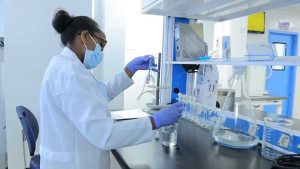
Ethiopia is transforming from an import-dependent market into a pharmaceutical manufacturing hub. After becoming the 9th African nation to reach WHO Maturity Level 3, local production now exceeds 40% of the medicine supply.
A milestone for public health
“Maturity Level 3 means that the regulatory system is stable and functioning well,” said Heran Gerba.
WHO uses a global benchmarking tool with more than 250 indicators to assess how countries regulate medicines, vaccines, and other medical products. These indicators cover the full regulatory cycle – from approval and inspection to quality testing, post-market surveillance, and governance systems. In Ethiopia, those systems are now aligned with international standards and operating in an integrated way.
This achievement strengthens public health protection. Access to quality-assured medical products is a core part of a strong health system.
During emergencies, the benefits become even more visible. A well-functioning regulator can accelerate approvals while maintaining scientific rigour.
The World Bank Group supports EFDA through the Ethiopia COVID-19 Emergency Response Project and the Regional Health Emergency Preparedness and Response Program, both of which contribute to strengthening national systems for public health preparedness, including regulatory functions.
Moving beyond import dependence
Ethiopia has long relied on imported medicines. That pattern is beginning to shift.
The Ethiopian pharmaceutical sector is evolving from a largely import-dependent industry into a more diversified healthcare manufacturing base.
Ethiopia’s pharmaceutical progress is taking shape around three reinforcing elements: regulation, industrial infrastructure, and research and human capital.
1. Strong regulation builds trust and opens markets
For manufacturers, ML3 is more than a certification. It is a sign of credibility.
“Achieving Maturity Level 3 sends a powerful signal,” Taddesse Teferi said. “It shows that the regulator is evidence-based and stringent.”
That credibility has practical effects. It raises product quality through stronger enforcement of manufacturing standards and inspections. It builds trust among patients, buyers, and institutions. It also makes it easier for Ethiopian products to reach regional markets.
Across Africa, regulatory reliance is gaining traction. Heran Gerba noted that eight countries with ML3 status have signed agreements to recognise one another’s decisions. This reduces duplication and shortens the path to market entry for medicines approved in Ethiopia. Ethiopia’s position within regional frameworks such as AfCFTA and COMESA further strengthens these opportunities.
2. Kilinto: A purpose-built manufacturing hub
Regulation alone cannot sustain growth. Manufacturing requires infrastructure designed for pharmaceutical production. At Kilinto Special Economic Zone, Ethiopia has created a dedicated hub for pharmaceutical and medical equipment manufacturing. Its location in Addis Ababa offers direct access to transport networks and regional markets.
Kilinto is not only ideal for Ethiopia, but also for Africa.
3. Research and human capital: Building long-term strength
A strong pharmaceutical sector also depends on research, innovation, and skilled professionals. Armauer Hansen Research Institute (AHRI) plays an important role in Ethiopia’s research ecosystem.
Unless we have a very strong research and development system, we cannot generate the knowledge needed to support pharmaceutical manufacturing.
At the same time, AHRI supports the industry directly. It provides training in good manufacturing practices and is establishing a bioequivalence centre to ensure locally produced medicines meet required standards for both domestic use and export.
At Addis Ababa University, CDT-Africa focuses on building the next generation of scientists.
Our mission is to produce Africa-based know-how to make drugs, vaccines, and diagnostics
“We have to be ready; another pandemic could be around the corner.”
He believes that investing in science and innovation is essential for Ethiopia’s long-term future. He also notes that during COVID-19, the dangers of total import dependence became clear.
Jobs, exports, and the next stage
Local pharmaceutical manufacturing is already generating economic impact. Jobs are created within factories and across related sectors, including packaging, logistics, and chemical supply. Ethiopia’s national strategy aims to meet half of the essential medicine demand through local production. According to Heran Gerba, local production has increased significantly and now accounts for more than 40% of the medicine supply in the market.
Stronger regulation and infrastructure are also opening new export opportunities. With ML3 status and growing regional cooperation, Ethiopian manufacturers are increasingly positioned to access markets beyond national borders.
However, despite progress, several challenges remain. Manufacturers face constraints such as limited access to affordable finance and foreign exchange. Exchange-rate volatility can affect costs and profitability, while faster customs processes and timely procurement payments are important to prevent supply delays.
Research institutions also face challenges in translating innovations into market-ready products. Stronger collaboration between industry, universities, and research centres will be important to move from prototype to production.
“Maturity Level 3 is not the end. It is a springboard toward Maturity Level 4 and expanded regulatory scope,” said Heran Gerba.
The milestone provides a foundation for what comes next: a more resilient pharmaceutical sector, stronger domestic production, and a growing role in regional markets.
