

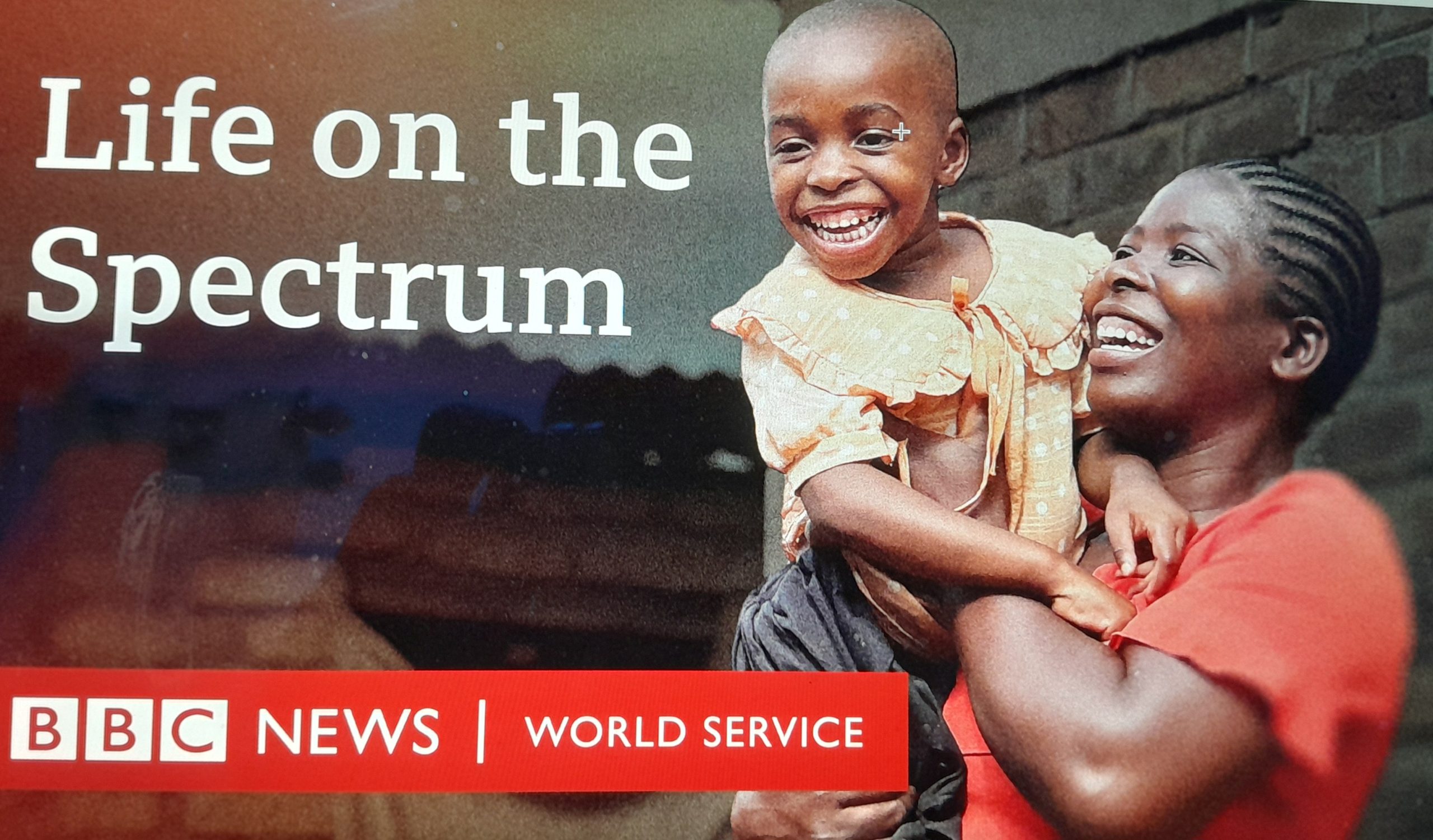
Life On The Spectrum delves into how families navigate diagnosis, stigma and access to care in Malawi and beyond. The documentary airs from 6th April.
Life On The Spectrum, a new documentary from BBC World Service’s investigative unit, BBC Africa Eye, follows the experiences of families caring for children with autism.
Centred on Malawi, the film offers a glimpse into the realities faced by families across Africa, highlighting themes around acceptance, stigma, awareness and access to care and information.
Globally, more than 60 million people live on the autism spectrum, according to the World Health Organisation, with millions more impacted as families and caregivers.
Through powerful firsthand accounts, BBC Africa Eye follows three Malawian families caring for children with autism, examining the severe structural and societal barriers they face.
On the outskirts of Malawi’s capital, Lilongwe, single mother Natasha turns to a traditional healer and pays the equivalent of $15 for her son’s soul to be returned, after being told her young son’s autism is due to Satan and witchcraft.
Her five-year-old son, Shalom, is non-speaking, unable to feed himself, and experiences high levels of physical restlessness.
2With up to 80% of Malawians turning to spiritual healers for help, Natasha and Shalom’s experiences show how the gap in access to education and clinical information leave families preyed upon when they are at their most vulnerable.
Meanwhile, Martha reached breaking point as her mental health deteriorated while caring for her young daughter who has autism. Lacking any external support, she recounts contemplating taking her daughter’s life. Martha saw her daughter referred to St John of God – one of the few specialist centres in Malawi for children with disabilities. She now shares her story to help other parents.
Dr Christopher Mhone PhD, Programme Manager at St John of God, told BBC Africa Eye that urgent action is needed to support families in these situations. He argued that the desperation faced by parents is a sign of institutional neglect.
“As a country, we owe children with autism a lot. We know they exist and we know we are failing them because they are invisible”, Dr Mhone said. “When a mother thinks of killing a child with disabilities, it means the system has failed…If society begins to understand [autism], there will be less stigmatisation. People will be looking at what strengths can come out of a child with disabilities.”
The BBC World Service film also explores how the divide between rural and urban areas can shape access to infrastructure, education and resources available to children with autism.
In Blantyre, the country’s financial capital, parents Onil and Angela describe their initial reactions – and evolving understanding – after learning that two of their sons are autistic.
“In the beginning, you tend to look for a reason,” Onil told the BBC. “After we found the answers to the reasons behind autism, that’s when we made peace with it.”
Angela says she was concerned about her children’s future. “I was worried about their quality of life”, she explains. “But as we did more research online, we saw examples of kids having a fulfilled life.”
Reflecting on his relationship with his son Max, who is non-speaking, Onil told the BBC: “A lot of people think autistic kids do not feel anything, they have feelings. Everything you and I feel, he can feel it, maybe even more. Imagine you can feel everything you feel, but you are locked inside your body, and you just can’t express what you are feeling in a particular moment. Is that not a terrible thing to go through?”
Florence Phiri, BBC reporter, said: “Working on this film deepened my understanding of the challenges and isolation faced by families raising children with autism in Malawi, where it is often misunderstood, leading to stigma. Meeting these families brought into sharp focus the pressure they face when there are few places to turn for support or information.”
Nicola Milne, Executive Producer, said: “In producing this film, it was important to reflect the challenges experienced by families in Malawi, while also including voices from across Africa. These stories show how many of these experiences are shared globally.”
Where to watch?
‘Life On The Spectrum’ will be available from Monday, 6 April
- International: The documentary will be available on the following YouTube channel: BBC News Africa (in English)
- UK audiences: Watch on BBC iPlayer
