


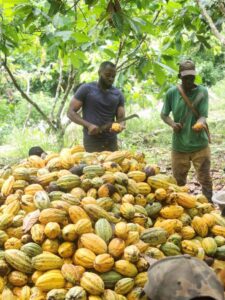
Cocoa has long been the pride of Ghana, sustaining rural communities and anchoring the nation’s economy as its second-largest export earner.
Yet, the sector faces serious threats, including unpredictable rainfall, ageing trees, pests, and significant post-harvest losses that reduce both farmer incomes and national revenue.
New tools in agricultural analytics offer hope. Predictive models—powered by weather forecasts, soil data, and satellite imagery—can help farmers plan when to plant, irrigate, or apply fertiliser.
Instead of relying solely on experience, farmers can now anticipate droughts, pest outbreaks, or shortened rainy seasons, making more informed decisions that protect their yields.
Equally important is addressing post-harvest losses, which account for a sizable share of Ghana’s cocoa harvest. Data systems that track humidity, temperature, and storage times can alert cooperatives to spoilage risks, while digital platforms can streamline transport from farm to market. By cutting losses, farmers can earn more without expanding their land, and Ghana strengthens its reputation for high-quality cocoa exports.
Mobile technology makes these insights accessible even in remote villages. With over 95 per cent mobile penetration, weather alerts, fertiliser advice, and price updates can reach farmers in real time.
This not only boosts productivity but also builds resilience against climate shocks.
For Ghana, investing in agricultural analytics is about more than technology—it is about food security, farmer prosperity, and sustaining the cocoa legacy for future generations.
With the right data, the nation’s most famous crop can remain both competitive abroad and life-sustaining at home.
By Muleka Masudi
Muleka Masudi is a business analytics professional with expertise in financial analysis, data-driven decision-making, and agricultural sustainability.
She holds an MSc in Business Analytics from the University of Louisville and has a strong background in business analytics, particularly in customer and finance services.
Her recent work highlights the use of agricultural analytics to strengthen food security in Ghana’s cocoa sector.
She has applied tools such as Power BI, SQL, Python, and R across various fields, including finance, education, and project management.

interesting article. agriculture is meant to modernize and tackle challenges by trying to incorporate technology and new cutting edge discovery