

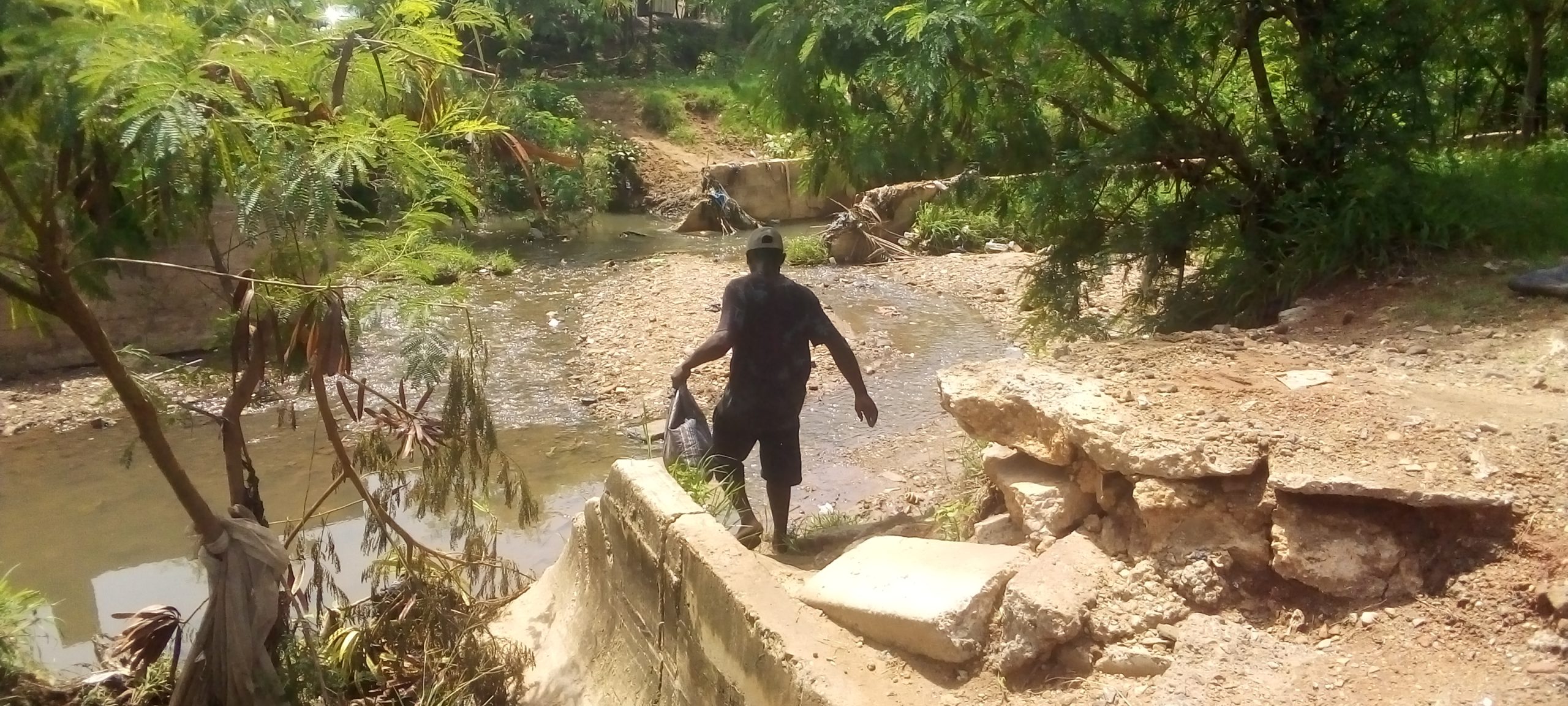
Accra, Ghana//-Residents, pedestrians, and motorists in and around Teshie, Nungua, and the surrounding areas in the Ledzokuku Municipal Assembly of the Greater Accra Region have expressed frustration over abandoned projects.
They demand that the government urgently complete the only bridges linking their enclave to other communities.
According to them, the two bridges connecting Teshie-Nungua and other areas in the Greater Accra Region were in good condition. However, the NPP government’s decision to expand them to accommodate floodwater has halted their reconstruction.
Since 2021, there have been no construction workers or machinery on-site, leaving the project incomplete.
The abandoned bridges connecting Teshie and Nungua serve as an alternative route for motorists and other road users during peak hours.
It is typical, therefore, to see container-bearing articulated trucks, tipper trucks, commercial buses, cabs, as well as private vehicles all resorting to this route to reach their destinations.
However, the reconstruction of these bridges was to be the panacea to the heavy traffic that had been typical of the Teshie-Nungua stretch has instead created new problems for commuters, particularly women and school children, and at the peril of their lives, struggle to cross these bridges.
The abandonment of these bridges not only disrupts the daily lives of commuters and residents but also poses significant risks to public health and safety, as well as affecting most businesses in the area.
Speaking to African Eye Report, some residents and assembly members expressed that although they have raised the issue at assembly meetings multiple times during the tenure of former President Nana Akufo-Addo, the former Municipal Chief Executive remained unresponsive.
They are now appealing to the newly elected President John Dramani Mahama of the National Democratic Congress to fix the bridges immediately.
“We are appealing to President Mahama to quickly reconstruct our bridges because when the rainy season starts, it affects a lot of people here, whenever it rains, it enters our rooms, particularly those living near the gutter.
Lamenting about the situation, Emmanuel Kwesi Apeteh said: “I like this when my wife is sending our children out to buy something at Cocoa Beach Junction, I’m always afraid until I see them back.”
He further stressed that since the abandonment of these two bridges, businesses in the area have been severely affected.
“We the people around who have small jobs like our Pubs and Grills, many of our customers no longer visit us. For someone who is around 50 or 60 years old, how can they possibly cross this large gutter just to come and buy a bottle of beer or a meal? Some unscrupulous individuals are taking advantage of the situation, attacking people at night, collecting their mobile phones, and stealing from them.
Some are also throwing ‘bola’ (rubbish) there, giving us all sorts of sicknesses. The place is being used as a public toilet facility. Open dedication is what is going on there, so we want the government to fix the bridges now, it will help thousands of people, and that’s my main concern, it’s been long, five years now”, he added.
Jane Bortey, a breastfeeding mother, also indicated that the poor nature of the bridge in the area is making it difficult for them to cross to the next town. Bemoaning the bad nature of the bridges, she stressed that school children and pregnant women, at the peril of their lives, risk crossing.
“Look! The rainy season has just begun, and the road to the bridge is also bad. We want the bridges fixed because next week, schools will resume, and our children’s lives matter. You cannot cross whenever it rains”, she noted.
A student who also uses this road expressed his frustration but appealed to the authorities to fix the bridges. “I don’t feel safe crossing to school, especially at night. Sometimes I have to jump over faeces and walk through dirty water,” said John Nti.
The troubling aspect is that children have had to, daily, ply this route to school, and any wrong step endangers their lives.
By Godwin Dzigbanu, African Eye Report
