UNCTAD: Gaza Reconstruction Needs Reach $71.5 Billion as Palestinian Economy, Public Finances Face Severe Strain

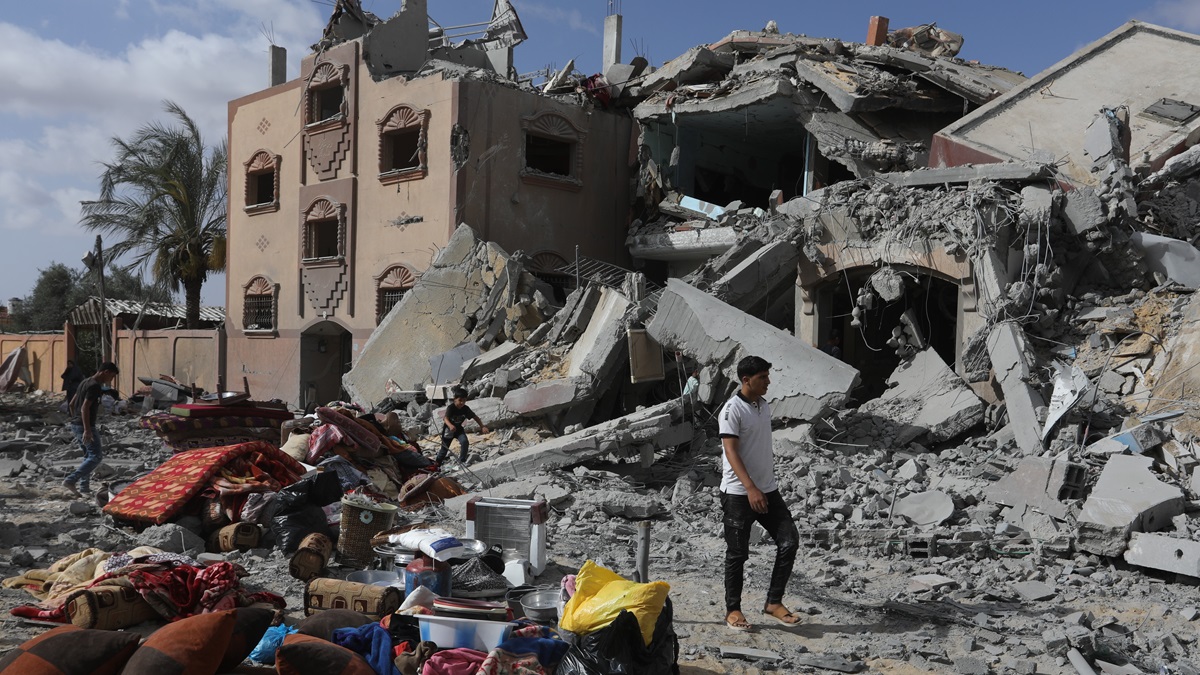
Rafah, Gaza Strip

Gaza’s recovery and reconstruction needs are estimated at $71.5 billion, according to the latest Report on UNCTAD assistance to the Palestinian people, presented to the UN Trade and Development Board.

The report details the collapse of Gaza’s economy, tightening constraints on economic activity in the West Bank and growing pressure on Palestinian public finances and the banking sector.

The report finds that 59 years of occupation have constrained the Palestinian economy, with structural and economic costs rising sharply since October 2023. Following the sharp contraction in 2024, Palestinian GDP grew by 4.3% in 2025 from a low base but remained 20% below its 2022 level.

Gaza’s real GDP rose by 34.2% after contracting 83% in 2024, a statistical rebound from a sharply reduced base. Across the Occupied Palestinian Territory, hundreds of thousands of jobs have been lost since October 2023, erasing an estimated $2.8 billion in cumulative labour income.

In the West Bank, the report documents reduced access to land and natural resources associated with settlement expansion. It also reports rising displacement: 38 communities have been emptied of Palestinian since 2023, and displacement in the first quarter of 2026 exceeded the total recorded in 2025.

Fiscal pressures threaten macroeconomic stability

The report finds that the Palestinian Government’s fiscal position has deteriorated sharply. Under the Paris Protocol, Israel collects more than two-thirds of Palestinian fiscal revenue on behalf of the Palestinian Government. Transfers have been intermittent and subject to deductions. According to the report, clearance revenue transfers due to the Palestinian Government were fully withheld from May 2025 through mid-2026.

Cumulative deductions and withheld revenues between January 2019 and March 2026 exceeded an estimated $3.67 billion at the exchange rates prevailing when the payments were due – equivalent to 83% of total Palestinian net revenue in 2025. The report estimates the 2025 budget deficit at 13% of GDP when unpaid clearance revenues are excluded, compared with 6% when those revenues are counted as revenue due to the Government.

These fiscal pressures are constraining essential services. Health-related arrears reached $1.1 billion by late 2025, raising risks to the continuity of services provided by hospitals, non-governmental providers and pharmaceutical suppliers. In the West Bank, resource shortages led schools to limit in-person instruction to three days a week in 2025, according to the report.

Risks to the banking sector

To finance the deficit, the Government has increasingly borrowed from domestic banks and accumulated arrears to private sector suppliers and the pension fund, bringing total public debt to $4.8 billion in 2025.

Combined with lending secured against government salaries, exposure of the banking system to the public sector has reached $5.3 billion, or 42% of all bank lending.

According to the report, the short validity of letters of indemnity issued by Israeli authorities affects correspondent banking relationships and access to global trade and finance. Palestinian banks also face constraints in converting physical shekel banknotes into digital balances because of restrictions on currency repatriation. Together, these constraints could disrupt financing for imports of fuel, medicines and food.

Economic crisis in Gaza

The report estimates that 92% of Gaza’s economic establishments have been damaged or destroyed since October 2023. GDP per capita stood at $212 in 2025 – equivalent to about $0.58 per person per day in GDP terms and 17% of its 2022 level. Unemployment reached 78%, while more than 90% of the working-age population was not employed.

Gaza’s share of Palestinian GDP fell from 17.4% before October 2023 to less than 4% in 2025.

All productive sectors in Gaza remained far below their 2022 output levels: agriculture and industry were each down 94%, while construction was down 99%, the report finds.


In 2025, Gaza’s overall price level remained 274% above its 2022 level, with staples such as potatoes and cooking gas costing several times their 2022 prices.

Reconstruction and recovery needs

A rapid damage and needs assessment by the World Bank, the European Union and the United Nations estimates physical infrastructure damage in Gaza at $35.2 billion and economic and social losses at $22.7 billion as of early 2026. Separately, it estimates total recovery and reconstruction needs at $71.5 billion. This figure may rise if further damage is recorded.

Housing accounts for the largest category of damage and the largest reconstruction need. The assessment reports extensive damage to educational and health facilities, with more than half of hospitals and primary health clinics non-functional. Less than 1.5% of Gaza’s cropland remained accessible and undamaged, increasing dependence on humanitarian food assistance.

The report finds that recovery and reconstruction across the Occupied Palestinian Territory would require large-scale international financial and technical assistance. It identifies rebuilding productive capacity in agriculture, industry, construction, energy and technology, as central to recovery beyond pre-October 2023 conditions.

The report identifies three immediate priorities: transferring withheld Palestinian revenues, safeguarding the banking system and aligning reconstruction support with the documented scale of damage and economic losses.

UNCTAD’s role

UNCTAD provides economic analysis and technical assistance on development conditions in the Occupied Palestinian Territory. In accordance with UN General Assembly resolution 77/22, UNCTAD reports on economic development in the Occupied Palestinian Territory, including East Jerusalem, and assesses the economic costs of the Israeli occupation. For nearly four decades, UNCTAD has conducted policy research, capacity-building and technical cooperation with Palestinian public and private sector institutions and civil society, within its trade and development mandate.

African Eye Report


Leave a Reply

*