


London, United Kingdom// — Angolan women and children displaced by drought into Namibia face serious human rights abuses arising from a lack of safe and legal migration pathways for people forced across borders by natural disasters, Amnesty International said in a new report.
The report, “The Drier It Gets The Longer You Have To Walk, The Deeper You Have To Dig” – The Human Rights Impacts Of Drought-induced Displacement On Angolan Women & Children In Namibia, documents the devastating consequences of recurrent drought in southern Angola and the human rights impacts experienced by those displaced into Namibia, including persistent fear of arrest, detention and deportation, which in turn influences their daily decisions about whether to seek healthcare and other services.
“Namibian authorities must establish a rights-based approach to migration, ensuring that people displaced by drought and other natural disasters can access basic rights, including registration and documentation.” Said Tigere Chagutah, Amnesty International’s Regional Director for East and Southern Africa.
“The protection of already marginalized Angolans who are forced to move to Namibia in search of livelihoods is not just a humanitarian concern. This is a human rights crisis that demands international solidarity, including legal protection against refoulement,” said Tigere Chagutah.
Between May 2024 and May 2026, Amnesty International interviewed at least 167 people, including displaced people, community leaders, government officials, representatives of civil society organizations (CSOs), academics, and members of the UN Country Team.
At the time of publication, Nambian government officials had not responded to Amnesty International’s request for comment.
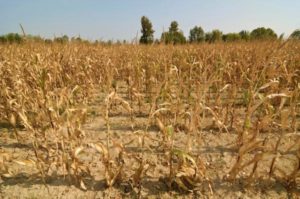
Southern Angola, particularly Cunene, Huíla and Namibe provinces, has been among the hardest hit by recurring droughts, which have been exacerbated by El Niño.
Together with long-standing structural vulnerabilities, these conditions have undermined traditional pastoral and farming systems, eroded people’s resilience and forced them to migrate to Namibia in search of safety, food, water, work, and essential services.
Women and children are disproportionately affected, often taking these journeys under great risk.
A young climate activist told Amnesty International that drought-induced displacement is not a simple story of people “running from drought”, but a rational response to collapsing systems. “The drier it gets, the longer you have to walk, the deeper you have to dig,” he said.
Namibian response to Angolan displacement
The report notes that Angolans displaced by drought have limited ways to regularise their stay in Namibia, as the current immigration and protection laws do not reflect the realities of climate-driven displacement.
This has forced many people into irregular status as they cross the border in search of food, water, grazing land, healthcare, family support, and work following the droughts that destroy crops, livestock, and livelihoods.
In 2026, the Namibian Ministry of Home Affairs immigration control programme announced that more than 1,000 Angolan nationals had been returned to Angola after being found in the country without regular immigration status.
On 4 June 2025, Amnesty International witnessed Namibian authorities round up about 40 Angolan nationals, including women and children, at a community centre in Opuwo, and transport them the same day to the Ruacana border – over 100km away – for handover to Angolan authorities, without individualised screening, information about asylum or protection options, or assessment of the risks upon return. The absence of individual examination raises serious concerns under the prohibition of collective expulsion and the principle of non-refoulement.
In other instances, Angolan children have also been subject to government-facilitated forcible returns without sufficient information being made publicly available to establish whether appropriate safeguards were applied.
The report highlights that Namibia’s existing immigration framework does not adequately respond to the circumstances of people displaced across the border by drought. Although Angolan passport holders can enter Namibia visa-free through official border posts for limited periods, this does not provide a right to work, longer-term residence or a dedicated protection pathway.
Many people from drought-affected border communities also lack passports or other documentation and use informal crossing points. Once in Namibia without regular status, they have few accessible options to regularise their stay.
This has left thousands of Angolans in fear of arrest, detention and deportation, a fear that shapes daily decisions about whether to seek healthcare and other services.
Amnesty International found that for those already living in northern Namibia, housing, water and sanitation conditions fell far short of international law and standards. Many families live in makeshift shelters, built from branches, plastic and cardboard, in severely overcrowded conditions or, in some cases, entirely without shelter.
The report details how undocumented Angolans were charged higher fees in hospitals than Namibian nationals, pushing them to delay treatment until illness became severe, and avoiding clinics altogether for fear that health facilities were linked to immigration enforcement.
“We only go when the pain is too much; otherwise, we just lie down and wait,” one woman said.
Amnesty International calls on Namibian authorities to honour their international and regional legal obligations by ensuring that displaced Angolans can access legal protections, including registration and documentation needed to access rights. State authorities must conduct individual assessments before deportations and consider the human risk associated with return.
High-income, historically high-emitting states have heightened obligations in relation to climate action, while states that can do so must provide international cooperation and assistance, including adequate climate finance, according to their capacity, to support countries such as Angola and Namibia in adaptation, drought preparedness, resilience-building and addressing loss and damage.
“This reality underscores the need for the international community to recognise the injustice faced by these communities and respond with robust cooperation and support. It cannot wait,” said Tigere Chagutah.
Angola’s failure to invest in adaptation and preparedness
Angola’s investment in climate adaptation, drought preparedness, and livelihood protection has remained uneven because of limited finance, weak institutional capacity, inadequate climate-monitoring infrastructure and continued dependence on donor-supported emergency and resilience programmes.
The report shows how gaps in early warning systems, water infrastructure, veterinary support, and social protection mechanisms have contributed to the progressive erosion of pastoral and subsistence farming systems.
“Drought and the increasing risks posed by climate change cannot absolve the government from its legal obligation to protect people’s rights to life, food, water, health, a healthy environment and an adequate standard of living,” said Tigere Chagutah
“Angolan authorities must take urgent action to honour their legal obligations by putting in place safeguards to protect the drought-affected through drought preparedness and climate adaptation mechanisms and protect communities at risk of displacement.”
Background
Between January and July 2021, more than 7,000 Angolans, mainly women, including pregnant and lactating women, children and older persons, crossed into northern Namibia following consecutive years of severe drought and food insecurity in southern Angola. Drought and food insecurity have continued to contribute to cross-border movement in subsequent years, including during renewed severe drought conditions in 2023 and 2024.
However, the true scale of drought-related displacement over this period is unknown due to the absence of comprehensive reception, registration, or data collection systems.
