

Before the sun rises over Nyankani, the village is already awake, not by choice, but by necessity.
In this small farming community in the Nanumba South Municipality of the Northern Region, water is not something you turn on. It is something you search for, walk for, suffer for.
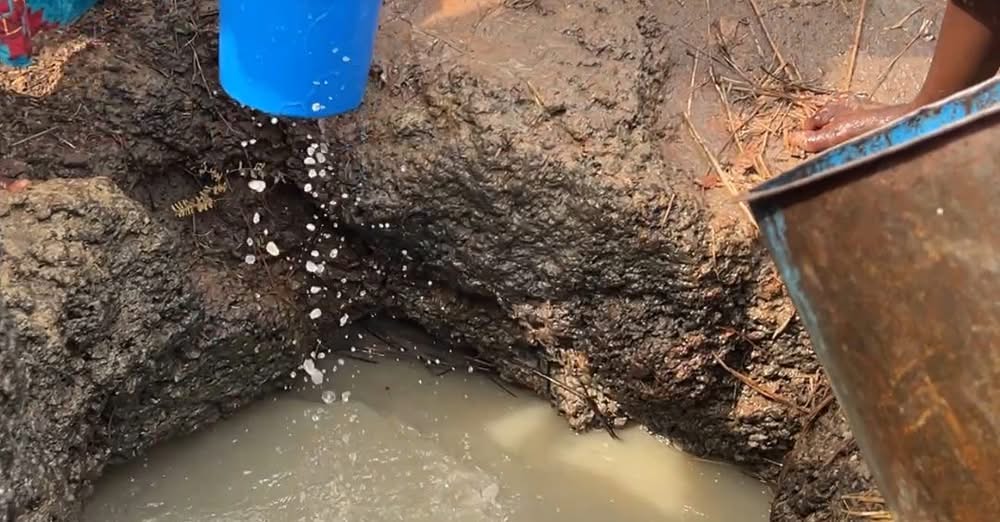
With no reliable source of potable drinking water, residents depend on an unclean open well. The only borehole in the community is so limited it barely serves two households, leaving the rest of the village to rely on unsafe water to survive.

Every day, women and children set out on long, tiring journeys, containers balanced on their heads, feet heavy with fatigue. The path to water is unforgiving. By the time they return, the sun is high, their strength drained but the water they carry home is still not safe.

Sometimes, they go into physical fights as to who came first and who fetches first.
Women in Nyankani say their children frequently fall sick after drinking the water. Diarrhoea, stomach pains, and persistent weakness are common, yet unavoidable.

For mothers, the struggle is even more painful.
Esther Rahaman, a mother of a three-month-old baby, the struggle is deeply personal. She has no option but to carry her infant along, pressed against her chest, exposed to the mercy of the weather scorching heat by day, chilling winds by evening just to fetch water for her household.
“It is painful,” she says. “But what choice do we have?”

Mary, another resident, says fetching water has become a daily sacrifice of strength, of time. “You come back tired, but you still have to cook, clean, and care for the children,” she says.
Beyond the physical exhaustion lies a quieter loss.
According to Gurunja Abdul Aziz Unkpi, a youth in the community, the water crisis has stolen time, strength, and opportunity from women. Hours that could have been spent farming or trading are instead spent walking long distances for water, leaving many families trapped in a cycle of hardship.
At the Wulensi Government Hospital, the impact of Nyankani’s water crisis is written in patient records. Nurse Pierce Abedin says many residents from the community report to the facility with water related illnesses conditions he believes are preventable.
The Assemblyman of the area, Mahamudu Mutari, does not deny the hardship. He admits the community has lived with unsafe and inaccessible water sources for more than 20 years. While he says interventions have been initiated, residents say the wait for relief has been long and painful.
In Nyankani, water is more than a resource, it is a test of survival. For the women who walk endless miles, for the children who drink from unsafe sources, and for the babies born into thirst, the question remains unanswered: how much longer must a community suffer before clean water flows?
