

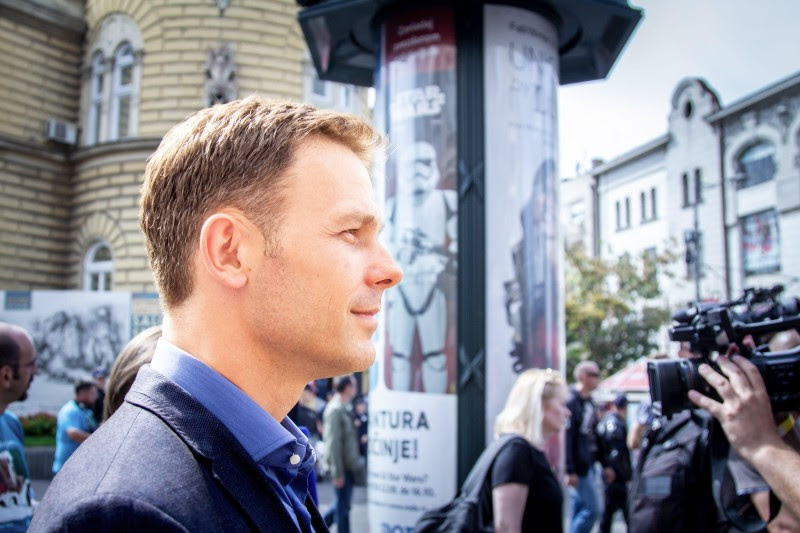
In 2015, Belgrade mayor Siniša Mali dared reporters to prove that he owned 24 apartments, worth millions of dollars, on the Bulgarian coast.
“If you determine that I am the owner of any of these apartments, they are all yours,” he told a press conference. “You will get the key that very moment.”
In the decade since, OCCRP and our Serbian member centre KRIK have published multiple exposés on the unexplained wealth of Mali, who has served as finance minister since 2018.
In 2021, with help from the Pandora Papers — a trove of leaked documents from offshore service providers obtained by the International Consortium of Investigative Journalists — we even showed that Mali owned the 24 apartments through Caribbean shell companies.
As yet, no keys have been forthcoming.
Mali’s career captures the essence of Serbia’s problem with corruption and the impunity enjoyed by its political elites. For the ruling SNS party, which has faced months of protests across the country, this is a sore point. A February poll found that 24 per cent of Serbians said corruption was the biggest problem facing the country.
However, corruption is deeply entrenched, University of Belgrade researcher Filip Balunović tells OCCRP.
“The whole system relies on corruption,” he said. “One of the main systemic illnesses of the state is the fact that institutions don’t work. People who hold significant places in the state refuse to simply respond, react, or address the issues of concern.”
