

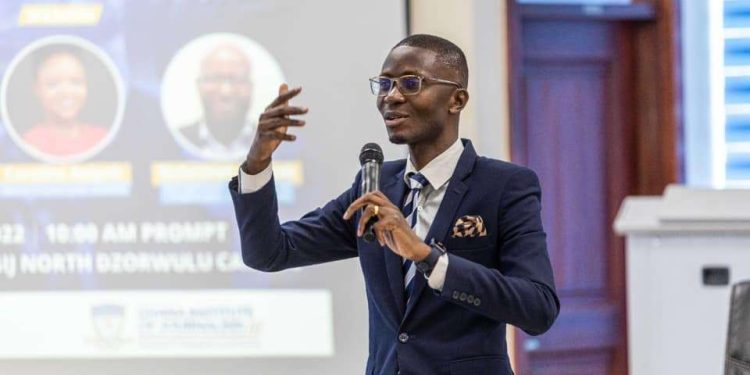
Accra, Ghana//-The General Manager of Citi FM and Channel One TV, Bernard Avle, says the government must acknowledge the journalists’ role in exposing corruption in the country.
This call followed the erstwhile Akufo-led government’s failure to recognise the vital role journalists played and continue to play in fighting corruption, which is rampant in Ghana.
Mr Avle said this on Wednesday, February 19, 2025, when he delivered a lecture at this year’s annual Akoto-Ampaw Active Citizenship Dialogue (AAACD) in Accra, which was held in honour of the late Akoto Ampaw, a renowned lawyer and activist.
Mr Avle, who hosts several radio and TV shows, CITI FM and Channel One TV mentioned the Fourth Estate’s exposé on the controversial revenue mobilisation deal between the Ghana Revenue Authority (GRA) and Strategic Mobilization Ghana Limited (SML), and the recent National Service Authority scandal to buttress his point.
He continued: “The [former] president’s statement asking KPMG to investigate didn’t even acknowledge the work of the journalist, in an attempt to delegitimize civic advocacy, that is wrong. Even if you want KPMG to investigate, you have to acknowledge that it was a journalist who brought the issue to your light”.
Mr Avle used the occasion, which was well attended by friends, civil society actors, and the academia, among others, to highlight the critical contributions of investigative journalism and the media in general to the socio-economic development of the Ghanaian nation.
Mr Avle, who delivered the keynote address, also underscored the importance of using creative arts, including theatre, as a medium for activism and social change.
He argued that there are creatives who are cultural activists, and “until we own our stories and we do it in a way that is both entertaining but enlightening, we can never be free.
So, the purpose of reclaiming our cultural spaces is that everybody wants to be entertained, but nobody wants to be lectured about how to improve their life, so you enlighten through entertainment”.
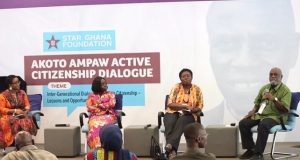
Touching on the theme “Inter-Generational Dialogue for Active Citizenship: Lessons and Opportunities for the Future,” Mr Avle urged activists to leverage their platforms to advocate for the well-being of the people.
While tracing the activism journey of notable Ghanaian activists and their important impacts, he challenged the present and future activists to apply the knowledge gained from their various fields to create meaningful change in their communities and the country at large.
“You can’t be a citizen if you don’t appreciate community, so it is not an imported concept. Citizenship is not alien to the African. We’ve always understood it and we’ve always manifested it just that we manifested it differently”, Mr Avle added.
“In modern times when we talk of citizenship, political action, participatory democracy, civil society and community support are all elements of citizenship as it is conceptualised today”.
If you can’t use that knowledge to liberate your people, you don’t know it because the only purpose of knowledge is usability”.
He urged: “Go back to your hometown and say, okay, how can I use this to help the farmers in their farm gate pricing? How can I use this to unlock markets for them? That’s the true purpose of knowledge. That’s what an activist intellectual does. Not to come on city breakfast show, news file and just speak English”.
The convening power
Mr Avle called on activists to recognize the power they hold as convenors and use it responsibly for the betterment of the society.
“I see society and media together. They must understand and harness it. Convening power is very, very important. If you have access to politicians, don’t use it to ask them for scholarships. Bring them and ask them hard questions. That’s what convening power is. Bringing different groups together.”
“You are the only person who can call chiefs, politicians and all these people together into the same room. It’s a very powerful thing that you have”.
Community-based collaboration
He noted that the importance of community-based collaboration could not be overemphasised and, therefore, encouraged citizens to work together with a shared understanding of their rights and responsibilities.
Discussants
An investigative journalist, Manasseh Azure Awuni, who joined the event via Zoom from the United States (US), urged the Ghanaian citizens to be interested in community-based collaborations.
“Community-based collaboration is very important. It is a collaboration and not competition”, he added.
“Now, this is very important because if we need to be on the same page, one of the most difficult things to do is to lead people who don’t understand where you are sending them.
“We have to go back to communities and do engagements because that’s the only way people can understand where we are taking them. Today I’m glad that somebody who did not occupy a political office, elected office, (11:54) is being celebrated”, according to him.
Contribute meaningfully to the progress.
Another discussant, who is a professor of journalism, Prof Kwame Karikari, also advised the citizens to actively engage in promoting developmental issues to enable them to contribute meaningfully to the forward march of the country.
In his words: “Anybody can be an activist. From a footballer to an artist, a canteen weaver, a basket weaver, a musician, or a poet—you don’t have to be the greatest scientist. As a musician, you could be an Ephraim Amu, an Anampe, a guitarist, or even a philosopher. But one thing you cannot be is a criminal.”
On her part, the Executive Director of the International Federation of Women Lawyers (FIDA-Ghana), Mrs Susan Aryeetey, detailed the major contributions of Ghanaian women activists to nation-building.
To this end, she stressed the importance of recognising and celebrating their trailblazing work for the girl-child to emulate their shining examples.
Significance of engaging
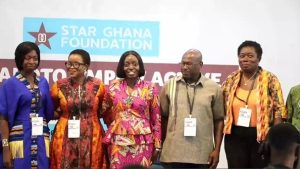
In her welcome address, the Chairperson of the Governing Council of STAR-Ghana Foundation, Hajia Hamdiya Ismaila, explained that the dialogue marked the foundation’s first public activity of the year, stressing the importance of engaging their colleague civil society actors in the civic space.
She re-echoed the Foundation’s commitment to promoting active citizenship as a vital tool for driving change while empowering citizens and influencing national development across all facets of the Ghanaian society.
Hajia Ismaila added: “It is our pleasure to have you all here representing different institutions and generations, ages, social assignments and with diverse experience and activism that has helped to shape our society at all levels today.
To us at STAR-Ghana Foundation, the promotion of active citizenship for change is critical because empowered citizens influence change and national development”.
It is for this reason that the Akoto Ampaw Active Citizenship Policy Dialogue are conducted annually to provide a strategic platform for such critical conversations that recognise activisms from the past to present and how to bring the way forward towards critical review and some of these generational approaches and their impact.
What is next?
The Executive Director of the STAR-Ghana Foundation, Amidu Ibrahim-Tanko, used the occasion to reveal that after the AAACD, his outfit would be convening the Ghana Civil Society Forum in June this year, which brings together all civil society organisations in the country to discuss pertinent issues.
The Annual Active Citizenship Dialogue is a key feature of STAR-Ghana’s calendar, based on its strategic focus on promoting active citizenship and local philanthropy.
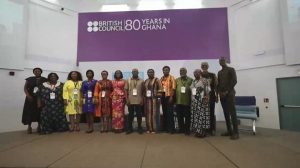
Since his passing away on 20th October 2023, the Foundation has renamed the annual dialogue the Akoto-Ampaw Active Citizenship Dialogue, in memory of Mr. Akoto-Ampaw, its former Board Secretary, founding member of the organisation and a tireless fighter for citizens’ rights. The dialogue provides a space for conversations on pathways to strengthening active citizenship in Ghana for good governance and inclusive development.
