

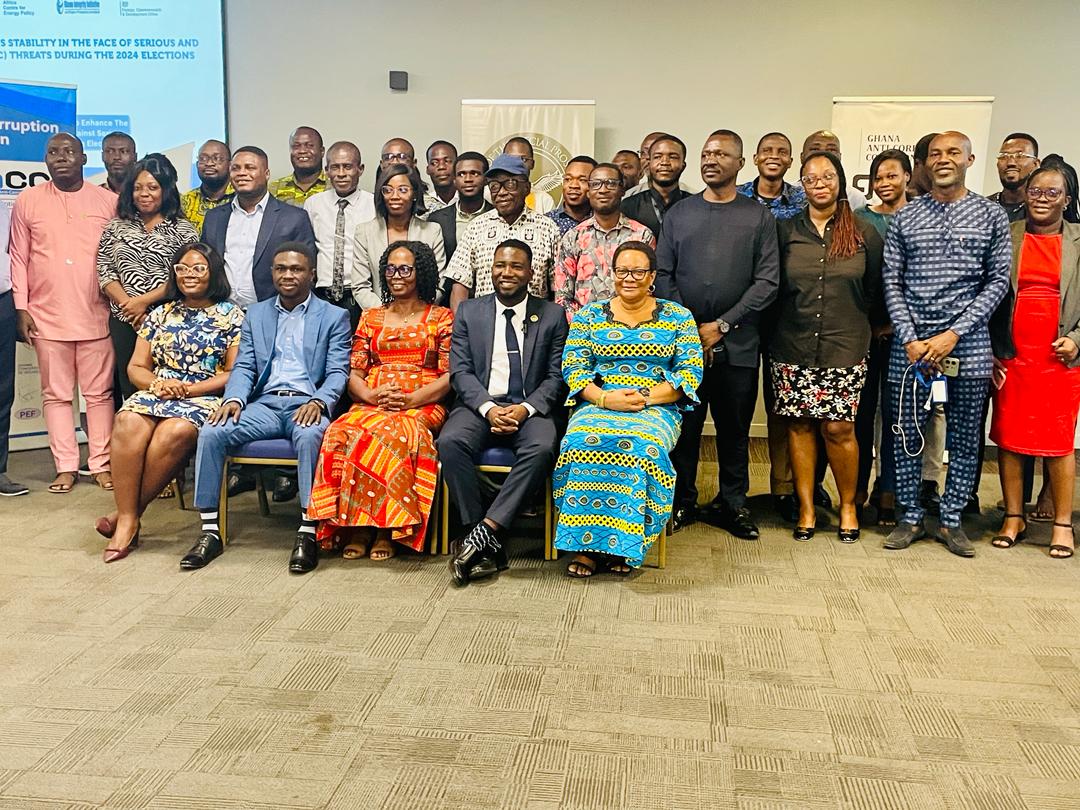

Accra, Ghana//-Ghana Anti-Corruption Coalition (GACC), in collaboration with Ghana Integrity Initiative (GII) and the African Centre for Energy Policy (ACEP), has organized a day workshop for journalists from various media houses, aiming to bolster their capabilities in combating Serious and Organized Crime (SOC) during the upcoming 2024 elections.
The workshop themed: “To Enhance the Media’s Capacity to Contribute to the Fight against Serious and Organised Crime (SOC) Threats in the Lead-up to the 2024 elections.”
The training program served as a platform for over 65 media practitioners drawn from selected from various public and privately owned media organizations, as well as some civil society organizations to be equipped on the SOC.
The focus of the training was to increase awareness and interest in the issues of elections and SOC.
The Executive Secretary of the Ghana Anti-Corruption Coalition, (GACC), Madam Beauty Emefa Narteh, speaking at the training explained that the workshop formed part of the project dubbed: “Safeguarding Ghana’s Stability in the Face of Serious and Organised Crime (SOC) Threats During the Elections”.
The objective of the project, according to her was to deepen public understanding through the media, enhance monitoring mechanisms, and garner commitment from both the public and political actors to combat SOC.
Madam Narteh believes the training would equip the journalists to sensitise the public in their reportage and be able to identify crucial places in their investigation.
It is crucial to provide support and protection to journalists in their efforts to uncover politicians who engage in illegal activities and use the proceeds to fund electoral campaigns, she added.
This Madam Narteh said would ensure transparency and fairness in the political process and help to maintain the integrity of our democratic institutions.
“The media has a critical role in sanitizing the system as politicians are gearing up for intensive campaigns ahead of the general elections.
Ghana will lose until we can expose the canker, so we need to work together. We aim to fortify the government architecture in fighting against illicit funds hence the media capacity building workshop,” she added.
Hence, the workshop was important for equipping media professionals with the knowledge necessary to effectively integrate the combatting of SOC threats into their coverage and preparations for the 2024 elections”.
The Deputy Head of Prosecution at the Economic and Organised Crime Office (EOCO), Leo Anthony Asiamah also noted that the effects of SOC increase public sector corruption and undermine the integrity of the country’s elections.
To tackle this canker, he called for a comprehensive strategy, emphasizing that EOCO is actively contributing to combatting the menace within the system.
During his session at the workshop, Sammy Darko, Director of Research and Communications at the Office of the Special Prosecutor (OSP), urged the media to exercise caution and highlight specific crimes in their reporting, rather than broadly categorising all offences under corruption.
He explained that crimes like fraud, vote-buying, and election financing should be specifically identified in journalists’ reports, as this would assist law enforcement agencies such as the OSP in addressing them directly.
Mr Darko indicated that the Office of the Special Prosecutor has probed numerous public officials regarding unexplained wealth and other corruption related to elections.
However, he noted that their challenges often stem from legal obstacles within the court system.
Kweku Krobea Asante, representing the Media Foundation of West Africa (WFWA), underscored the importance of the media delving into sources of campaign and party funding, especially with the upcoming Presidential and Parliamentary elections.
The collective insight shared at the workshop aimed to equip media professionals with the necessary knowledge to effectively address SOC threats in their coverage and preparations for the 2024 elections. The workshop was funded by the Foreign, Commonwealth & Development Office (FCDO).
