

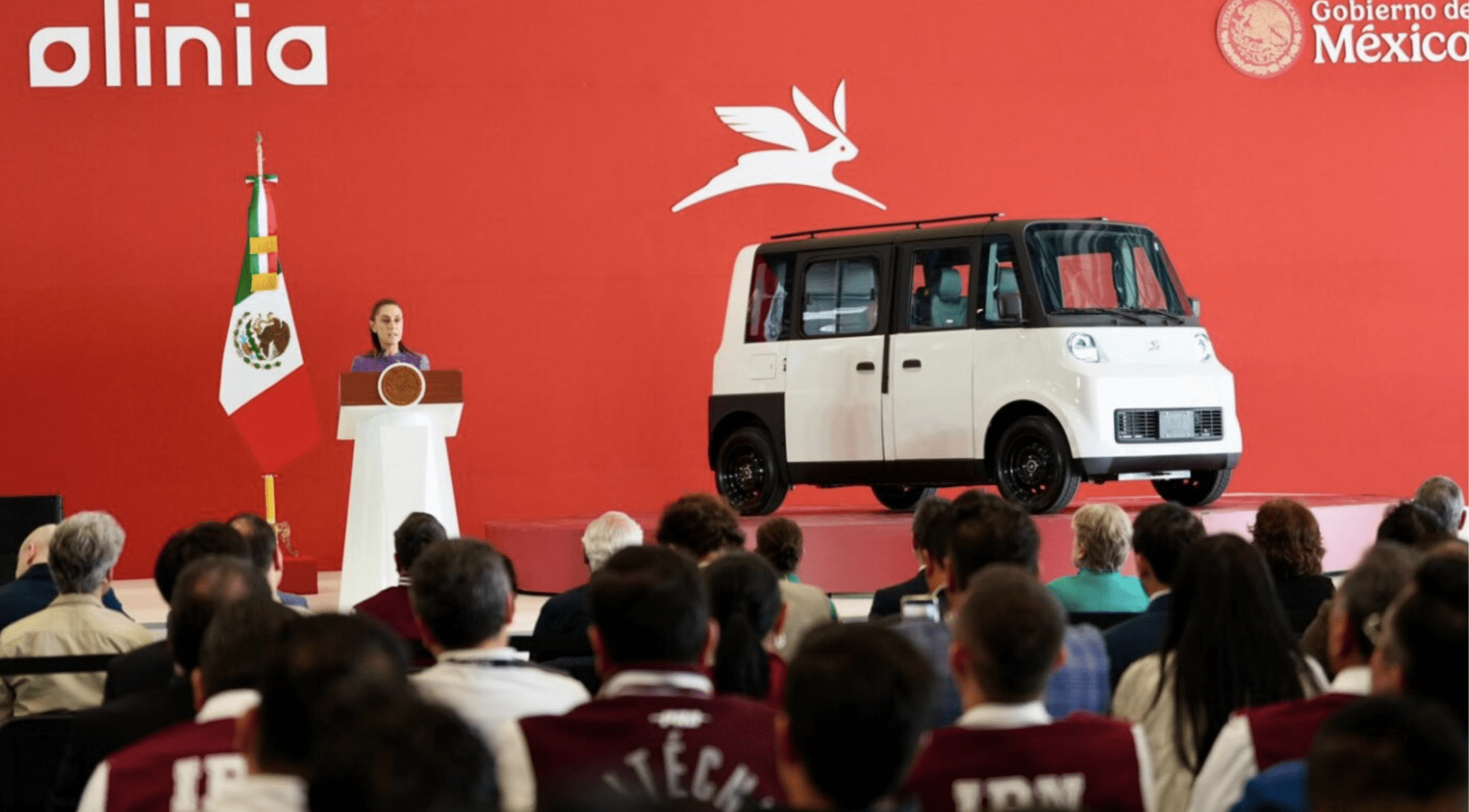
Mexico City, Mexico – Mexico has established Latin America’s first national financing programme specifically designed to help small and medium-sized enterprises (SMEs) transition to electric vehicles for urban and last-mile freight transport.
Developed by Mexico’s state-owned development bank, Nacional Financiera (NAFIN), C40 Cities and The Climate Pledge, the programme ElectroPyME addresses one of the main barriers to fleet electrification: access to affordable financing.
According to NAFIN, ElectroPyME could help finance approximately 300 electric freight vehicles, supported by a US$1 million guarantee fund with the potential to mobilise approximately US$14.2 million in investment.
Carlos Torres Rosas, General Director of NAFIN/Bancomext, said: “Small and medium-sized enterprises are fundamental to the economy. However, they face greater challenges in financing investments that can transform their businesses, such as the transition to electric vehicles. Every small business that can replace its vehicle and reduce its operating costs brings us one step closer to cleaner air and healthier cities, while helping accelerate the transition toward a more efficient, sustainable, and less polluting economy”.
Mexico’s transport sector generates approximately 23% of the country’s total greenhouse gas emissions, with close to 90% of transport emissions coming from road transport, including light-duty vehicles, vans, buses and freight trucks. Electrifying freight fleets offers an opportunity to reduce greenhouse gas emissions and air pollution while generating economic benefits for businesses through lower operating and energy costs.
For small and medium-sized businesses, however, the higher upfront cost of electric vehicles is compounded by limited access to financing. Financial products specifically designed for electric freight transport remain scarce, while interest rates for financing electric vehicles can range between 20% and 25% per year. These conditions can make investments prohibitively expensive, extend payback periods and discourage smaller businesses from electrifying their fleets.
ElectroPyME addresses this barrier through a NAFIN guarantee scheme that reduces part of the risk assumed by financial intermediaries when providing credit to SMEs purchasing electric freight vehicles. The programme aims to mobilise approximately US$14.2 million in financing, while offering a maximum interest rate of 16.5%, significantly below the 20–25% rates SMEs commonly face through other financing products.
It is also expected to shorten the time required for businesses to recover their investment. Initial estimates indicate that the payback period for an electric freight vehicle could fall from approximately 15 years to 6.7 years under the programme’s financing conditions.
Sarah Dimson-Tararuj, The Climate Pledge, said: “ElectroPyME is transformational for the EV freight industry in Mexico. ElectroPyME is a derisking mechanism that sends an incredibly strong demand signal to commercial banks and OEMs – ultimately helping companies decrease supply chain emissions in a very tangible way. Climate Pledge signatories and other companies operating in the region can drive towards net-zero much faster as carriers make the shift away from fossil fuel-powered vehicles to EVs
By reducing the cost and risk of financing, ElectroPyME aims to make electric freight vehicles a more accessible investment for businesses that might otherwise be unable to transition their fleets. And the potential market for fleet electrification in Mexico is significant. Approximately 97% of companies using urban freight transport are micro and small businesses, making access to appropriate financing particularly important.
A C40 Cities study identified approximately 100,000 SMEs across Mexico with the financial and operational potential to adopt electric mobility solutions in the short and medium term. These businesses operate across sectors with significant urban freight activity, including grocery and retail, food and beverage, pharmaceuticals, and household appliances.
C40 Cities estimates that the first phase of ElectroPyME could help finance approximately 300 electric freight vehicles. Over ten years, these vehicles could avoid approximately 11,931 metric tons of CO₂, equivalent to taking approximately 2,783 passenger cars off the road or the carbon sequestration associated with planting approximately 197,280 trees.
Ilan Cuperstein, Regional Director of C40 Cities for Latin America, said: “ElectroPyME marks a major milestone for the region. Mexico is the first country in Latin America to launch a national financing program specifically designed to help SMEs transition to electric vehicles for urban freight.
Through ElectroPyME, Nacional Financiera is offering Latin America’s first financial product dedicated to zero-emission urban freight for SMEs, making the financing needed for this transition more accessible. By addressing one of the main barriers to electric vehicle adoption, the program will help small businesses reduce emissions and operating costs while supporting cleaner, more sustainable cities.”
The Laneshift Initiative, launched in 2023 by C40 and the Climate Pledge, works on developing scalable solutions for freight electrification across cities and markets in Brazil, Mexico and India. ElectroPyME Program offers a potential model for expanding access to electric freight financing across Latin America, demonstrating how public financial institutions, cities and private-sector partners can work together to overcome investment barriers and accelerate the transition to zero-emission urban transport.
