

Accra, Ghana(CAJ News) – Ghana is intensifying its campaign for Britain and other former European colonial powers to address the enduring consequences of slavery and colonialism through meaningful reparations, insisting apologies and symbolic gestures must lead to practical action.
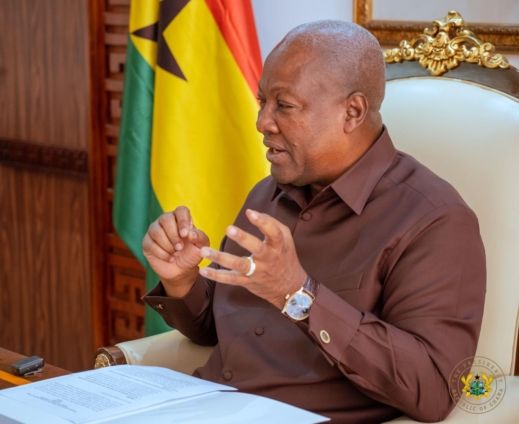
President John Dramani Mahama, the African Union’s champion for advancing reparations, has placed the issue at the centre of Ghana’s diplomacy.
The demand encompasses justice, restitution, development and African dignity.
At a November 13 discussion in Amsterdam, Professor Sir Hilary Beckles, chairperson of the Caribbean Community Reparations Commission, challenged arguments used to resist reparations.
He said slavery was an organised system of extraction that converted African people into property and generated wealth for merchants, financial institutions, plantation owners and European states.
At the Berlin Conference of 1884–1885, 14 powers, including Britain, France, Germany, Belgium, Portugal and the Netherlands, negotiated rules governing territorial claims and trade in Africa without consulting African representatives.
The conference did not draw every colonial border, but established a framework that accelerated the partition and occupation of the continent.
Conquest was enforced through military violence.
Communities resisting occupation faced massacres, punitive expeditions, dispossession and forced labour.
Kingdoms and political systems were dismantled, land and minerals seized, and economies redirected to serve imperial interests.
Millions were captured and transported across the Atlantic; many died during the passage, while survivors endured generations of enslavement, racial discrimination and exclusion.
Mahama has said the transatlantic slave trade forcibly displaced more than 12.5 million Africans, with an estimated two million dying during the Middle Passage.
He argues colonial exploitation cost Africa enormous human and material resources.
Ghana is building an institutional response.
In June, Mahama announced three international panels covering reparatory justice, the restitution of cultural artefacts and legal pathways.
Foreign Minister Samuel Okudzeto Ablakwa has stressed that reparations are about healing and restoring dignity, not enriching political leaders.
He has also called for the return of African artefacts held abroad.
The campaign has gained diplomatic traction.
Ghana said in November that Britain had shown openness to dialogue on a formal apology and reparatory justice.
That must produce negotiations and commitments.
Africa must lead those negotiations. Proposals include a jointly governed reparations fund, debt-service relief, investment in education, healthcare and infrastructure, restitution of cultural property, and stronger African representation in international institutions, particularly the United Nations.
Any fund must have transparent governance and ensure benefits reach affected communities.
The European Commission has funded a €150,000 Centre for Reparative Finance at the University of Amsterdam and a separate €2 million Re-PAIR research project.
These initiatives make African coordination urgent: proposals must not be shaped without African leadership.
The African Union and Caribbean reparations bodies have begun joint work. They need political authority, resources, and a clear mandate.
Reparations cannot reverse history or restore lives stolen.
But Britain and other former European colonial powers must acknowledge responsibility and help repair the lasting damage. Ghana’s message is clear: Africa and its diaspora are demanding justice, not charity.
– CAJ News
