
Global Growth Slows to 2.6%, and Gaps Widen Between Developing Regions

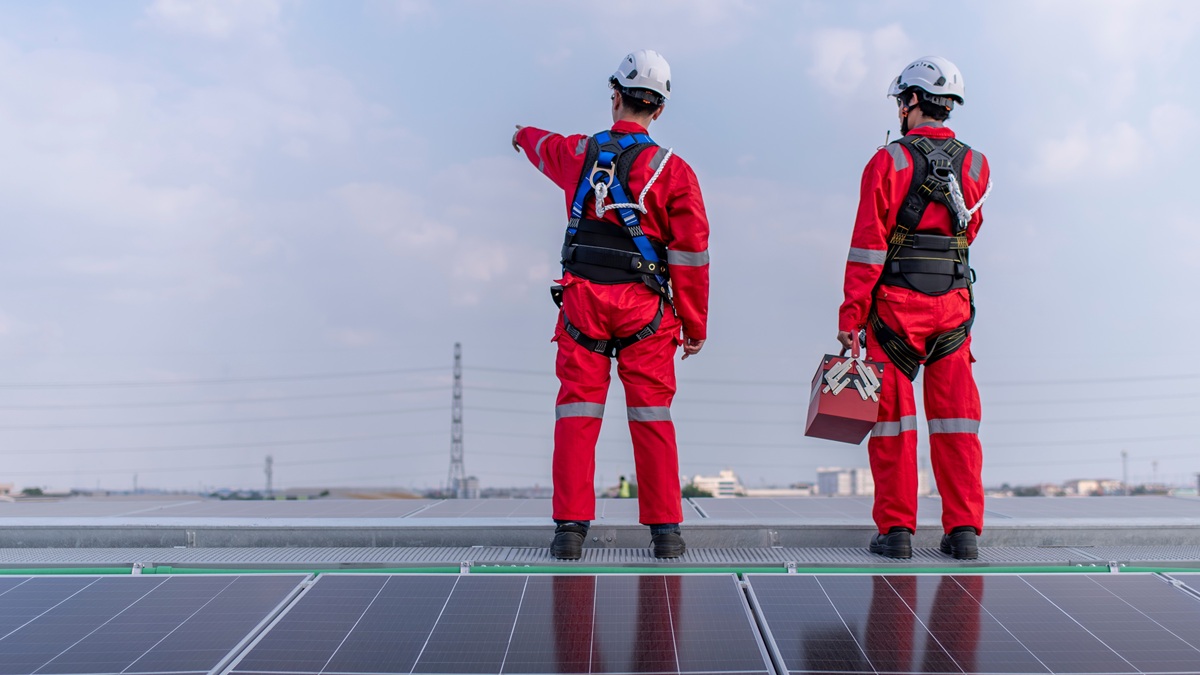
Rooftop solar panels

UNCTAD’s Trade and Development Report 2026: the geoeconomics of development, presented today in Geneva, projects global growth of 2.6% for 2026, down from 2.9% last year, even as trade in goods and services is expected to expand by about 4% at constant prices. Developing economies are projected to grow by 4% this year, down from 4.7% in 2025.

Global trade reached a record $35 trillion in 2025. In 2026, higher trade values are being driven by price increases amid the energy shock.

The global trade map is shifting: trade between China and the United States has fallen by more than 20% since 2024, while East Asia has expanded trade with both China and North America. Export controls, investment screening and supply-chain conditions make strategic sectors harder for new entrants to access.

UNCTAD’s flagship report finds that governments increasingly use industrial, trade, financial and technology policies to pursue economic and national security objectives.

Market access and the ability to move into higher-value activities now depend more heavily on technology, finance and geopolitics.

Asia leads, but the route to catch-up is narrowing

Asia is projected to contribute 59% of global growth in 2026, with India expanding at 7.3%, China by 4.5% and Indonesia by 5.2%. Other high performers in the region include Kyrgyzstan (8.8%), Mongolia (7%), Tajikistan (6.6%), Uzbekistan (7.9%) and Viet Nam (7.8%).

A few developing Asian economies continue to close the income gap with advanced countries, while convergence has stalled across most of the developing world since the mid-2010s. The industrial path that powered much of Asia’s rise is becoming harder for others to follow.

East Asia is central to the surge in semiconductors and advanced computing manufacturing. AI products are now the main driver of merchandise trade. In the report’s case study of an advanced AI server rack, post-tax profits account for 68% of traced value added, while workers receive less than 15%. Growth in AI-related trade does not automatically bring broad development gains.

More specialisation is needed to access gains of global value chains

Developed economies capture around 70% of the value of announced greenfield projects in high-value strategic sectors, including semiconductors, energy-transition technologies and AI infrastructure, according to data for 2020–2025.

Energy shock and financial instability put the global economy to the test

The Middle East conflict pushed the price of Brent crude from $70 to over $110 per barrel in the weeks after its outbreak. Higher energy costs have hit import-dependent developing economies and poorer households especially hard.

Higher energy costs compound rising borrowing costs and capital-flow volatility, which has doubled since the conflict began. The AI boom also brings financial stability risks as markets become more exposed to a small number of companies. Official development assistance, a key source of finance for least developed countries and small island developing states, is projected to fall by almost 7% in 2026, its third consecutive annual decline.

Policy priorities for developing countries: prioritise key sectors, diversify trade profiles, advance the energy transition

The energy shock strengthens the case for diversifying energy supply. Since 2024, renewables have been cheaper than the cheapest newly installed fossil-fuel alternative in more than 90% of cases, the report finds. Domestic renewable sources, where feasible, can reduce dependence on imported fossil fuels. The report argues that addressing energy and supply constraints is more effective against supply-driven inflation than broad monetary and fiscal tightening.

As production becomes more specialised under geoeconomic pressures, economic integration is increasingly taking place sector by sector. This allows many middle powers of the Global South to build strengths in specific sectors while maintaining economic and financial ties with multiple partners. The report recommends coordinating industrial, financial and technology policies, including linking foreign investment to local suppliers and increasing domestic value added.

Rising economies of the Global South anchor regional cooperation

Regional agreements could expand markets, reduce trade costs and support regulatory cooperation. The African Continental Free Trade Area links market integration to diversification and regional value chains. Alongside it, the Pan-African Payment and Settlement System seeks to connect 42 African currencies to ease payment barriers.

Pedro Manuel Moreno, acting Secretary-General of UNCTAD, underlined that: “Rising economies of the Global South are becoming regional anchors, extending trade integration to new financial initiatives. This works best alongside a multilateral trading system that keeps non-discrimination and special and differential treatment at its core.”

Leave a Reply

*