

Gracious Monyeke, Project Sales Manager at Aggreko Africa, talks about how the commissioning phase is the most critical and underestimated stage of any new data centre build in Africa
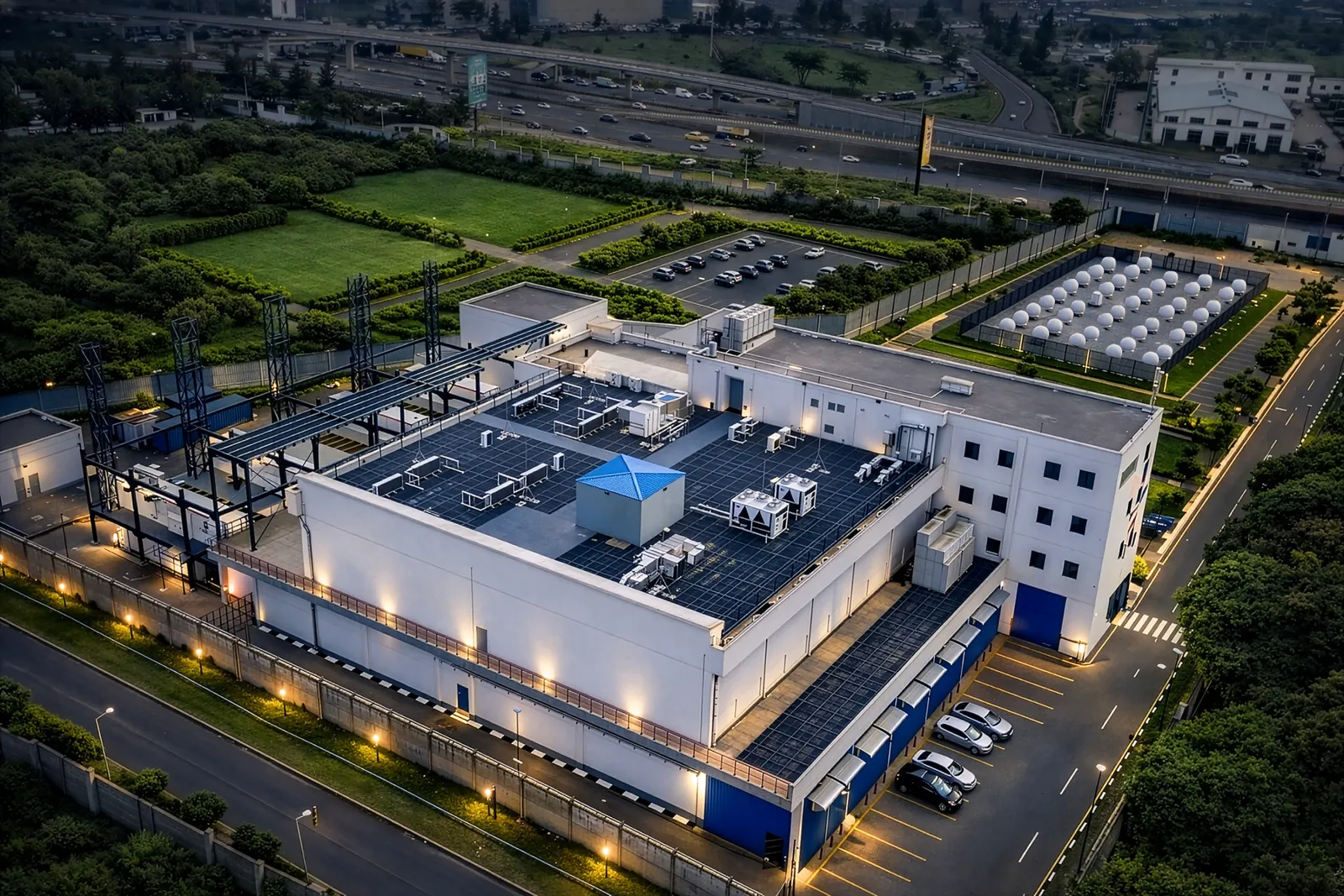
Africa’s data centre market is expanding rapidly. As recently as 2020, the continent had only around 140,000 square metres of data centre space, roughly the same as Switzerland, but serving a population of around 1.26 billion rather than 8.5 million.
The installed IT power capacity is also estimated at only a few hundred megawatts against a foreseeable requirement of at least 1,000MW over the coming decade. And this highlights a structural supply gap that must be closed[1][2].
Data centre supply has already more than doubled since 2020, and it is projected to continue growing strongly, underpinned by rapid digitisation and rising cloud usage across the continent.
Cloud adoption across manufacturing, financial services and healthcare, combined with tightening data protection and localisation requirements that are pushing companies to host data closer to where it is consumed, is driving waves of new investment into facilities in Johannesburg, Cape Town, Nairobi, Lagos and a growing number of emerging hubs such as Harare and Kigali.
This investment is welcome, but the development of the data centre footprint in Africa is only one part of the story. A data centre is only as reliable as the commissioning process that proves its critical infrastructure operates efficiently, especially in the African context where the unreliability of local grids has long been a challenge for ages which pose more threats for the data centre infrastructure and development.
Furthermore, with many original equipment manufacturers still based outside Africa, and those within the continent focusing mainly on final assembly, lead times for spares and parts are extended. This often results in increased downtime, as operations managers are hesitant to hold underutilised inventory in their warehouses.
The stakes attached to commissioning a data centre correctly are far higher in Africa than anywhere else in the world[3].
Commissioning is a structured process of verifying that every system in a new data centre has been correctly designed, installed and tested before the facility goes live. It covers the full range of critical infrastructure from incoming electrical distribution and transformers through to uninterruptible power supplies and standby generation, to mechanical cooling.
The goal is to confirm systematically and at every level that each component performs to its designed specifications and that the facility responds correctly when all systems are running under real load conditions.
During the construction of a new data centre, there are five levels of testing across power and cooling infrastructure. Level one is factory acceptance testing that evaluates equipment before and after assembly to confirm it has been built and operates in accordance with design specifications.
For generators and UPS systems, resistive and reactive load bank testing simulates full electrical loading at both leading and lagging power factors and verifies that backup systems synchronise correctly. Any issues identified at this stage can be resolved before the equipment arrives on site, eliminating the significantly higher cost of resolving problems after installation.
Level two is site acceptance testing, where the OEM and installing contractors verify that equipment meets the specifications and check for damage before it enters the facility. Level three, pre-functional testing, confirms that every device has been correctly installed, wired, torqued and earthed before initial energisation, and level four evaluates each piece of equipment individually. Then, level five is integrated systems testing across the entire facility as a single integrated system at full load.
Comprehensive testing identifies inefficiencies and costs, allowing for accurate assessment of power consumption and ensuring that compliance and warranties remain intact.
Original equipment manufacturer (OEM) warranties can be voided if required testing has not been completed, and contractors and operators run the risk of financial penalties if their completion deadlines are missed. And if critical equipment fails after a facility goes live, there are brand reputation and customer relationship consequences.
These risks also impact the opportunity for ongoing investment. The market is working hard to attract sustained international investment to fund the next phase of digital infrastructure development, so a commissioning failure at a major new facility negatively influences the broader investor community in African digital infrastructure as an asset class.
This is why commissioning should move from the end of the build to the start. It should become an inherent part of the design and development of the facility from the outset. Why? Because issues identified during design review cost a fraction of those identified during integrated systems testing.
Problems in wiring, piping and sequencing that appear late in a build require changes to infrastructure that is already in place, and this generates additional costs and delays. The commissioning team’s involvement at the design review stage has the potential to catch as many issues as possible as early as possible, effectively cutting the costs of mistakes further down the line.
For operators building or managing multiple data centre facilities, which is an increasingly common model among Africa’s growing tier of regional operators, a standardised commissioning framework delivers compounding benefits. More than 70% of all data centre outages globally are caused by human error rather than infrastructure design failure and so consistency in the commissioning process directly reduces exposure to the most common source of failure and provides a reliable performance baseline that supports maintenance planning, fault diagnosis and benchmarking across a portfolio of sites.
Aggreko’s modular, standardised equipment fleet means the same commissioning programme is deliverable regardless of where in Africa a new data centre is located. This is particularly relevant on a continent where supply chain complexity and longer lead times remain a live operational reality so having a partner with standardised, available equipment removes a significant variable from the commissioning timeline.
The cost savings realised by thorough commissioning far outweigh the cost of the commissioning process itself. A properly commissioned data centre delivers more uptime, lower operations and maintenance costs across the facility’s lifetime, a safer working environment, and a full documentation set that supports benchmarking, trend analysis and maintenance decisions for years ahead. The total cost of ownership of the facility’s critical infrastructure is lower. The risk of the kind of failure that carries financial penalties and reputational consequences is materially reduced, and Aggreko has the tooling, expertise and capability to support data centres at every stage.
The right commissioning partner can assist with the new construction or extension of a data centre.
When issues arise due to human error or equipment failure on site, it is essential to engage a commissioning partner with the right expertise. They should not only understand the process thoroughly but also support OEMs by identifying faults early, right from the initial stages of commissioning, rather than allowing them to surface later, when downtime becomes more costly.
The right commissioning partner will give you peace of mind by ensuring full fleet availability across both your electrical and cooling plants.
