


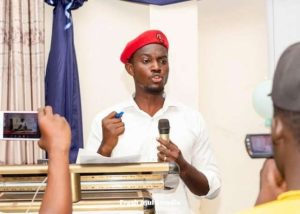
The leader of the Economic Fighters’ League (EFL), Ernesto Yeboah, has strongly defended the government’s decision to evacuate Ghanaians affected by recent afrophobic attacks in South Africa, describing criticisms of the move by South African opposition politician Julius Malema as misplaced.
Reacting to comments by the leader of South Africa’s Economic Freedom Fighters (EFF), who questioned Ghana’s decision to airlift some of its nationals from the country, Mr Yeboah said the remarks were “complete rubbish”, although he expressed sympathy for the political and social circumstances informing Mr Malema’s position.
Speaking on Saturday, May 30, Mr Yeboah maintained that the safety and welfare of Ghanaian citizens must remain paramount and that the government’s intervention demonstrated responsible leadership in the face of growing insecurity for affected migrants.
According to him, Ghana’s response reflected a commitment to protecting its citizens and should be commended rather than criticised.
“Ghana has demonstrated maturity, leadership and concern for its citizens in a manner that should make every Ghanaian proud,” he stated.
Apartheid legacy
Mr Yeboah, however, argued that the wave of afrophobic attacks occurring in South Africa cannot be understood without examining the country’s deep-rooted socio-economic challenges and the lingering effects of apartheid.
He said many Black South Africans continue to endure severe economic hardships decades after the official end of apartheid, with poverty, unemployment and inequality remaining widespread in many communities.
“The conditions of apartheid are still very present,” he stated.
Drawing on his personal experiences from visits to South Africa, Mr Yeboah said the scale of deprivation in some Black communities was difficult to comprehend without seeing it firsthand.
He explained that many residents continue to live in sprawling informal settlements constructed from cardboard, corrugated metal sheets and other makeshift materials.
“Had I not personally visited South Africa and witnessed the living conditions of many Black communities, I would have found such accounts difficult to believe,” he said.
He added that conditions in some South African settlements were far worse than those experienced in many low-income communities in Ghana.
“Some of the ghettos in Ghana would appear like luxury apartments or even hotels when compared with conditions in parts of South Africa,” he noted.
To illustrate the extent of the problem, he said: “Imagine the whole of Kokomlemle with everyone living in cardboard structures. That is how widespread and severe the situation is.”
Economic frustrations
Mr Yeboah said the continued economic disparities between Black and White South Africans have created widespread frustration among sections of the population, contributing to hostility towards migrants from other African countries.
He argued that South Africa’s education system and successive governments have not adequately addressed historical injustices inherited from apartheid, resulting in lingering resentment and social tensions.
In his view, these unresolved challenges have helped fuel the anti-foreigner sentiments currently being witnessed.
“They are a traumatised nation,” he remarked.
Political calculations
The EFL leader further suggested that Mr Malema’s comments must also be viewed within the context of South Africa’s increasingly competitive political landscape.
He noted that the Economic Freedom Fighters, once regarded as the country’s third-largest political party, lost that position to former President Jacob Zuma’s MK Party ahead of the last general election.
According to him, several political analysts and commentators have attributed the MK Party’s rise partly to its strong ethnic and regional support base, as well as growing public dissatisfaction with the ruling African National Congress (ANC).
Mr Yeboah explained that during the election campaign, the EFF’s Pan-African stance became a political vulnerability as opponents portrayed the party as favouring open borders and increased migration from other African countries.
He said narratives suggesting that migrants were taking jobs away from South Africans resonated with many frustrated voters and contributed to shifts in political support.
Malema’s balancing act
Mr Yeboah said these political realities help explain Mr Malema’s recent comments regarding Ghana’s evacuation exercise.
He recalled that after the first group of Ghanaian nationals were evacuated from South Africa, Mr Malema challenged advocates of afrophobic sentiments by asking, “Now that 300 Ghanaians have left, where are the 300 new jobs?”
According to Mr Yeboah, Mr Malema’s subsequent criticism of the evacuation effort appeared to be an attempt to strike a delicate balance between opposing anti-African sentiments and maintaining political appeal among sections of the South African electorate.
While acknowledging the domestic political pressures facing South African politicians, Mr Yeboah insisted that Ghana’s government acted appropriately under the circumstances.
He stressed that protecting citizens from violence and insecurity must remain the foremost responsibility of any government and said the evacuation initiative reflected that obligation.
The comments come amid ongoing concerns over the safety of foreign nationals in parts of South Africa following reports of renewed afrophobic attacks targeting African migrants and businesses.
Myjoyonline
