

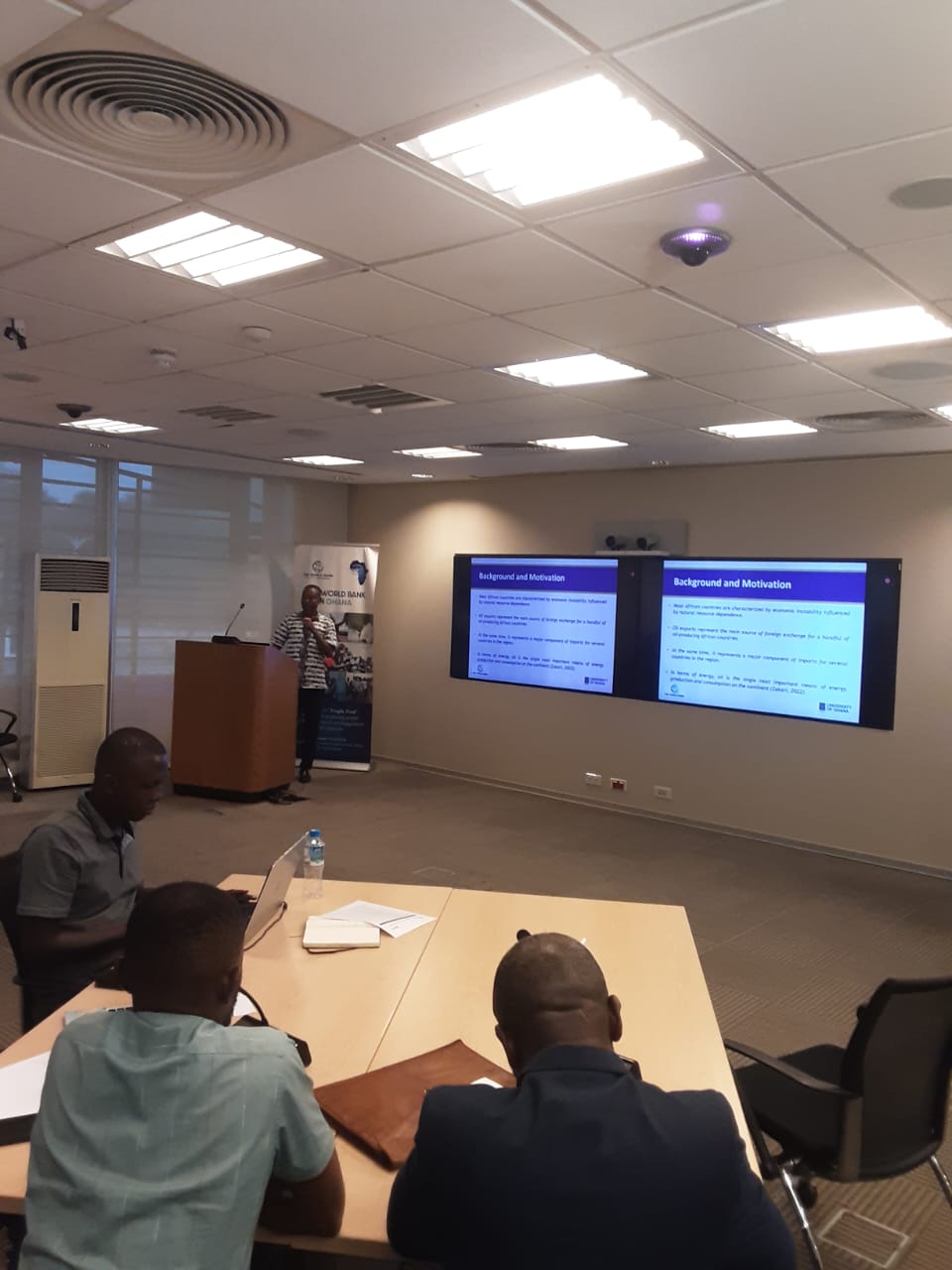

Accra, Ghana//-Research presentation sessions at the inaugural World Bank–University of Ghana (UG) Graduate Student Research Colloquium turned into a live workshop on research rigour, as presenters faced thorough questioning, requests for clarification, and concrete recommendations to strengthen their work.
Held at the World Bank Headquarters in Accra, the colloquium featured graduate students presenting research across fiscal policy, trade, health systems, agriculture, and finance.
Each presentation was followed by detailed feedback from discussants drawn from the World Bank, University of Ghana, and the Institute of Statistical, Social and Economic Research (ISSER) of the University of Ghana.
Tightening Research for Policy Impact
Presenters were questioned on methodology, data sources, and the policy relevance of their findings.
Discussants sought clarifications on assumptions, measurement approaches, and the scope of conclusions. The aim was clear: move students beyond first drafts toward research that can withstand both academic and policy scrutiny.
In several sessions, discussants pointed students to specific papers and literature to refine arguments and methods.
The guidance was practical: sharpen the research question, align the data with the theory, and situate findings within existing evidence from Africa and similar contexts.
Constructive critique, not criticism
Discussants stressed that the comments were meant to strengthen, not undermine, the work. “The feedback is about making the research more credible and applicable,” one discussant said.
Another encouraged students to treat the comments as a roadmap for turning conference papers into publishable work.
Among the discussants were Stuart Ehrlich Russell, Marina Ngoma Mavungu, Angelique Basanta Gutierrez, Elisha Kipkemoi Ngetich, Kwame Adjet-Mantey, Christian Schoder, Justice Tei, Prof. Monica P. Lambon-Quayefio, and Woubet Kassa, all from the World Bank and ISSER respectively.
Topics under review included fiscal decentralisation in Ghana, intra-regional trade and poverty, environmental degradation from small-scale gold mining, health outcomes in Sub-Saharan Africa, and contract farming among maize farmers in Northern Ghana.
Bridging academia and policy
The exchanges underscored a core goal of the colloquium: to bridge academic training and real-world policy by subjecting student research to the same standards used in development practice. For the graduate students, the sessions offered direct mentorship from researchers and practitioners working on Africa’s development challenges daily.
