

African journalists have been urged to broaden their reporting beyond national boundaries and pay closer attention to regional political, democratic and security developments shaping the continent, as experts warn that Africa’s challenges are increasingly interconnected and require stronger cross-border journalism.
According to governance experts, media scholars, and civil society actors, they will help strengthen public understanding of cross-border issues, improve accountability and enhance democratic resilience across Africa at a time of rising political instability, shrinking civic space and growing geopolitical competition.
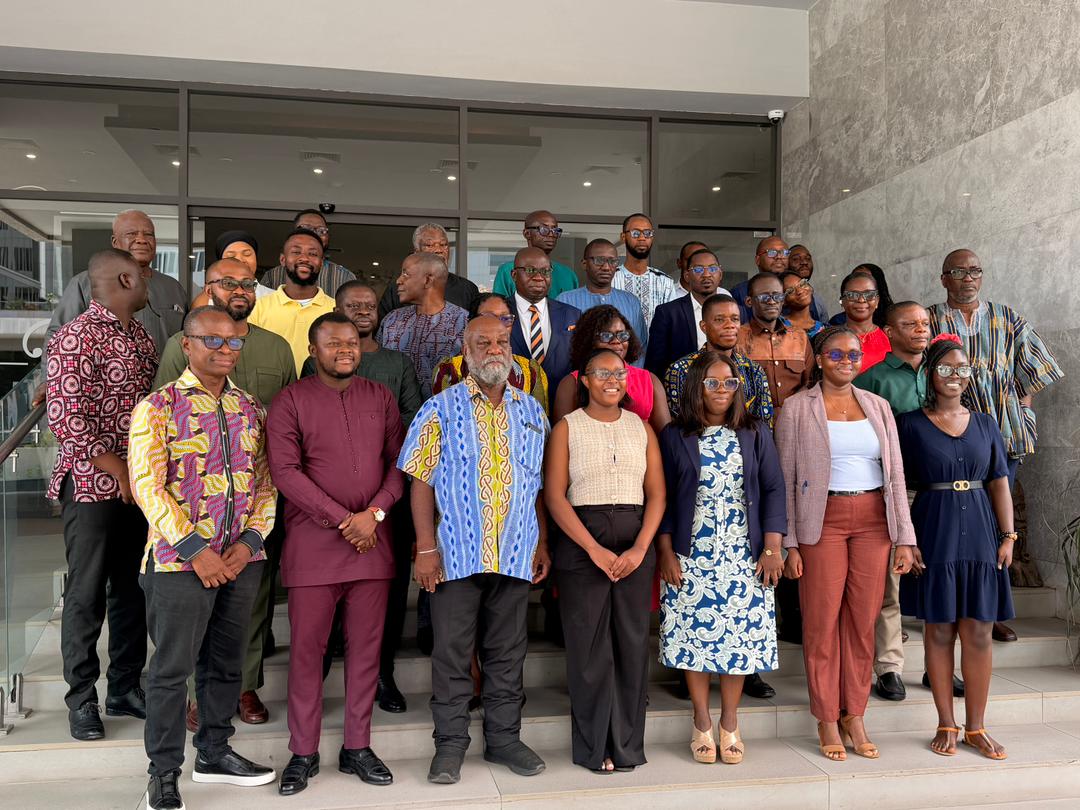
The call was made at the opening of the Regional Media Training and Capacity-Building Programme in Accra, where journalists, civil society organisations and policy actors gathered to examine the role of the media in strengthening democratic governance in West Africa.
The Executive Director of the Ghana Center for Democratic Development (CDD-Ghana), Prof. Henry Kwasi Prempeh, said democracy in Africa can no longer be treated as a purely national issue, as developments in one country increasingly generate ripple effects across neighbouring states.
He explained that while CDD-Ghana was established in 1998 to promote democracy, good governance and inclusive development in Ghana, its scope of work has increasingly expanded in response to regional political realities.
According to him, rising political instability, growing public dissatisfaction with democratic systems and the increasing influence of global geopolitical interests in Africa require journalists to deepen their understanding of regional dynamics.
Prof. Prempeh observed that many media organisations across Africa remain heavily focused on domestic political issues while underreporting regional developments that have direct implications for national stability and democratic progress.
“Developments in neighbouring countries affect all of us, whether through security threats, migration, economic pressure or democratic decline,” he said.
He added that the training programme was designed to strengthen the capacity of senior journalists and editors to improve coverage of democracy, governance and geopolitical developments across West Africa.
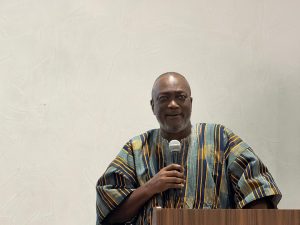
Former Executive Director of the Media Foundation for West Africa, Prof. Kwame Karikari, also called for a stronger role for African media in shaping continental narratives and protecting Africa’s interests in a rapidly evolving global environment.
He said African journalism must move beyond narrow national reporting and invest in stronger cross-border networks that allow for consistent, independent and coordinated reporting on continental issues.
Prof. Karikari warned that Africa risks losing control of its narrative if it continues to rely heavily on international media organisations for coverage of African affairs.
He further noted that Africa is facing renewed global competition over its strategic mineral resources, driven by increasing demand for digital and technological industries. “The renewed scramble for Africa’s resources should concern every African,” he said.
Prof. Karikari also raised concern over democratic setbacks in parts of Africa, including shrinking civic space, weakening institutions and increasing pressure on independent journalism.
He called for stronger collaboration among African media organisations through joint reporting, cross-border investigations and the development of regional knowledge-sharing platforms to improve journalism standards.
He further proposed the creation of a pool of experts across the continent to support journalists with analysis on complex issues such as governance, security, climate change and international relations.
Prof. Karikari stressed that African media have a responsibility not only to inform the public but also to safeguard democracy, protect sovereignty and support long-term development across the continent.
Network Coordinator of the West Africa Democracy Solidarity Network (WADEMOS), Mr Paul Osei Kuffour, said journalists must strengthen their capacity to counter foreign influence and disinformation that threaten democratic stability in West Africa.
He noted that West Africa is increasingly shaped by complex geopolitical and economic interests that influence elections, public discourse, digital spaces and public trust in democratic institutions.
According to him, journalists are no longer only reporters of events but have become key actors in defending truth, accountability and democratic governance.
“The challenges facing the media are becoming more sophisticated. Disinformation campaigns are more coordinated, and foreign influence is often embedded in economic, political and digital ecosystems,” he said.
Mr Kuffour said the rapid spread of information has made verification more difficult, underscoring the need for stronger journalistic capacity in analysing narratives and tracing influence networks.
He stressed that improving media capacity should be seen as part of a broader effort to strengthen democratic foundations in the sub-region.
“When journalists are equipped to understand geopolitical dynamics and interrogate complex narratives, they empower citizens to make informed decisions,” he stated.
He explained that WADEMOS is a regional platform bringing together civil society organisations, activists, academics and policy experts across 15 West African countries to promote democratic governance, peace and security.
He added that the network continues to support initiatives aimed at strengthening democratic institutions, civic participation and regional cooperation.
Kuffour stressed that protecting democracy requires collaboration between journalists, policymakers, civil society organisations and academia to build a more resilient information environment.
“A well-informed society remains the foundation of every healthy democracy, and a capable independent media remains its strongest pillar,” he said.
The programme brought together journalists, researchers and democracy advocates to explore strategies for improving regional reporting and strengthening democratic resilience across West Africa.
By Ike Dzokpo
