

Accra, Ghana//-Civil Society Organisations (CSOs) in Ghana have urged Ghanaians, as a matter of urgency, to insist on an Independent Public Prosecutor to fight corruption following a recent court ruling that cut off the prosecutorial power of the country’s Office of the Special Prosecutor (OSP).
The CSOs comprising Ghana Center for Democratic Development (CDD-Ghana), STAR Ghana Foundation, Ghana Anti-Corruption Coalition (GACC), Transparency International, Democracy Hub, Penplusbytes, Parliamentary Network Africa, IMANI Africa, Africa Center for Energy Policy (ACEP), NORSAAC, One Movement Ghana, and Africa Education Watch, dedicated to promoting democratic governance, public accountability, and fighting corruption in Ghana, condemned the recent legal developments and the serious implications for the fight against corruption in Ghana.
In a press statement issued and signed by the CSOs in Accra, they maintained that political parties and public officers are expected to act in the interest of the people.
They said: “Ghanaians must therefore resist this effort to weaken the evolving public accountability institutional framework”.
The last few weeks have generated general despondency amongst the populace and mistrust in the state and government’s commitment to fighting corruption, the statement noted.
“If all the estimates of a $3bn yearly loss to corruption is to be believed, then Ghana cannot afford to roll back this important investment in setting up the OSP to tackle serious corruption”.
It is important that citizens do not shirk their responsibility to hold governments accountable for the use of the taxpayers’ money and the power of the State, according to them.
“We should stay vigilant, make our voices heard, and insist on policies that would benefit the majority of citizens.
We pledge our full dedication to promoting integrity, transparency, and accountability in public life”.
It would be recalled that on 8th April 2026, the Attorney-General of Ghana filed processes at the Supreme Court in response to the case of Noah Adamtey versus Attorney-General (AG), seeking to declare the OSP Act 2017 (Act 959) unconstitutional.
In the Affidavit, the AG supported the position of the applicant that aspects of Act 959 seeking to authorise the OSP to prosecute without the AG’s permission were unconstitutional.
Then, on 15th April 2026, a High Court (General Division) in Accra, on a judicial review application in a criminal fraud case, declared that the OSP’s powers to prosecute under Act 959 without authorisation from the AG were unlawful.
The Court then made sweeping orders for the AG to take over all cases being prosecuted by the OSP and, at the same time, declared all cases prosecuted by the OSP null and void.
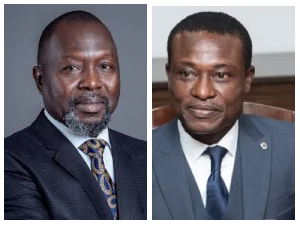
A day later, following the Court order, the Deputy AG, Dr Justice Sai, stated that the AG’s Office has moved to take over all cases being prosecuted by the OSP.
Meanwhile, the OSP has released a statement indicating that the High Court decision conflicts with another High Court (Criminal Division) decision to stay proceedings following a similar application to allow for the Supreme Court case to be decided, and as such, it will take the necessary legal steps.
Certainly, these developments have immediately jeopardised the state’s ability to prosecute its ongoing cases against individuals accused of corruption and corruption-related offences to the detriment of the public interest.
In response, the members of a group of Civil Society Organizations make the following statements:
For over two decades, Ghanaians have made it clear that they want an independent Public Prosecutor, separate from the AG, to prosecute crimes generally.
The rationale, backed by years of empirical evidence, was that the AG as a political appointee is conflicted in his ability and motivation to prosecute members of his government, particularly cabinet colleagues.
As such, the prosecution of corruption has focused on prosecuting members of a previous regime following a change in government.
This was captured in the Africa Peer Review Mechanism (APRM) assessment of Ghana in 2004.
This policy was adopted by Parliament in the first National Anti-Corruption Action Plan (NACAP) in 2015 and launched by President John Mahama during his first term as President.
In 2017, following a campaign promise to set up an Office of the Special Prosecutor to deal with corruption cases involving Politically Exposed Persons (PEPs), the Akuffo-Addo regime initiated and passed the OSP Act 2017 (Act 959).
This step was seen as a first step to fully implementing the objective of creating the role of an independent public prosecutor when a constitutional review process came around.
It also fulfilled Ghana’s obligations under the United Nations Convention against Corruption (UNCAC) and the African Union Convention on Preventing and Combating Corruption (AUCPCC) and partly aligned with the Jakarta Statement on Principles for Anti-Corruption Agencies.
The OSP Act, 2017 (Act 959), was established lawfully and in accordance with the 1992 Constitution of Ghana.
The Special Prosecutor’s power was drawn from Article 88(4) of the Constitution and consistent with many other statutes delegating the AG’s powers of prosecution to other agencies to prosecute in many forms.
We firmly disagree with the Attorney General’s and the NDC Government’s position in the Noah Adamptey v. AG case before the Supreme Court. We have therefore authorised Merton and Everett LLP, our lawyers, to apply to the Supreme Court as Amicus to enable us to submit a brief in support of the constitutionality of Act 959, the statement noted.
We also find the judgement of the High Court ultra vires as the matter is before the Supreme Court, and the orders are contradictory and unhelpful. We expect the OSP will seek to stay and quash the orders so the Supreme Court can address the matter.
It is time to complete the process we started in 2004 through the APRM and to fulfil our state obligations under the UNCAC and AUCPACC.
The Constitutional Review Committee (CRC) has made very clear and credible proposals on the way forward to fully entrench the arrangement of an independent public prosecutor, particularly for prosecuting corruption in the Constitution.
The opportunity must not be missed. It is regrettable and frustrating that after two decades of overwhelming evidence and popular demand for an independent public prosecutor to prosecute crime, particularly those perpetrated by the politically exposed persons, we are back to this debate.
The leading voices and proponents of an exclusive power of prosecution held by an AG politician are mostly political actors who want to return to the pre-2017 situation.
