

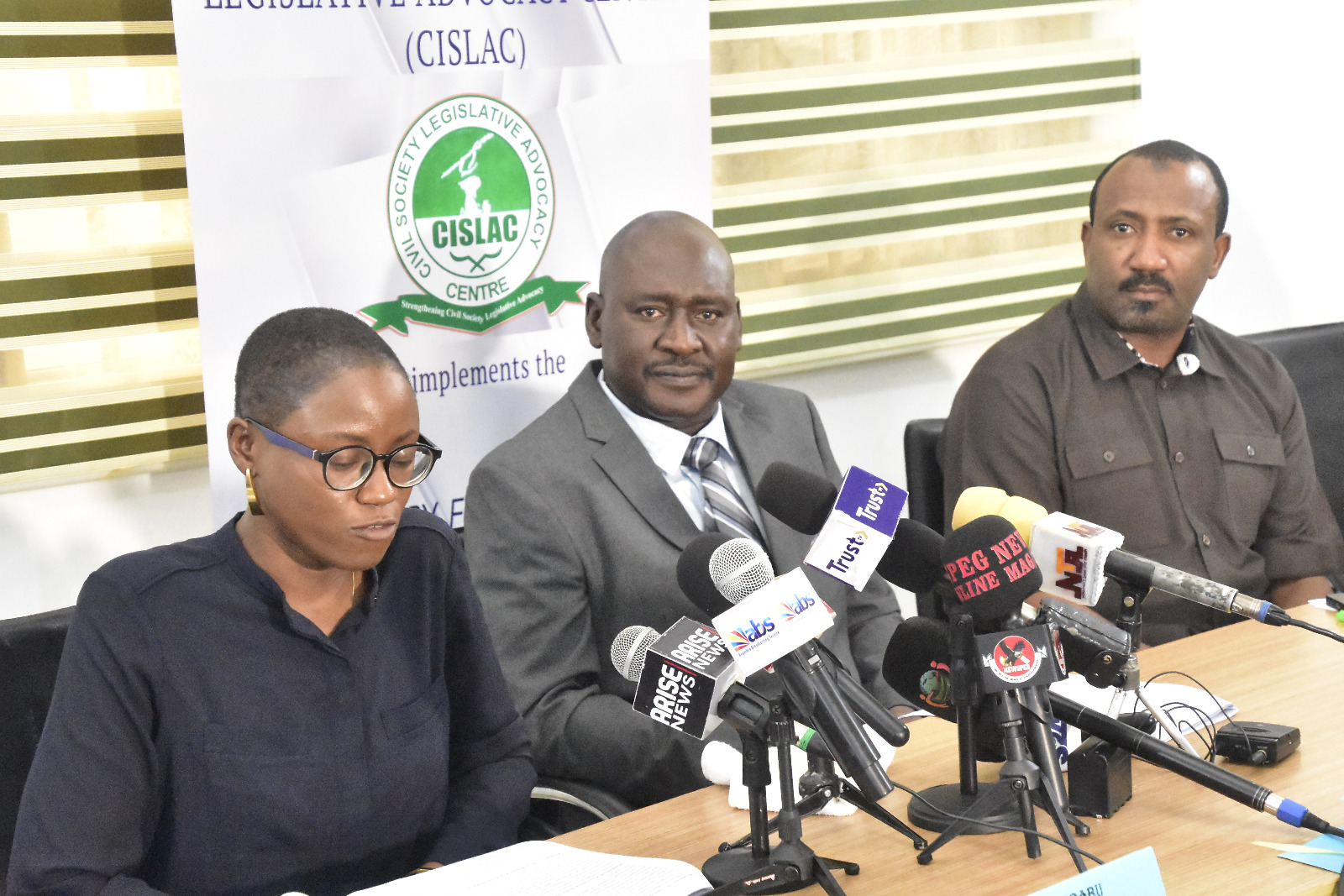
Abuja, Nigeria//- Transparency International (TI), through its Nigerian chapter, the Civil Society Legislative Advocacy Centre (CISLAC), released the 2025 Corruption Perceptions Index (CPI) and revealed that Nigeria scored 26 out of 100, retaining its score of 26 from last year.
On the global country ranking, Nigeria declined from 140 in 2024 to 142 in 2025. This reflects a stagnation in Nigeria’s anti-corruption efforts despite efforts by anti-graft agencies and other well-meaning citizens.
This result shows that there is a lot to be done to strengthen anti-corruption in Nigeria.
Although the index does not document specific instances of corruption within the country, it reflects the prevailing perception of corruption in Nigeria. The index is impartial, objective, and globally recognised as the most widely utilised cross-country measure of corruption.
With respect to this year’s CPI release, it is important to clarify that the index does not constitute an evaluation of Nigeria’s anti-corruption agencies, which continue to demonstrate commendable commitment and effort in addressing corruption.
The data used to compile the CPI are not generated by Transparency International, but by independent, reputable organisations that employ rigorous research methodologies.
The CPI is of considerable significance, as governments, private sector entities, civil society organisations, and other stakeholders rely on it to inform policy and strategic decisions.
Consequently, CISLAC/TI-Nigeria has identified key areas to explain Nigeria’s current performance on the CPI.
Notable positive trends and developments
Strength 1: Improvement in Asset Recovery Efforts: Demonstrating significant progress, Nigeria’s efforts to recover and repatriate stolen assets reflect growing international cooperation and strengthened domestic enforcement.
Over the course of 2025, domestic anti-graft agencies made significant recoveries: the Economic and Financial Crimes Commission (EFCC) announced that it had recovered over ₦566 billion (approximately) and $411 million, along with 1,502 properties between October 2023 and September 2025. demonstrating sustained progress in combating illicit financial flows and reclaiming public resources.
Additionally, the Independent Corrupt Practices and Other Related Offences Commission (ICPC) reported the recovery of ₦37.44 billion and $2.353 million in 2025 through seizures and forfeitures as part of its enforcement activities.
On the international front, in January 2026, the UK Crown Dependency of Jersey agreed to repatriate more than $9.5 million in assets linked to corruption to the Federal Republic of Nigeria, with the funds to be applied to critical infrastructure projects such as the Abuja – Kano Road.
These measures underline Nigeria’s commitment to reclaiming illicit wealth, but as noted in our recommendations below, there remains an urgent imperative to ensure the transparent and effective management of recovered assets for the benefit of ordinary citizens.
Strength 2: Nigeria’s Exit from the Financial Action Task Force (FATF) Grey List:
After being placed on the FATF “grey list” due to deficiencies in its financial monitoring systems, Nigeria was officially removed in October 2025, following two years of enhanced monitoring.
The country successfully implemented a 19-point action plan to address the identified gaps. This delisting reflects measurable progress in strengthening Nigeria’s Anti-Money Laundering and Countering the Financing of Terrorism (AML/CFT) frameworks and signals greater compliance with international financial standards.
Strength 3: Strong Civil Society and Media Advocacy: Investigative journalism and civil society organisations, such as CISLAC, continue to play a pivotal role in uncovering corruption and holding the government accountable.
The media, civil society, and citizens remain essential pillars of Nigeria’s democracy.
Through their complementary efforts, they consistently draw attention to issues that undermine the national interest, thereby prompting governmental responsiveness. CISLAC/TI‑Nigeria acknowledges and commends these contributions and encourages stakeholders within this constituency to sustain this vigilant and constructive engagement.
Key weaknesses
Weakness 1: Judicial Corruption
Corruption and nepotism remain persistent challenges in Nigeria’s judiciary.
Even the Chief Justice of Nigeria (CJN) has acknowledged allegations of bias and undue influence, noting their impact on public confidence.
The Nigerian Bar Association (NBA) has also condemned judicial corruption, warning that it threatens democracy and social justice.
There have also been allegations of favouritism and nepotism in judicial appointments, which have favoured candidates with political connections or familial ties over merit.
Weakness 2: Legislature
Over the years, there have been consistent allegations of bribery involving lawmakers.
According to an investigative report by Premium Times in January 2025, federal lawmakers had set up a bribery scheme targeting federal universities and other tertiary institutions.
Lawmakers were using intimidation and threats to force heads of universities to pay N8million each (N4 million each to Senate and House Committees) to approve their allocations and 2025 budgets.
The investigation revealed that the extortion scheme involves senators and members of the House of Representatives.
In August 2025, allegations of lawmakers having to pay a bribe of between N1million to N3million in order to present motions, Bills and petitions before the floor of the House of Representatives, the whistleblower was Ibrahim Usman Auyo (APC, Jigawa State).
The number of bribery scandals emanating from the National Assembly is shameful and detrimental to Nigeria’s image everywhere.
Weakness 3: Oil Theft and Subsidy Fraud: Oil theft and subsidy fraud continue to exact a heavy toll on Nigeria’s revenue, with persistent losses and limited accountability in the sector.
According to the 2022 audited report by the Auditor‑General of the Federation, published on 9 September 2025, the Nigerian National Petroleum Company Limited (NNPCL) failed to account for N22.3 billion, USD 49.7 million, £14.3 million and €5.2 million in oil-related funds, raising concerns about possible diversion or misappropriation.
The audit detailed weak internal controls and numerous questionable transactions, including payments for abandoned or undocumented projects and irregular contract expenditures.
These findings underscore deep-seated financial mismanagement and a lack of transparency in the oil sector.
Weakness 3: Weakening of Opposition Parties: Political corruption and the weakening of democratic plurality have become increasingly salient in Nigeria as the country approaches the 2027 general election.
Observers and civil society voices have expressed concern over rising defections, suggesting that political incentives, patronage and perceived pressures rather than ideological alignment are driving realignments and further eroding opposition effectiveness.
Furthermore, the National Assembly rejected the proposed amendment to Clause 60, Subsection 3 of the Electoral Act Amendment Bill, which sought to make the electronic transmission of election results mandatory in Nigeria.
This is a setback to Nigeria’s democratic development and a direct affront to the collective will of Nigerians who have consistently demanded a stronger, more transparent and credible electoral legal framework.
It also raises serious questions about the Senate’s commitment to genuine electoral reforms.
Weakness 4: Corruption in the Power Sector: Despite substantial investments and an increase in the cost of electricity tariffs, Nigeria’s electricity production has not improved, with the national grid experiencing continuous collapse due to corruption-driven inefficiencies in procurement and oversight.
The Auditor-General’s report, published in 2025, revealed the alleged misappropriation of ₦128 billion by the Ministry of Power and the Nigerian Bulk Electricity Trading Plc.
Weakness 5: Shrinking Civic Space and Democratic Decline: Government suppression of civic engagement continues to intensify, marked by escalating crackdowns on journalists, activists, and whistleblowers exposing corruption.
Security agencies and political actors increasingly exploit repressive laws, including the Cybercrime Act, as well as strategic lawsuits against public participation, to silence critical voices in the media and civil society.
Press freedom remains under severe threat, and state-sponsored intimidation of civil society organisations undermines democratic accountability, creating conditions in which corruption can thrive.
According to the 2025 annual report by Media Rights Agenda, there were 86 documented incidents of attacks targeting journalists, media organisations, and citizens.
Weakness 6: Corruption in the Security Sector: Persistent corruption and wasteful expenditure in Nigeria’s security sector continue to undermine the effectiveness of government responses to the escalating security crisis, including insurgency, banditry, and communal violence across the country.
The trend of politicians and politically exposed individuals exploiting security agencies for personal or partisan gain, while vast segments of the population remain unprotected, exacerbates insecurity and erodes public trust.
Without urgent reforms to ensure accountability, transparency, and strategic deployment of resources, increased funding alone will fail to contain Nigeria’s multifaceted security challenges and achieve the administration’s development objectives.
Weakness 7: Procurement Fraud and Budgetary Corruption
Concern has risen over the recent constitutional breaches in the repeal and re-enactment of the 2024 and 2025 Appropriation Acts carried out by a collaboration between the President and the National Assembly.
The opacity, lack of transparency and popular participation in the budgeting process, to the extent that eighteen days after the presentation of the federal executive budget, the Budget Office of the Federation and National Assembly failed, refused and neglected to upload the same on their websites, is concerning.
Furthermore, the 2024 and 2025 Appropriation Acts (Repeal and Re-enactment) bills, which have been approved by the National Assembly, are not available to Nigerians or on any electronic portal.
In 2025, BudgIT made a startling revelation about the budgetary process, which has shaken public confidence in Nigeria’s budgetary process. It was uncovered that a staggering N6.93 trillion worth of questionable projects had been inserted into the 2025 national budget by the National Assembly.
Weakness 8: Opaqueness of public institutions
Many public institutions in Nigeria have yet to fully comply with the Freedom of Information Act 2011, the Open Government Partnership, and other international transparency commitments to which the country is a signatory.
Critical information on contracts in the oil and gas, infrastructure, and social protection sectors, among others, remains largely inaccessible to the public.
Anti-corruption agencies must provide comprehensive data on their arrests, investigations, prosecutions, and recovered proceeds of crime in accordance with the Proceeds of Crime (Recovery and Management) Act 2022.
Furthermore, the disposal of assets by anti‑graft agencies should be conducted transparently to prevent allegations of misconduct and ensure public confidence in their operations.
RECOMMENDATIONS
The Executive Director of CISLAC, Auwal Ibrahim Musa (Rafsanjani), who addressed journalists on the CPI 2025, recommended several ways that the country could fight corruption.
He suggested: “Ensure that agencies such as the EFCC, ICPC, and NFIU operate independently, free from political interference, and are adequately funded. Implement swift and fair trials for corruption cases and enact laws that enhance transparency and accountability”.
Mr Musa called for the establishment of a robust integrity monitoring mechanism within the judiciary, including whistleblowing channels, mandatory asset disclosure, and conflict-of-interest protocols.
The processes for judicial appointments and promotions should be fully transparent, he added.
Prioritise impartial and unhindered investigations into corruption within the security sector to address Nigeria’s deteriorating security situation. Security agencies and operatives must not be used as instruments of politically motivated vendettas.
Below are the rest of the recommendations
-Introduce robust tracking systems for oil production and sales, ensuring that the NNPC accounts for the alleged missing funds as highlighted in the Auditor General’s Report of 2022, published in 2025. Additionally, the government should ensure the effective implementation of the Public Procurement Act, 2017, mandating full digitisation and public access to all government contracts, budget allocations, and procurement processes.
-Anti-corruption agencies mandated under the Proceeds of Crime (Recovery and Management) Act 2022 should establish publicly accessible databases detailing assets in their custody, in line with the Act and the proactive provisions of the Freedom of Information Act 2011.
-Ensure that high-profile corruption cases are pursued to their logical conclusion, safeguarding national interests. Explore international avenues for addressing transnational grand corruption cases where applicable.
-Provide an enabling environment that protects citizens’ rights to protest and express satisfaction or dissatisfaction with governance processes, thereby reinforcing government accountability.
-The National Assembly should prioritise the passage of the Whistleblower Protection Bill to safeguard individuals exposing corruption and uphold fundamental freedoms of expression.
-Investigative journalism, civil society organisations such as CISLAC, and active citizens play a critical role in exposing corruption and holding the government accountable. Their combined efforts strengthen Nigeria’s democracy by consistently highlighting issues that undermine the national interest, and continued engagement from this constituency is strongly encouraged.
-The National Assembly should ensure that no expenditure occurs without proper appropriation and fully comply with constitutional provisions limiting spending to amounts appropriated by law. It should also publish the 2026 federal budget estimates and the 2024 and 2025 Appropriation Acts (Repeal and Re-enactment) on the websites of the Budget Office of the Federation (BOF) and the National Assembly (NASS) to promote transparency and public accountability.
-The National Assembly should amend the Electoral Act to mandate the electronic transmission of election results across Nigeria, in line with best practices observed in other countries.
