

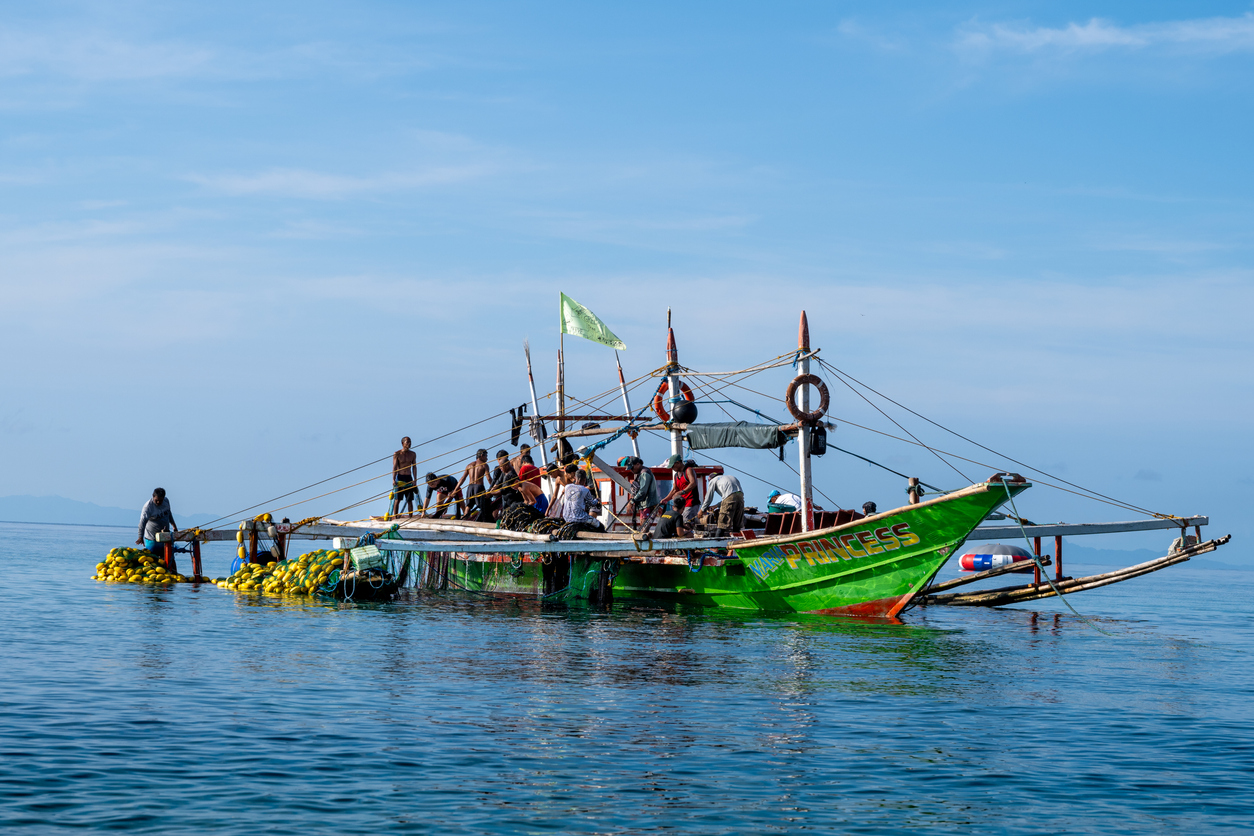
For many coastal and lakeside communities in Kenya, small-scale fishing is not merely commerce, but survival. To keep those who work at sea in Kenya safe, international treaties are implemented by a network of local courts and specialised maritime lawyers.
Principal State Counsel at the Office of the Attorney General and Department of Justice, Ashley Toywa, said: “Local fishing communities need the support of maritime lawyers. My department has partnered with Kenya Shipyards Limited to help fishing communities access safer boats.”
The work of law practitioners improving seafarers’ working conditions and maritime safety in Kenya, as well as several other countries, is highlighted in a new documentary series filmed by Makerchange Studios.
It underscores the lasting impact of a collaboration between the IMO International Maritime Law Institute (IMLI) and Lloyd’s Register Foundation, building local legal expertise in emerging maritime economies.
Ashley Toywa, a Lloyd’s Register Foundation-sponsored graduate, is applying these laws to improve safety and sustainability in Kenya’s maritime sector.
Maritime legal challenge
Across Kenya, a mismatch has existed between customary shipbuilding practices and emerging safety expectations. Many small vessels are constructed using traditional, intergenerational knowledge that lacks standardised technical oversight.
As a result, life-saving kits are sometimes absent and construction standards fail to mitigate risks to builders and users. These operational realities sit beside broader regulatory gaps: reporting systems, pollution controls, and enforceable construction standards, which together undermine safety and hamper compliance with international laws.
The impact of IMLI
To attain the legal education needed to help resolve this mismatch, Ashley attended the IMO International Maritime Law Institute in 2023 supported by Lloyd’s Register Foundation’s fellowship programme.
The course equipped him with a working knowledge of international law, contracts, maritime security and environmental protection, and with a practical understanding of how IMO instruments translate into national rules and port procedures. That technical legal training has enabled Ashley to advise on legislation and to structure partnerships that deliver tangible safety improvements to local fishing communities.
The advantage of partnership
With Ashley’s leadership, the Office of the Attorney General partnered with Kenya Shipyards Limited to make safer, compliant vessels available to fishing communities. Bespoke small craft are being built in Kisumu, near Lake Victoria, to recognised safety standards: stronger hulls, greater stability and designed to carry essential safety kit.
County governments have subsidised costs while beach management units — community groups created to pool resources and manage shore facilities — work with shipyards to acquire and maintain boats. The result is a practical, localised compliance model that combines legal oversight, public subsidy and community agency.
In addition to regulation
Legal reform has been accompanied by regulatory mechanisms: reporting systems to monitor pollution and clearer ship-construction standards that protect both craftsmen and seafarers. Ashley emphasises that legal instruments alone are insufficient; implementation requires education, inspection capacity and community engagement so that rules change behaviour as well as standards.
He said: “In Kisumu, skilled teams build small fishing vessels designed to meet safety standards — strong, stable, and built to last. County governments help subsidise the cost, and communities have formed beach management units to pool their resources to purchase them.”
A parallel in Nigeria
The role of specialised maritime lawyers is mirrored in Nigeria, where Ahmad Wanka — an IMLI alumnus from 2012 and now General Manager of Regulatory Services for the Nigerian Ports Authority — has helped reframe port governance. More than 90% of goods traded in Nigeria pass through ports. Ahmed’s work has centred on updating outdated policies and moving the focus from revenue collection alone to safety, trade facilitation and regulatory clarity.
Of IMLI’s impact, he said: “What you need is deep and effective legal knowledge to deal with these issues. It was at IMLI that I was able to gain the knowledge and skill of the common legal tradition and the ability to deal with issues as they come.”
Tim Slingsby, Director of Skills and Education at Lloyd’s Register Foundation and IMLI Governing Board member, said: “Maritime industries are traditionally known to be some of the most hazardous on the planet.
Standing as they do on the front lines of climate change, seafarers and fishing professionals bear the brunt of harsher climates and rising seas, often without the protections needed to keep them safe. Graduating from IMLI has empowered Ashley Toywa and Ahmad Wanka to use legal channels to better safeguard those whose work is relied on by thousands, if not millions, and improve standards for this and the next generations of maritime workers.”
Both cases highlight the same lesson: building local legal expertise in emerging maritime economies results in practical safety improvements across the maritime system. For legislators, regulators and advisers, the work is technical, incremental and collaborative, but its outcomes are immediate with fewer lives lost, safer vessels, and ports better aligned with the demands of contemporary trade and environmental stewardship.
