

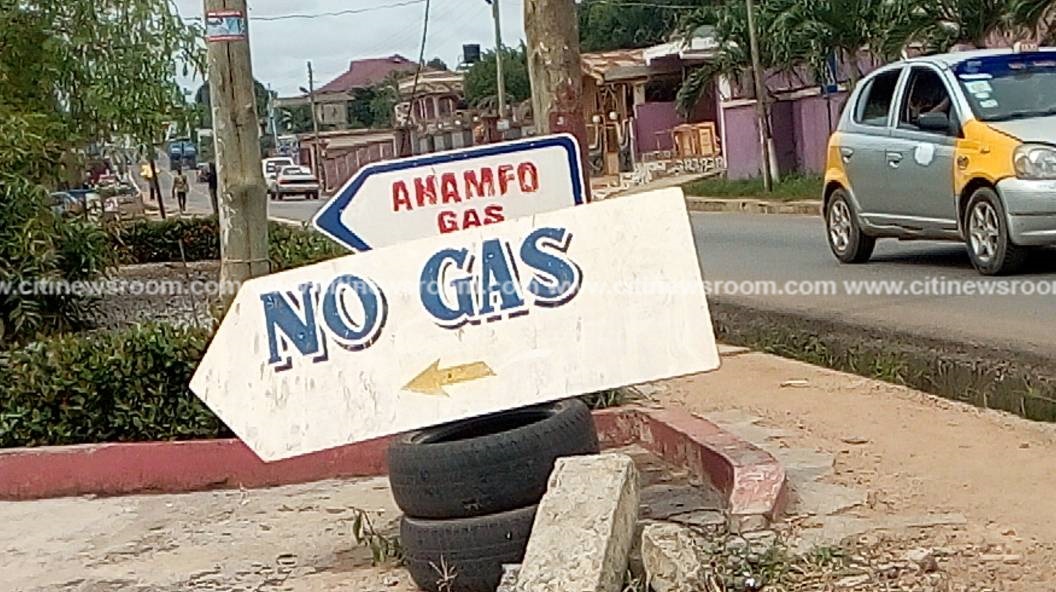

Accra, Ghana//-Maame Yeboah, a mobile money agent in Accra’s Alhaji-Tabora suburb, worries that skyrocketing liquefied petroleum gas (LPG) prices are forcing Ghanaians back to charcoal.
“Imagine earning GH¢500 a month and spending GH¢150 on a 14.5-kilogram gas cylinder every few weeks—that leaves you with only GH¢350 for food, transport, and other expenses,” she said.
She is not alone. George Tetteh, a 55-year-old civil servant, said he stopped using LPG for cooking entirely due to rising costs and occasional shortages.
That shift is visible at local markets. Charcoal seller Hajia Lariba noted that while charcoal was once bought mostly by low-income earners, middle- and high-income residents now queue for her supply as well.
Infrastructure Gaps Drive Up Costs
Beyond global fuel trends, domestic supply chain bottlenecks are worsening the crunch. Limited bulk storage capacity, transport constraints, and a heavy reliance on road haulage continue to undermine LPG supply reliability and drive up prices at the pump, according to Mark O.A. Agyemang, Technical Director of Public Interest and Accountability Committee (PIAC).
He said Ghana should prioritise building infrastructure to gather, process, and transport domestic gas to reduce its dependence on imports.
Currently, the Ghana National Gas Company (GNGC) processes natural gas from offshore fields—such as Jubilee and Sankofa—at the Atuabo Gas Processing Plant. This yields lean gas for power generation, alongside LPG and condensates for the local market.
However, Mr. Agyemang revealed that existing infrastructure lacks the capacity to process all the gas coming from Ghana’s fields, a challenge worsened by limited interim storage facilities.
As a result, GNGC—the country’s gas aggregator—supplies only 30% of Ghana’s monthly LPG consumption, forcing the nation to import the bulk of its needs.
Addressing these capacity bottlenecks and over-reliance on limited supply sources, he noted, will require targeted investment and diversification to ensure reliable gas delivery.
While the development of pipelines, onshore receiving facilities, and transmission networks connecting natural gas supply to major demand centres must be sped up, Mr Agyemang noted that downstream infrastructure is also seeing critical upgrades.
In the Liquefied Petroleum Gas (LPG) sub-sector, Asharami Ghana commissioned a 6,000-metric-tonne storage facility at the Tema Oil Jetty in October 2026—a roughly 10% boost to national storage capacity. Alongside marine investments like the MT Asharami Ghana vessel, the expansion supports Ghana’s target of achieving at least 50% LPG access by 2030, complementing ongoing National Petroleum Authority (NPA) campaigns to transition households away from charcoal and firewood to curb deforestation. [1, 2, 3, 4]
These private-sector investments align with Ghana’s broader Gas Master Plan (GMP)—a 2015–2040 framework approved by Cabinet in 2016 to guide natural gas prioritisation, pricing, utilisation, and infrastructure across both power and non-power sectors. [1, 2]
Recent studies on Ghana’s cooking energy landscape highlight affordability, cylinder access, safety concerns, and entrenched habits as major barriers to Liquefied Petroleum Gas (LPG) adoption. As a result, charcoal remains widely used across urban centres, including Accra, Kumasi, Cape Coast, Takoradi, Tema, Obuasi, Tamale, and Techiman.
“Charcoal is now the major source of energy for most homes in the urban centres, so we have a big market for our products,” said Madam Talaata Kuoro, a charcoal seller based in Darkuman, Accra.
According to her, even wealthy households in her neighbourhood increasingly buy charcoal for domestic cooking rather than LPG, citing high refill costs.
Madam Kuoro joined hundreds of urban charcoal vendors calling on the government to reduce fuel prices, noting that lower transport costs would allow them to haul charcoal into the cities at more reasonable lorry fares.
Biomass Consumption Drops
Biomass consumption in Ghana—primarily charcoal and woodfuel—dropped to 23.4% of the nation’s total energy share in 2025, according to the 2026 National Energy Statistical Bulletin released by the Energy Commission. While this marks a steady average annual decline of 1.3%, the residential sector remains the country’s largest consumer of biomass.
Transitioning to Clean Cooking
Shifting toward clean cooking solutions—such as liquefied petroleum gas (LPG), electric cooking, biogas, and improved biomass stoves—is critical for improving public health, slowing deforestation, and meeting climate targets, according to the World Bank Group.
Doris Duodo, Head of the Clean Cooking Unit at Ghana’s Ministry of Energy and Green Transition, noted that adopting cleaner fuels significantly reduces exposure to harmful household air pollution.
Lowering smoke inhalation from firewood and charcoal directly decreases the risk of respiratory illnesses, eye irritation, and cardiovascular disease, particularly for women and children.
Beyond health and environmental benefits—such as curbing forest loss and greenhouse gas emissions—Duodo emphasised the socioeconomic impact of the transition.
Moving away from traditional fuels cuts down the hours families spend gathering firewood and tending slow fires, freeing up time for education and income-generating activities.
Furthermore, scaling up efficient stoves and cleaner fuels can lower ongoing household fuel expenses while creating local jobs in manufacturing, distribution, and clean energy services.
By Masahudu Ankiilu Kunateh, African Eye Report
