
Global Leaders in Philanthropy Convened in Warsaw to Mark First Ever Consortium Summit

Palace of the Commonwealth, Warsaw, Poland,

For one day, Warsaw became the meeting place for leaders of Polish and global philanthropy. Within the historic interiors of the 17th-century Baroque Palace of the Commonwealth, the Philanthropic Consortium, an initiative launched by Omena Mensah and Rafał Brzoska.

It hosted the first Philanthropic Consortium Global Summit, convening international experts to discuss the future of philanthropy, responsible leadership, and new models of international cooperation.

On 17 September, the Philanthropic Consortium Global Summit took place at the Palace of the Commonwealth in Warsaw, an inaugural international event in Poland focused on the state and future of both Polish and global philanthropy. The meeting brought together representatives from business, philanthropy, academia, and international organisations from Poland, across Europe, Africa, and the United States.
Among the guests were the Philanthropic Consortium’s Global Strategic Partners: the Obama Foundation, the Otumfuo Osei Tutu II Foundation, and UNESCO, with whom the Omenaa Foundation signed a new 3-year Framework Agreement. The partnership was made possible due to the support of the Polish permanent delegation, making Omenaa Foundation the first Polish private foundation to partner with UNESCO.
Polish business was represented by leading figures from the sector, including Rafał Brzoska, Founder and President of InPost; Robert Dobrzycki, Investor and President of Panattoni; and Piotr Dejneka, a member of the Supervisory Board of PCG.
The event was also attended by Wojciech Zajączkowski, Undersecretary of State, who coordinates policy towards Africa, the Middle East, Eastern Europe, and Latin America, and supervises the corresponding departments within the Ministry of Foreign Affairs.
Participants sought to address a pressing challenge facing both Polish and international philanthropy today: How can private capital and global institutions work together to tackle the world’s most significant challenges, not only by responding to crises, but by building solutions that endure for years to come.

From individual gestures to a platform for change

The Philanthropic Consortium is the first initiative of its kind in Poland. It was launched in 2023 during TOP CHARITY, the largest art charity initiative in Europe, founded by Omenaa Mensah and Rafał Brzoska. This is a new model of philanthropy.
The initiative brings together business leaders, philanthropists, creative industries, and social impact organisations committed to collaborative impact. We support initiatives that create measurable change through thoughtful, long-term solutions.
It builds bridges between art, business and philanthropy, enabling cross-sector projects with substantial impact.
Each year, the TOP CHARITY business community shares funds raised between Polish and international projects, with at least 30% distributed to the Philanthropic Consortium, a global network of non-profit partners. Partners are proposed by the TOP CHARITY business community, then reviewed by the Governing Council and the Expert Council. Their expertise ensures funding is directed where it is most effective.
Since 2023, across three editions, the initiative has supported 196 projects in more than 17 countries. Over the course of the first three editions, the Philanthropic Consortium has awarded grants totalling more than €8 million, and in the upcoming fourth edition, a further €4 million is planned for distribution. This brings the total grant funding to nearly 52 million PLN.
The funds allocated during the first three editions constitute part of the overall amount of €55 million raised as part of TOP CHARITY, also supporting art, education and community initiatives run directly by the Omenaa Foundation and OmenaArt Foundation, as well as an Endowment Fund to secure the long-term future of Poland’s philanthropic impact.

“Today, the world is becoming increasingly unpredictable, shaped by war, the pandemic, and deepening political and social divisions. When existing models of philanthropy can no longer keep pace, we propose something new: a bridge built on Poland’s renaissance, connecting Poland with Africa and Africa with the world.

Poland has already shown the world that it can compete economically, build outstanding companies, and create entrepreneurs who achieve success on the international stage. If that is the case, why shouldn’t we also compete as a country that knows how to share its success?”

Omenaa Mensah, Founder of the Philanthropic Consortium.
Today, the Consortium works with organisations across four continents, from Ghana, Rwanda, and Tanzania to Europe and the United States. Projects span education, the arts, health, humanitarian assistance, and environmental protection.
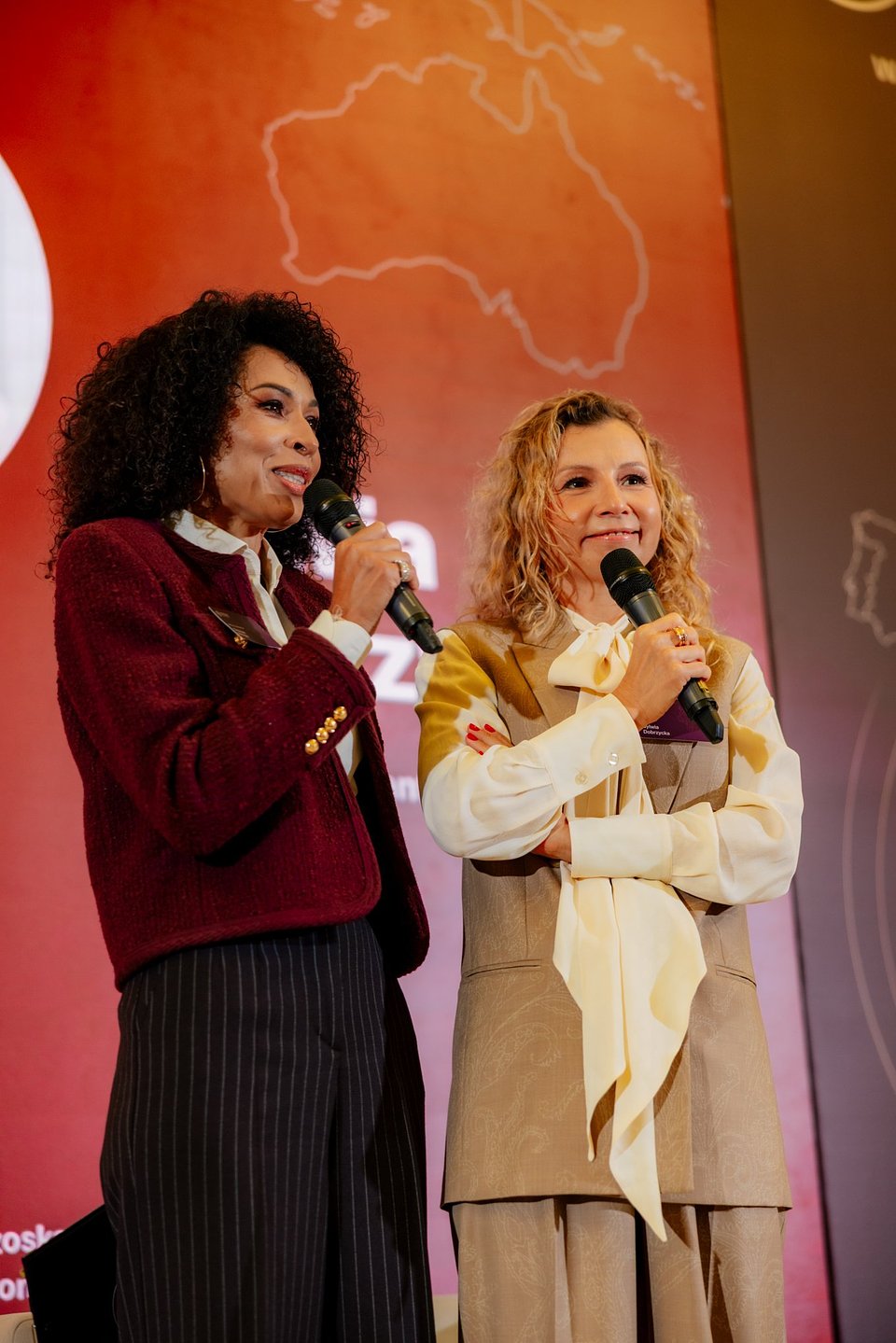
Omenaa Mensah, Founder of the Philanthropic Consortium and Sylwia Dobrzycka, Chair of the Philanthropic Consortium

Omenaa Mensah, Founder of the Philanthropic Consortium and Sylwia Dobrzycka, Chair of the Philanthropic Consortium

Amongst many projects is the Yaa Asantewaa Art Prize in Ghana, a partnership with Gallery 1957 to support women artists in building professional careers through residencies, mentoring, and access to the international art market. In 2026, the programme was also expanded to Senegal.
In London, the Consortium supported the first Ghanaian residency at Studio Voltaire, awarded to artist Carlos Idun-Tawiah, and launched the TOP CHARITY Scholarship at SOAS University of London, increasing access to African Studies education.
Across Africa, the Consortium also supports education and community programmes, such as Malaika in the Democratic Republic of Congo, which runs a school for more than 400 girls, serves as a local community hub, and delivers access to clean water used by over 35,000 people each year. The Philanthropic Consortium also includes organisations working to protect endangered species, including Gorilla Doctors, as well as humanitarian initiatives, for example Doctors Without Borders in Sudan.

The Philanthropic Consortium’s Grant Program supports organizations that translate good ideas into concrete social action. We fund projects carried out in Poland and around the world that address important social challenges and the needs of various groups. Each edition of the Program focuses on a different area.

This year, we are focusing on projects that support children, young people, and seniors in Poland and globally through sport, physical activity, and initiatives promoting health in its broadest sense.”

Sylwia Dobrzycka, Chair of the Philanthropic Consortium

Poland: from beneficiary to benefactor

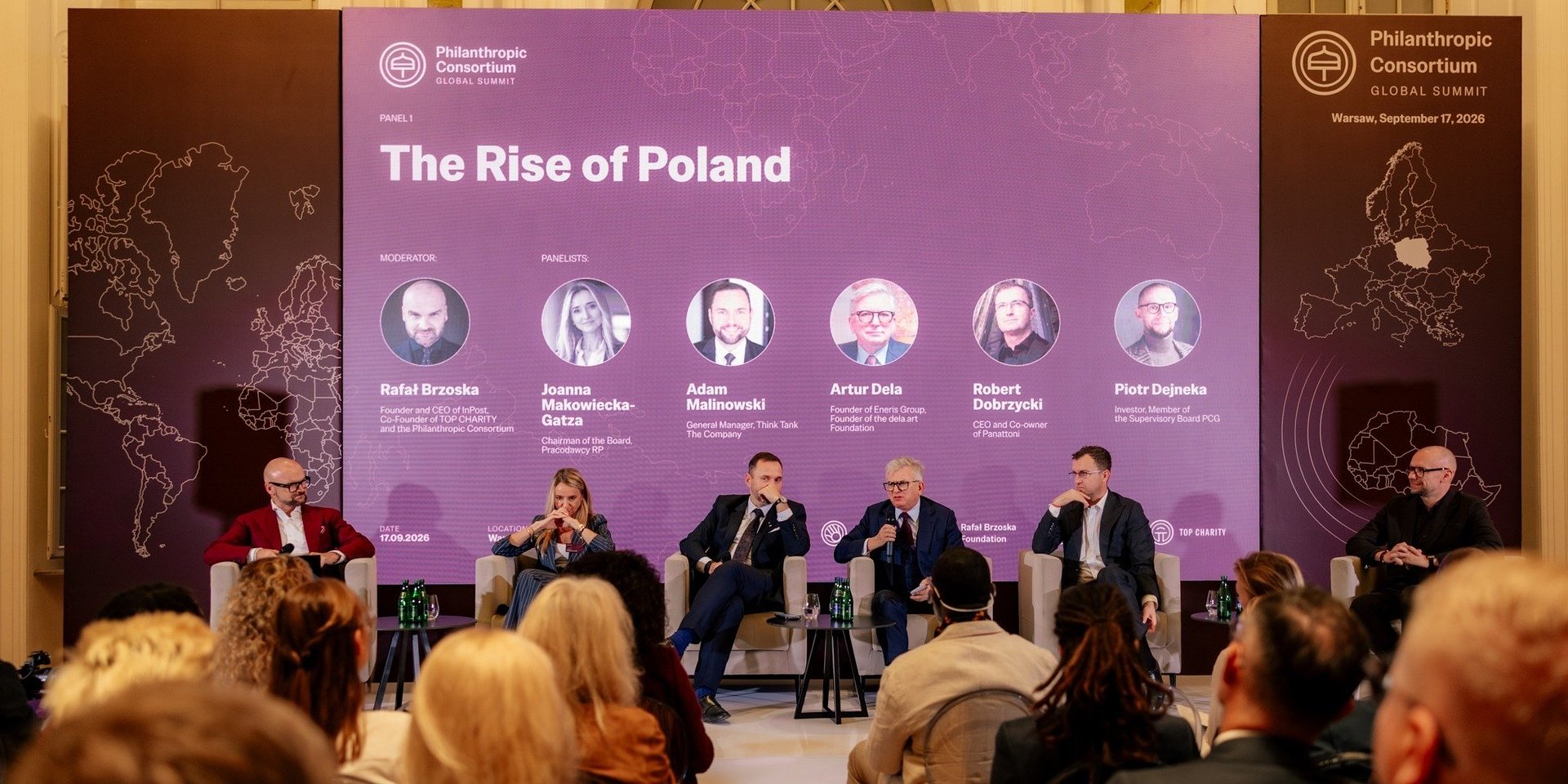
The first part of the Summit, The Rise of Poland, focused on the exceptional position Poland now holds in the international landscape of philanthropy. Over a single generation, Poland has moved from being a country receiving international assistance to becoming an increasingly visible source of private philanthropy. As recently as the early 1990s,
Polish schools, hospitals, and civil society organisations benefited from support provided from abroad. Three decades later, Poland is among the largest economies in the European Union, and the generation of entrepreneurs who built their companies during the transformation increasingly treats their success as a responsibility toward the broader social environment.

“Polish philanthropy no longer needs to catch up. We act together, set goals, oversee how funds are allocated, and take responsibility for results, because this is exactly how we run our businesses. I believe we are ready to set standards, rather than simply follow them.”

Rafał Brzoska, Co-Founder of TOP CHARITY and the Philanthropic Consortium.
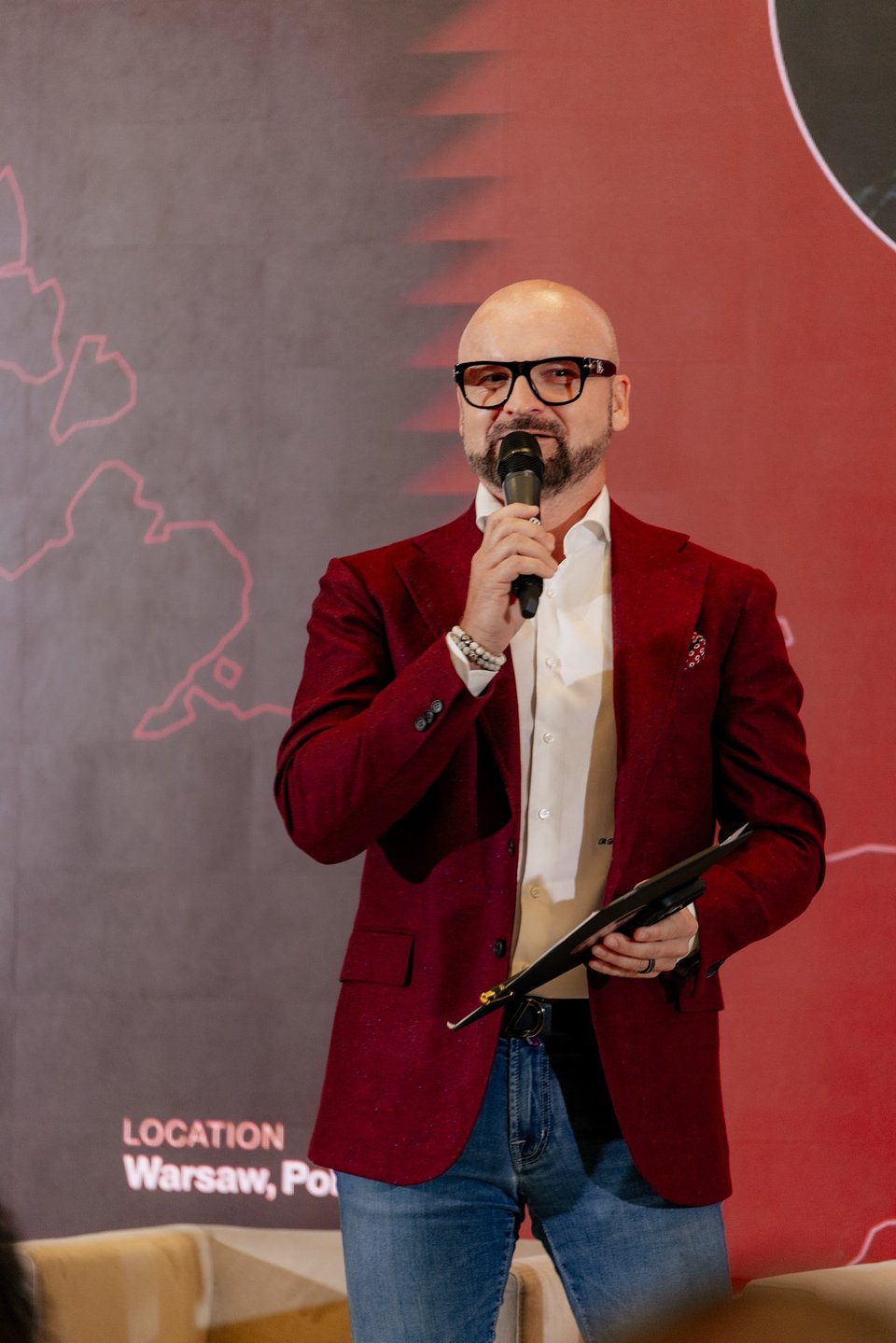
Rafał Brzoska, Co-Founder of TOP CHARITY and the Philanthropic Consortium

Rafał Brzoska, Co-Founder of TOP CHARITY and the Philanthropic Consortium

Rafał Brzoska, together with representatives of Polish business, including Robert Dobrzycki, Joanna Makowiecka-Gatza, Adam Malinowski, Artur Dela, and Piotr Dejneka, discussed how the experience of transformation after 1989, entrepreneurial drive, the ability to mobilise quickly, and Poland’s tradition of solidarity can become strengths for the country in international philanthropy.
The discussion also covered how to move from spontaneous generosity to lasting institutions, mechanisms, and partnerships, and whether philanthropy can become one element of Poland’s soft power.
This shift was particularly evident in the way society and business responded to the full-scale invasion of Ukraine in 2022, when 77 per cent of Polish citizens provided help for refugees and the business community raised record sums. This was a turning point that also became a driving force behind the creation of TOP CHARITY.

“Philanthropy is something we need to grow into. At the beginning, when we are building a business, we grapple with existential challenges and focus primarily on consumption. Over time, an impulse of the heart emerges, followed by a phase of individual philanthropy. Only later do we conclude that only organised, systemic philanthropy can outlive us and our money.”

Robert Dobrzycki, Investor, CEO of Panattoni Europe

“Philanthropy is not only for the wealthy. France is a good example: for years, it has used culture as an important tool of soft power. Every year, around €4 billion allocated to the promotion of French culture also comes from the support of ordinary people.”

Artur Dela, Founder and Principal Shareholder of Eneris Group, Founder and Chairman of the Board of the dela.art Foundation

Does the future of global philanthropy belong to Africa?
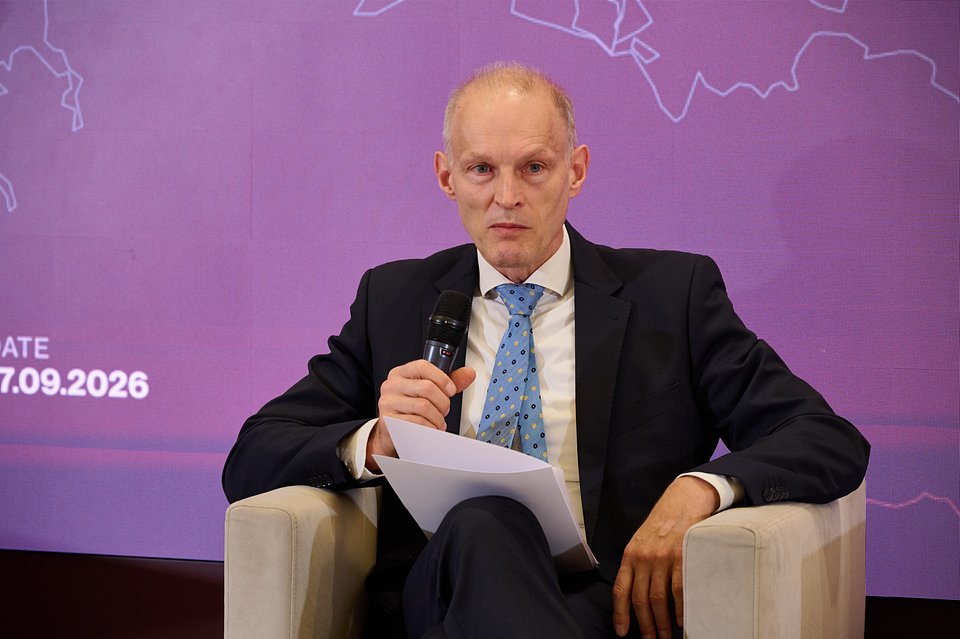
The second panel, moderated by Dr Kwame Mintah, Head of the Omenaa Foundation’s Africa Strategy, took the discussion to a global level. Participants included Tina Höfinghoff from the Obama Foundation, Edmond Moukala from UNESCO Ghana, Nana Bahanene from the Otumfuo Osei Tutu II Foundation, Andrea Iannou from SOAS (University of London), and Anna Masłon-Oracz from SGH Warsaw.
The panel explored what a new model of philanthropy should look like in a world where traditional development aid is being constrained, while Africa’s significance, demographically, economically, and culturally, is growing rapidly.
Rather than viewing Africa solely as a recipient of assistance, the panel shifted to a partnership-based approach. The starting point was the development of equal, long-term partnerships in which local organisations bring their own expertise and resources and have genuine influence over the direction of initiatives.
Wojciech Zajączkowski, Undersecretary of State at the Ministry of Foreign Affairs

Wojciech Zajączkowski, Undersecretary of State at the Ministry of Foreign Affairs

“We are pleased to see the establishment of the Omenaa Foundation, a fully private initiative. It has the potential to play an important role in building bridges between Poland and Africa, particularly Ghana. It is our hope that it will become an exemplary model for those who are committed to the comprehensive development of African societies.”

Wojciech Zajączkowski, Undersecretary of State at the Ministry of Foreign Affairs

“Our cooperation with the Omenaa Foundation is about building bridges, building partnerships, and empowering new generations.”

Tina Höfinghoff, Development Advisor for Central Europe, Obama Foundation

“A country like Poland can be truly inspiring for Africa. Despite all the terrible atrocities it went through during and after the war, it was able to rise again and rebuild. I was here a couple of decades ago, and seeing Warsaw today, I am really impressed by the transformation.”

Edmond Moukala, UNESCO Representative to Ghana and Head of the Accra Office

From conversation about hate to concrete action
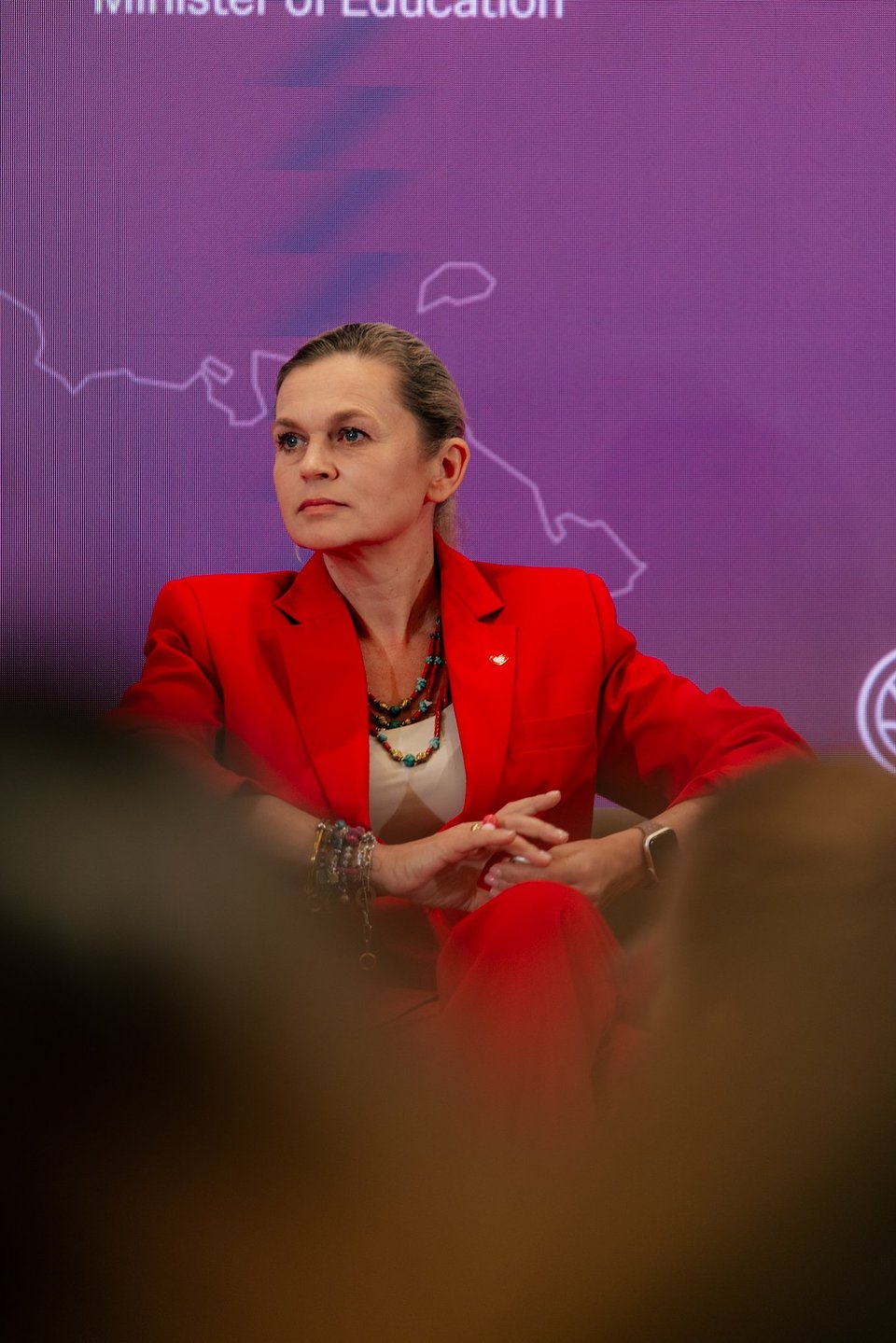
The final section of the Summit addressed a topic particularly relevant to today’s society: the rise of hate speech and identity-based violence, including its impact on education, health, public life, and international partnerships.
The panel, “Beyond Hate: From Awareness to Action,” moderated by Beata Tadla, brought together Sylwia Grzegorczyk-Abram, Barbara Nowacka, Marta Różyńska, Marcin Gortat and Mikołaj „Bagi” Bagiński.
The discussion focused on practical tools for action, what interventions philanthropy can fund, how to measure effectiveness, and where the boundaries lie for private-sector involvement. It attracted strong audience interest and clearly demonstrated that Poland’s global ambitions must be matched by building an open and safe environment at home for people who study, work, and develop international partnerships in the country.
Barbara Nowacka, Minister of National Education

Barbara Nowacka, Minister of National Education

“As part of the ‘Compass for Tomorrow’ reform, Polish schools are introducing a cross-curricular module encompassing Polish language, geography, safety education, and IT, designed to teach young people essential skills for today’s world, such as reading comprehension and critical text analysis, source verification, safe internet use, and recognising disinformation and manipulation.”

Barbara Nowacka, Minister of National Education

Art as a vehicle for emotion, education, and measurable impact

The event also featured an artistic component, reflecting one of the core values of the Omenaa Foundation ecosystem: art as part of a toolkit alongside philanthropy and business. Art brings communities together and motivates people to engage in action. Philanthropy provides the funding needed to pilot ideas and demonstrate real impact. Business, in turn, supplies investment that sustains the initiative beyond any single grant.
On that day, the Palace was transformed into a unique space for encountering contemporary art. Its interiors showcased works from the collection of the OmenaArt Foundation, along with pieces specially loaned for the occasion by institutions and collectors affiliated with the Foundation. Among the featured objects were sculptures from Zuza Golińska’s “Snus” series, on loan from Zachęta – National Gallery of Art; “Dunes” by Marta Gąsienica-Szostak from the collection of the Central Museum of Textiles in Łódź; and Marcin Maciejowski’s painting “I am not an ideology” from the Krupa Art Foundation.
The exhibition, much like the overall spirit of the event, carried an international dimension. It was complemented by works from acclaimed and distinctive artists from around the world, including Rita Mawuena Benissan, Courage Kpormorne Hunke, Pablo Atchugarry, and Modupeola Fadugba. As a result, for one day, the Palace became a space for dialogue between different traditions, generations, and artistic languages.
Guests of the event were also treated to an exceptional museum exhibition at the Palace, featuring nearly 200 of the most precious and unique objects from the treasury of the National Library. These artefacts of Polish and world literature span from the 8th century to the present day, with some inscribed on the UNESCO Memory of the World list.
On display were valuable mementoes of Polish Nobel laureates: autographed manuscripts of Henryk Sienkiewicz’s “Quo Vadis” and “Krzyżacy”, a letter written by Maria Skłodowska-Curie, notebooks belonging to Czesław Miłosz, and even his Nobel Prize Medal.

Polish philanthropy aims to co-create global solutions

The first Philanthropic Consortium Global Summit symbolised a broader shift: Polish philanthropy no longer wants to stand on the sidelines of global action. Instead, it increasingly seeks to propose its own solutions and build international coalitions.
Emerging from the experience of Poland’s transformation and from TOP CHARITY, the Philanthropic Consortium is now extending this model beyond Poland’s borders, connecting Polish business and civil society organisations with partners in Africa, Europe, and the United States.
During the Summit, the organisers indicated that this is only the beginning of the next phase of international development and of the direction for the global strategy of the Omenaa Foundation ecosystem.

Leave a Reply

*